Written by the Birdsville team. Last updated October 2026.
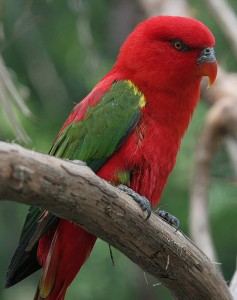
The Musk Lorikeet is a cheeky, mostly green lorikeet with a bright red face, a blue cap and a red tipped beak. Hand raised birds are easy to tame and love attention, which makes them one of the best lorikeets to keep as a pet. Below you’ll find everything you need to look after a Musk Lorikeet at home: diet, cage and aviary setup, enrichment, training and the health problems to watch for.
Birdsville sells hand raised Musk Lorikeets, along with everything you need to look after one. You’ll find food, cages, toys and health products in-store at 684 Botany Road, Alexandria NSW 2015, and online through Petsville with delivery Australia-wide.

Musk Lorikeet Quick Facts
Scientific name: Glossopsitta concinna (also listed as Trichoglossus concinnus)
Other names: Musky Lorikeet, Red-eared Lorikeet, Green Keet
Adult size: about 22cm, 60 to 90g
Lifespan: about 12 to 25 years (sources differ, see FAQ)
Diet: nectar, pollen, blossom, fruit and vegetables
Housing: a large cage with daily time out, or an aviary at least 3m long
Talking: doesn’t talk, but mimics sounds well
Temperament: playful, affectionate and easy to tame
Clutch: usually 2 white eggs
Experience level: suits a committed first time lorikeet owner
On This Page
Musk Lorikeets as Pets
Essential Supplies
Cage and Aviary Setup
Enrichment
Diet and Feeding
Water
Vitamins and Calcium
Handling and Bonding
Training
Common Health Problems
Worming and Parasites
Cleaning Routine
Household Dangers
What to Look for in a Healthy Bird
Sexing
Breeding
Record Keeping
Holiday Care
Travelling with Your Bird
Introducing Other Birds
Boarding
FAQ
Recommended Vets and Links
Musk Lorikeets as Pets
Wild Musk Lorikeets range from south east Queensland through NSW and Victoria to South Australia and Tasmania. Over the last few decades flocks have moved into Sydney and other cities, so many people know them from the flowering gums in their own street. They are smaller and quieter than Rainbow Lorikeets, though they still have a sharp, rolling screech.
A hand raised Musk Lorikeet is a fun, cuddly companion. They tame easily, enjoy being handled and quickly learn to copy household sounds like whistles and beeps. They need a fresh nectar based diet every day and a lot of attention, so they suit owners who can spend time with them.
Essential Supplies for Musk Lorikeets
All of these products, and many more, are available in-store at Birdsville and online at Petsville.
Cage and Housing
Large cage, at least 90 x 60 x 90cm, with stainless steel or powder coated bars
Natural branch perches in several widths
Newspaper or paper liner for the cage tray
Cage cover for night time
Food and Dishes
Birdsville Blends Lorikeet Dry (https://petsville.com.au/products/birdsville-blends-lorikeet-dry-1kg)
A wet mix for young birds, such as Passwell Complete Lorikeet (https://petsville.com.au/products/passwell-complete-lorikeet-1kg)
Separate dishes for wet mix, dry mix and water
Bird bath
Vitamins and Supplements
Vetafarm Multivet (https://petsville.com.au/products/vetafarm-multivet-50ml)
Vetafarm Calcivet (https://petsville.com.au/products/vetafarm-calcivet-50ml)
Calcium perch (https://petsville.com.au/products/avian-care-trimming-calcium-perch-140mm-small)
Toys and Enrichment
Swings and ladders
Rope, leather, wood and shredding toys
Foraging toys such as the BeakJoy Bamboo Climber (https://petsville.com.au/products/beakjoy-bamboo-climber)
Bird Kabob for hanging fruit (https://petsville.com.au/products/bird-kabob-grande-42cm-1)
AviOne Bird Hammock for snuggling (https://petsville.com.au/products/avi-one-bird-hammock-closed-s-17l-x-10w-x-10cm-h)
Health and Hygiene
Avitrol Mite and Lice Spray (https://petsville.com.au/products/fidos-avitrol-bird-mite-and-lice-spray-125ml)
Bird wormer such as Vetafarm Wormout Gel (https://petsville.com.au/products/vetafarm-wormout-gel-50ml)
F10 Veterinary Disinfectant (https://petsville.com.au/products/f10-veterinary-disinfectant-200ml)
Aviclens water cleanser (https://petsville.com.au/products/vetafarm-aviclens-water-cleanser-100ml)
First Aid and Grooming
Digital scale in grams
Styptic powder
Small heat lamp
Out and About
Carry cage
Bird harness and lead for supervised outings (https://petsville.com.au/products/avi-one-bird-harness-lead-small)
Worth Considering
Vetafarm Probotic during stressful times (https://petsville.com.au/products/vetafarm-probotic-25g)
Vetafarm Spark Liquid after the trip home (https://petsville.com.au/products/vetafarm-spark-liquid-50ml)
Passwell Lorikeet Treat Bar (https://petsville.com.au/products/passwell-delight-lorikeet-75g)
Cage and Aviary Setup
Musk Lorikeets are busy birds that need space to climb, swing, stretch their wings and play. For a single pet bird, choose the biggest cage you can fit, at least 90cm long, 60cm deep and 90cm high, and give it time out every day for exercise. Bigger is always better, because the cage also has to hold toys, perches and three dishes.
In an aviary, aim for a flight at least 3 metres long. Musk Lorikeets are strong forward fliers but not good at flying straight up, so length matters more than height.
Lorikeets have runny droppings. Put newspaper in the tray and replace it daily. In an aviary, a drained concrete floor, a sand base you can replace or a suspended flight keeps things clean.
Setting Up the Cage
- Place the cage against a wall in a busy room, away from the kitchen, draughts and direct afternoon sun.
- Fit natural perches at different heights and thicknesses.
- Put food and water dishes up high and away from perches so droppings can’t fall in.
- Hang a swing, two or three toys and a hammock or snuggle hut.
- Add a bath dish a few times a week.
- Cover the cage at night so your bird gets 10 to 12 hours of quiet sleep.

Enrichment
As an ex zoo keeper, I learned that every animal needs a variety of enrichment to stay healthy and happy, and a pet parrot is no different. A bird with only perches, food and water gets bored, and boredom can lead to feather plucking, self harm and constant squawking. A bird with plenty to do is calmer, friendlier and easier to train.
Enrichment can be chew toys, leather toys, acrylic toys, shredding toys, ropes, swings, ladders, bells, balls, cardboard, small boxes, wicker baskets, a tray of wheatgrass, bird baths, food kabobs and new foods.
From the garden, try pine cones with treats hidden inside, twigs, bendy branches and safe flowers such as bottlebrush, grevillea, eucalyptus, melaleuca, hibiscus, marigolds, roses, violets and dandelions, leaves and all. Wash anything you bring in from outside, and make sure it hasn’t been sprayed and isn’t toxic.
Enrichment tip: rotate toys every week or so. Swapping them around makes each one feel new again and keeps your bird interested.
Diet and Feeding
Musk Lorikeets are nectar feeders. In the wild they eat nectar, pollen and blossom, mostly from flowering gums, plus some fruit and buds. Pet lorikeets need a commercial nectar replacement diet as the base of their food. A poor or spoiled diet is one of the most common reasons lorikeets die young, so it’s worth getting right.
We recommend Birdsville Blends Lorikeet Dry, which sells more than any other lorikeet food in our shop. Other good quality options include Vetafarm Forest Fusion Lori Diet (https://petsville.com.au/products/vetafarm-forest-fusion-lori-diet-450g) and Wombaroo Lorikeet and Honeyeater Food (https://petsville.com.au/products/wombaroo-lorikeet-honeyeater-food-1-5kg). Be wary of cheap supermarket mixes, which are often high in sugar and low in real nutrition.
Dry Mix and Wet Mix
Lorikeet food comes as a powder in two main types.
Dry mix is fed straight from the dish. It doesn’t spoil as quickly, but your bird needs plenty of fresh water beside it.
Wet mix is stirred into water. Because it contains so much water, your bird drinks less, but fresh water should still always be available. Wet mix goes off fast, so tip it out and scrub the dish morning and afternoon, and even more often when it’s hot.
Feeding Your Musk Lorikeet by Age
Young hand raised birds: offer both wet and dry mix in separate dishes. Most young birds lean on the wet mix at first. Over the first few months, gradually cut back the wet mix until your bird is eating dry mix only.
Adults: leave dry mix in the dish from morning to night. As a rough guide from Vetafarm, a lorikeet eats a tenth of its body weight or more in dry food daily, which is about 6 to 9g for a Musk Lorikeet. Serve fruit and greens with breakfast and clear away what’s left before bedtime.
A weekly weigh-in on kitchen scales tells you straight away if the amount needs adjusting.
Fruits and Veggie Guide
Fruits
Figs, pear, apple, pawpaw, rockmelon, blueberries, strawberries, pomegranate and the odd grape. Keep citrus to a weekly treat.
Vegetables
Spinach and silverbeet leaves (a good natural source of calcium), sweet potato, carrot, pumpkin and corn on the cob.
Treats
Native flowers, a slice of soaked fig, the occasional Passwell Lorikeet Treat Bar, and a small piece of millet spray now and then.
Avoid Entirely
Chocolate, avocado, onion, coffee or tea, alcohol, chips and other salty or greasy food, and dry seed mixes as the main food.
Water
Always give your Musk Lorikeet fresh, clean water, even if it eats wet mix. On dry mix they drink a lot more, so look at the water bowl morning and afternoon when it’s warm. Adding Aviclens slows down the growth of germs. Wash the water dish every day, because nectar on the beak leaves a sticky film that grows bacteria.
Vitamins and Calcium
Add a vitamin supplement such as Vetafarm Multivet to the water every two to three days. It fills the gaps that are common in lorikeet diets.
We also recommend Vetafarm Calcivet for every bird, and especially for indoor birds that don’t get direct sunlight, as it provides calcium and vitamin D3. Leafy greens and a calcium perch give extra calcium.
Handling and Bonding
Hand raised Musk Lorikeets are known for being easy to tame. Most love a head scratch and will happily ride on a shoulder.
Your new bird needs a day or two to get used to its surroundings before you start picking it up. From there, calm and quiet time together works best, like sitting with it on the couch while the TV is on. Young birds tire easily, so keep sessions gentle for the first few weeks.
Handle your bird every day, but in short sessions. Too much handling stresses a young bird, and too little can let it become nervous. Some Musk Lorikeets give a cheeky nip now and then. Don’t react, and gently put the bird down. Teach children to be calm and gentle, never to chase or grab.
Training
Training helps a hand raised bird become a well behaved family pet. Three simple rules:
Reward good behaviour.
Ignore unwanted behaviour.
Never punish your bird.
The first cue to teach is “step up”. With your bird sitting on one hand, rest a finger of your other hand against the lower chest, say “step up” and push ever so lightly. One foot will come up onto your finger, and as you raise your hand a little the second foot follows. Reward it with a favourite fruit or a lick of nectar. As it improves, ask for a few step ups before each reward, then switch from food to praise.
Keep training short but frequent. Musk Lorikeets are clever mimics, so you can also reward them for copying a whistle or a simple sound.
See our full guide to training your parrot (https://birdsville.net.au/pet-bird-advice-and-training/bird-training-clicker-training-parrot-body-language/).
Common Health Problems
Lorikeets hide illness until they are quite sick. If your Musk Lorikeet sits fluffed up, sleeps more than usual or stops playing, act quickly. Our Common Bird Illnesses page has more information (https://birdsville.net.au/common-bird-illnesses/).
Yeast Infections
The sugar in a nectar diet lets yeast grow, especially when wet food is left out too long. A Musk Lorikeet that suddenly loses its usual bounce, brings up food or has sour breath may have yeast. Get it checked by a vet without delay.
Fungal Infections
Dirty cages and contaminated food are the most common causes. A shortage of vitamin A also makes birds more prone to infection. Keep the cage clean, serve food fresh and offer vitamin A rich foods such as carrot and sweet potato.
Bacterial Infections
Germs can be picked up from the floor, from other animals in the house and from little hands. A stressed bird catches them more easily. A fluffed up, quiet bird needs warmth first, so set up a heater or heat lamp beside the cage and then call your avian vet.
Iron Storage Disease
A lorikeet’s body takes up iron very efficiently, and over time the excess builds up in the liver. Because vitamin C boosts iron uptake, citrus stays a once a week fruit. Look out for a puffy tummy, heavy breathing or weakness.
Beak and Feather Disease
Psittacine Beak and Feather Disease is passed between parrots in feather dust and droppings. It kills many chicks before they leave the nest. Other birds lose feathers, and while some lorikeets beat it and grow a normal coat again, they can stay carriers. With no vaccine available, good food, cleanliness and a calm home are your bird’s best defence.
Stress
In my zoo keeping days, cutting stress was near the top of every day’s job list. Adult Musk Lorikeets love noise and attention, but a young bird in a new home needs time to eat, drink and rest. Overexcited children can overwhelm a baby bird, so introduce them gently.
Obesity
Pet lorikeets that don’t get enough exercise put on weight, which can shorten their lives. A large cage, swings, perches of different sizes and daily time out of the cage help burn energy. Keep sweet treats small.
Injuries
Free flying birds can hit glass, mirrors and spinning fans. Close the windows and curtains, switch fans off and stay in the room. If your bird is hurt, head to a vet that day.
Worming and Parasites
The first worming is due somewhere between a few weeks and two months after your bird comes home. Recently weaned birds have delicate gut bacteria that need time to develop, so check the timing with our staff when you buy. After that, worm every 6 months.
Mites and lice are the parasites cage birds pick up most, and a bird mite and lice spray deals with both. Clear out food and water, then treat the bird along with its cage, perches and toys, steering clear of the face. Follow the directions on the bottle for the dose.
If you have other birds, keep your new Musk Lorikeet separate for 4 to 6 weeks first.
Cleaning Routine
Each Day
Throw out wet mix and wash dishes at least twice. Remove old fruit and vegetables. Change the cage paper.
Each Week
Clean the cage tray, bars, perches and toys. Weigh your bird.
Each Month
Give the whole cage a full clean with a bird safe disinfectant such as F10. Replace worn perches and toys.
Household Dangers
See the Avoid Entirely list in the Fruits and Veggie Guide for unsafe foods. Hand raised birds also face these risks around the home:
Cats and dogs. Even a gentle family pet can be unpredictable, so introduce them slowly and never leave them alone together.
Ceiling fans, which owners easily forget to switch off before letting a bird out
Windows, glass doors and mirrors
Fumes from non-stick cookware, aerosols and smoke
Zinc, copper, bleach, oven cleaner, glue, nail polish remover, paint and insect spray
Sinks, toilets, buckets and even a cup of tea, any of which can drown a small bird
Electrical cords
Draughts, one of the biggest causes of illness in pet birds
Germs from an unclean house
What to Look for in a Healthy Bird
Whether you’re choosing a new Musk Lorikeet or checking your own, here’s what to look for.
Eyes: shiny and open wide, without any weeping, puffiness or redness.
Body condition: whenever I pick up a bird, I run a finger along its keel bone under the chest, where the big flight muscles anchor. Muscle wastes away here first when a bird is unwell, and with their fast metabolism, birds can lose condition in a matter of days. Get into the habit of feeling your bird’s keel, particularly if it seems quieter than normal.
Mouth and beak: clean, not overgrown, with no sores or build up.
Nostrils: clear and dry.
Feathers: smooth and full. Young birds often look scruffy on the body and tail from walking through wet food and rubbing on wire.
Vent: clean, with no staining.
Legs and feet: clean.
Appetite: choose a bird that eats hungrily. A big appetite is a good sign of health.
Behaviour: active and alert. A sluggish bird may be sick or too young to feed itself.
Weaning: pick a bird that’s already eating by itself, unless you’re experienced at hand feeding. A weaned bird bonds just as closely.
Enclosure: clean and hygienic.
A clipped bird should have matching wings, never one side only. Birdsville clips wings free with any bird purchase (https://birdsville.net.au/wing-clipping-nail-clipping/).
Sexing Musk Lorikeets
Males tend to have brighter red and blue on the head and a larger yellow patch on the wing, while females have a duller blue crown. The differences are subtle, so a DNA test is the only reliable way to know. Young birds are duller overall, with a brown beak and brown eyes.
Breeding Musk Lorikeets
Musk Lorikeets can breed from about 12 months old, but only well bonded pairs tend to nest. In the wild, breeding runs from about August to January.
They prefer an upright nest box of roughly 20 x 20 x 40cm, or a hanging hollow log, bedded with a little pine shavings or crumbled rotten wood. Leave out any nest mix with cedar in it.
The hen usually lays 2 white eggs and incubates them for about 22 to 24 days. Sources put fledging anywhere from 5 to 8 weeks, and chicks become independent a week or two after that. Clean the nest box out between clutches, as lorikeet nests get wet and dirty quickly.
Pairs can turn bossy during breeding season, so give them extra feeding stations. Vetafarm Breeding Aid (https://petsville.com.au/products/vetafarm-breeding-aid-100ml) helps support breeding birds.
Record Keeping
Keep a simple record of your bird’s weekly weight, worming and mite spray dates, vet visits and any changes in eating or behaviour. Weight that suddenly falls is usually the earliest clue that something is wrong.
Holiday Care
Lorikeets can’t be left with extra food while you’re away, because wet mix spoils within hours. Have someone experienced visit at least once a day to change food and water, or book your bird into boarding.
Travelling with Your Bird
Use a secure, ventilated carry cage. Take the water out during the trip so it doesn’t spill, and offer it again when you arrive. Keep trips short, avoid direct sun and never leave your bird alone in a car. Once you’re home, Vetafarm Spark Liquid in the drinking water gives a tired bird a boost. Birdsville sells a range of carry cages (https://birdsville.net.au/carry-cages/).
Introducing Other Birds
Musk Lorikeets are generally calm and can live with doves, finches and other small parrots in a large aviary. They can get bossy in small spaces or while breeding.
When you bring a new bird home, keep it in its own cage at first. Let the birds see and hear each other through their cages for at least 2 weeks before putting them together. Finish the 4 to 6 week quarantine before any contact.
Boarding
Going away? Birdsville offers bird boarding in Sydney with staff experienced in lorikeet care (https://birdsville.net.au/parrot-bird-boarding-sydney/). Drop off a supply of your bird’s own lorikeet food with it.
Musk Lorikeet FAQ
Do Musk Lorikeets make good pets?
Yes. Hand raised Musk Lorikeets are playful, affectionate and easy to tame, and many enjoy head scratches and riding on a shoulder. They need a large cage, daily time out, a fresh lorikeet diet and plenty of attention. They don’t talk but are good at copying sounds like whistles and beeps.
Can Musk Lorikeets talk?
Musk Lorikeets aren’t known as talkers, but they are good mimics. Many learn to copy household sounds such as whistles, phone tones and microwave beeps. Their natural call is a sharp, rolling screech, though they are generally quieter than Rainbow Lorikeets, which makes them a better fit for many homes.
What do Musk Lorikeets eat?
Their natural food is nectar, pollen, blossom and fruit. Feed a good quality commercial lorikeet mix as the main diet, either dry with fresh water or mixed wet and replaced twice a day. Add fresh fruit, leafy greens and vegetables daily, give vitamins in the water every two to three days, and avoid avocado and chocolate.
How long do Musk Lorikeets live?
A healthy Musk Lorikeet usually lives about 12 to 20 years, and the World Parrot Trust gives up to 25. Diet makes the biggest difference. Fresh lorikeet food, clean dishes, regular worming, vitamins and plenty of exercise all help your bird reach the top end of that range.
How big a cage does a Musk Lorikeet need?
A single Musk Lorikeet needs a cage at least 90cm long, 60cm deep and 90cm high, and bigger is better. It also needs daily time out of the cage to fly and exercise. In an aviary, aim for a flight at least 3 metres long, as they fly forwards well but not straight up.
Is my Musk Lorikeet a boy or a girl?
It’s hard to tell by looking. Males often have brighter red and blue on the head and a larger yellow wing patch, while females have a duller blue crown. These differences are subtle and overlap between birds, so a DNA test is the only reliable way to know your bird’s sex.
Recommended Vets and Links
SASH (Small Animal Specialist Hospital), 5/476 Gardeners Rd, Alexandria NSW 2015, 02 8913 4000, sashvets.com (24/7 emergency)
The Wild Vet, 22A Bridge Road, Glebe, 1300 945 3838, thewildvet.com.au
SERV, 57-63 Herbert St, Artarmon, 02 9436 4884, exoticsvet.com.au
Southern Cross Veterinary Clinic, 60 Princes Hwy, St Peters, 02 9516 0234, southerncrossvet.com.au
Carlingford Animal Hospital, 772 Pennant Hills Road, Carlingford, 02 9871 6036, birdhealth.com.au
The Unusual Pet Vets, 995 Bourke Street, Waterloo NSW 2017, 02 9319 6111, unusualpetvets.com.au
Vetafarm, vetafarm.com.au
Further reading:
RSPCA Knowledgebase, How should I care for my lorikeet? (https://kb.rspca.org.au/knowledge-base/how-should-i-care-for-my-lorikeet/)
World Parrot Trust, Musk Lorikeet (https://parrots.org/encyclopedia/musk-lorikeet/)
Aviculture Hub, Musk Lorikeet (https://www.aviculturehub.com.au/musk-lorikeet/)
Hand Raised Musk Lorikeets and Supplies at Birdsville
Birdsville has been Sydney’s bird specialist since 1985. We’re a small business that does things in a big way, and with no one telling us how to run our shop, we only stock the products we’d use on our own birds.
Visit us at 684 Botany Road, Alexandria NSW 2015, on the corner of Gardeners Road, servicing the Eastern Suburbs and Inner South Sydney. Come in or call (02) 9669 1766 to ask about hand raised Musk Lorikeets, or shop our lorikeet range on Petsville (https://petsville.com.au/collections/lorikeet-food) with delivery Australia-wide.
For photos of the birds coming through and live updates, follow us on Facebook (https://www.facebook.com/BirdsvilleRosebery/), Instagram (https://www.instagram.com/petsvillesydney/) and TikTok (https://www.tiktok.com/@birdsvillepets).