
Tropical Fish care guide
Our Tropical Fish care guide will cover all the basics you need to know before and during setting up your tropical fish tank.
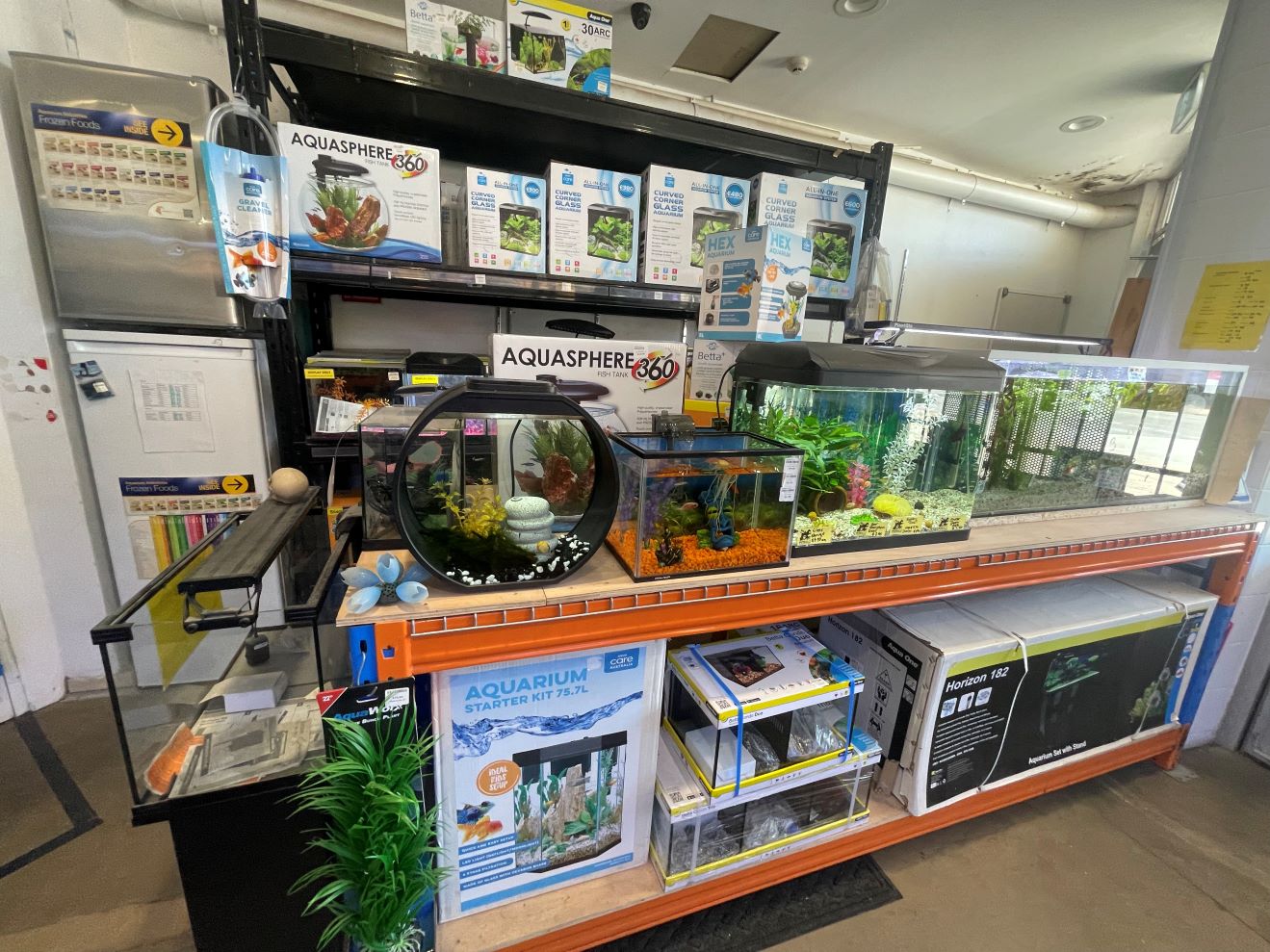
Choosing a tropical fish aquarium
Choosing the right aquarium and products for the tropical aquarium is important, and it depends on what types of tropical fish you want to keep.
Working out the location may help with choice as the area needs access to power points for filter, heater, light and bubbler. This area may limit the size of a tank. Never place an aquarium in a busy thorough fair. Considering what kinds of fish you wish to keep is also important and larger species will need a larger tank. If you have measured out the area you want your tropical fish aquarium to go, come in to see us we will likely have a tank for you.
Those considering a larger size aquarium A foam underlay is important for the base of the tank as it becomes quite heavy when water is added. A slight variation of the base will result in a cracked tank. Click the link the foam booth in Surry Hills Sydney, these guys will cut foam to suit any tropical fish tank size.
Getting tropical fish aquarium ready
Rule number 1 is clean and rinse with every non-living item that enters the tank with tap water only. This includes but not limited to everything that is in our checklist mentioned below.
Once you have rinsed the inside of the tank and all the essentials it’s important to set up the tank before the introduction of fish. Place gravel, filters, bubblers, heaters, plants, ornaments in before adding water. Place clean plastic over the gravel and then fill the tank up with water.
Add water conditioner in when tank is filled with water.
Add biostart . Do not add biostart in until water conditioner has been mixed through as the chlorine from tap water can kill the bacteria in bio start.
It is possible to buy everything in one day and set the tank up and place the fish straight in but only if you start with very small numbers of fish. The best way is to set the tank up and cycle the tank for at least a week or two before adding the fish.
Tropical fish aquarium checklist
Suitable sized tank: Think ahead in terms of fish you may add in future, the maximum growth size of your selected fish, and leaving space for ornaments, hides and plants.
Gravel: Ensure enough gravel to adequately cover the bottom of the tropical fish aquarium, about 3 to 5cm deep, to allow ornaments and plants to be secured. Roughly 1 inch minimum is suitable. Always rinse gravel thoroughly before adding to the aquarium.
Filtration: Many varieties and brands available at Petsville, some tropical fish aquariums come with them already. Ensure you get a filter suitable for your tank size or larger. Filters will come with a recommended litres rating (if rated 1000, 2000 etc., simply divide by 10 to estimate suitable tank size in litres).
Lighting: An important part of any tropical fish aquarium. Lights will make the fish colours pop, add life to the decor and help promote plant and fish health.
Aeration/bubbler: Adding an airline system to your tank will help oxygenate your ecosystem. Oxygenation results in cleaner water and healthier fish. Bubblers can also be used as tropical fish aquarium backdrops or cool features.
Heater and thermometer: Essential for tropical fish aquarium setups, check packaging in store, as it will indicate the tank size suitable for the heater. The thermometer is essential to regulate the heater temperature, if the water is too hot or too cold you can adjust the dial on the heater. Heaters do not come with a thermometer included.
Gravel vacuum: A must have, this reduces cleaning time whilst increasing water quality. It easily suctions debris and waste out of the gravel and into a bucket.
Fish net: Fish nets always come in handy with every tropical fish aquarium. Nets are used to move items around or catch fish for cleaning, etc.
Food: Essential, ask our Petsville team about the good quality options available, from pellets and flakes to frozen feed.
Water conditioner: This product removes and neutralises chlorine and metals from the water supply. Any water change will need water conditioner added to keep your fish alive and healthy. Fish will die in straight tap water, as it will burn their gills and cause them to asphyxiate.
Biostart: Tropical fish aquariums must have beneficial bacteria to function inside the filter media. Bacteria species added by this and similar products are critical parts of the nitrogen cycle mentioned above.
Waste controller: This additive helps convert waste such as food and faeces into beneficial bacteria. This minimises cleaning and increases tank health.
Salt: Improves fish health by increasing gill function, making it easier for fish to breathe. The additional salt also helps fish produce more slime coat, the protective mucous barrier on their body, this slime coat helps fight off disease. Salt also adds electrolytes, as a lack of electrolytes can cause issues in many fish. Never use table salt, as it will kill your fish, only use aquarium salt.
Algae cleaners: Any healthy aquarium is going to have algae growth, and algae grows faster in warm water. These cleaners need to be made of the right material that doesn’t scratch the glass. We have many options including floating magnetic glass cleaners and various scrubbers and cleaners, which will also remove stubborn algae, calcium and lime. We also have suckerfish and snails of different types, these guys do the work for you, though they only remove the soft, fast growing algae. They’re still very cool creatures to keep.
pH test kit: One of the major factors that determines good quality water is pH, which is the measure of acidity and alkalinity. Sydney tap water fluctuates quite a lot between different areas. pH testing has never been easier.

Handling when new fish arrive
Firstly, make sure your aquarium is all set up with the items above, has water filled up, and everything is running. A cycled tank that has been running for at least 2 weeks will have the best success. Check water parameters such as pH, and that the temperature is between 24 to 27 degrees Celsius.
Before releasing the fish, make sure to let the bag sit in the tank for 10 to 15 minutes to acclimate the fish. This will prevent the fish from getting a shock from a quick temperature change. Use a net to scoop the fish out to place in the aquarium. Discard the bag and the water inside it, do not add this water to the aquarium.
Newly arrived fish will be stressed from the transition to a new environment. Do not feed the fish for the first 24 hours.
When you start feeding your fish, the most important rule is not overfeeding. Fish in captivity have more health issues from overfeeding than underfeeding. Tropical fish should be fed enough flakes or pellets to consume within 30 seconds.
Maintaining your tropical aquarium
A large part of keeping a tropical fish aquarium healthy is regular maintenance, and knowing what maintenance you need to do will make your aquarium journey a lot more enjoyable and the inhabitants happy. Unlike large bodies of water in nature, your fish tank is a finite area, and if not maintained, filters will become clogged and stop working, while fish will continue to produce waste and decay, and the water parameters will worsen and become unlivable. The only way an aquarium system will remain healthy is with regular maintenance.
Regular maintenance doesn’t mean a lot of maintenance, as too much cleaning can kill off the beneficial bacteria and eventually kill the inhabitants. So you need the right balance of maintenance. Cleaning needs to be done in stages, as too much cleaning can kill off the beneficial bacteria and cause an increase in ammonia.
Every 24 hours, do a quick health check, count and eyeball all fish checking their condition. The best time to do this is when they are having their daily feed. If it takes longer than 30 seconds to eat the pellets or flakes, you have fed them too much.
Check that everything is running and operating properly, the filter has good flow, and the bubbler and lights are working. Check the thermometer to make sure temperatures are in the correct range.
Every 2 weeks, check the glass to see if it needs an algae scrub or clean. Gently shake ornaments, plants and fake plants to dislodge any debris. After this has been done you will need to do a water change with the gravel vacuum. This process will clean and remove the waste from the gravel and also help get rid of the nitrates from the water. A 30% water change should be sufficient, and make sure you place water conditioner in the tank just before replacing the tap water. This process usually takes 10 minutes.
Once a month, before doing water changes, test the water’s pH, ammonia, nitrate and nitrite levels.
If you have algae growth issues, you may want to test the phosphate levels, as algae loves high phosphate levels.
During your every 2-week clean, use the discarded water for filter maintenance. Use this water to rinse the filter media and cartridges. This water will keep your beneficial bacteria alive during the cleaning process. Replace old and clogged filter media, avoiding replacing it all at the same time, and keep part of the media to retain as much of the beneficial bacteria colony as possible. In about 4 weeks, replace the remaining filter media.
For live plants, inspect and remove any dead leaves, and trim back if they are overcrowding the tank.
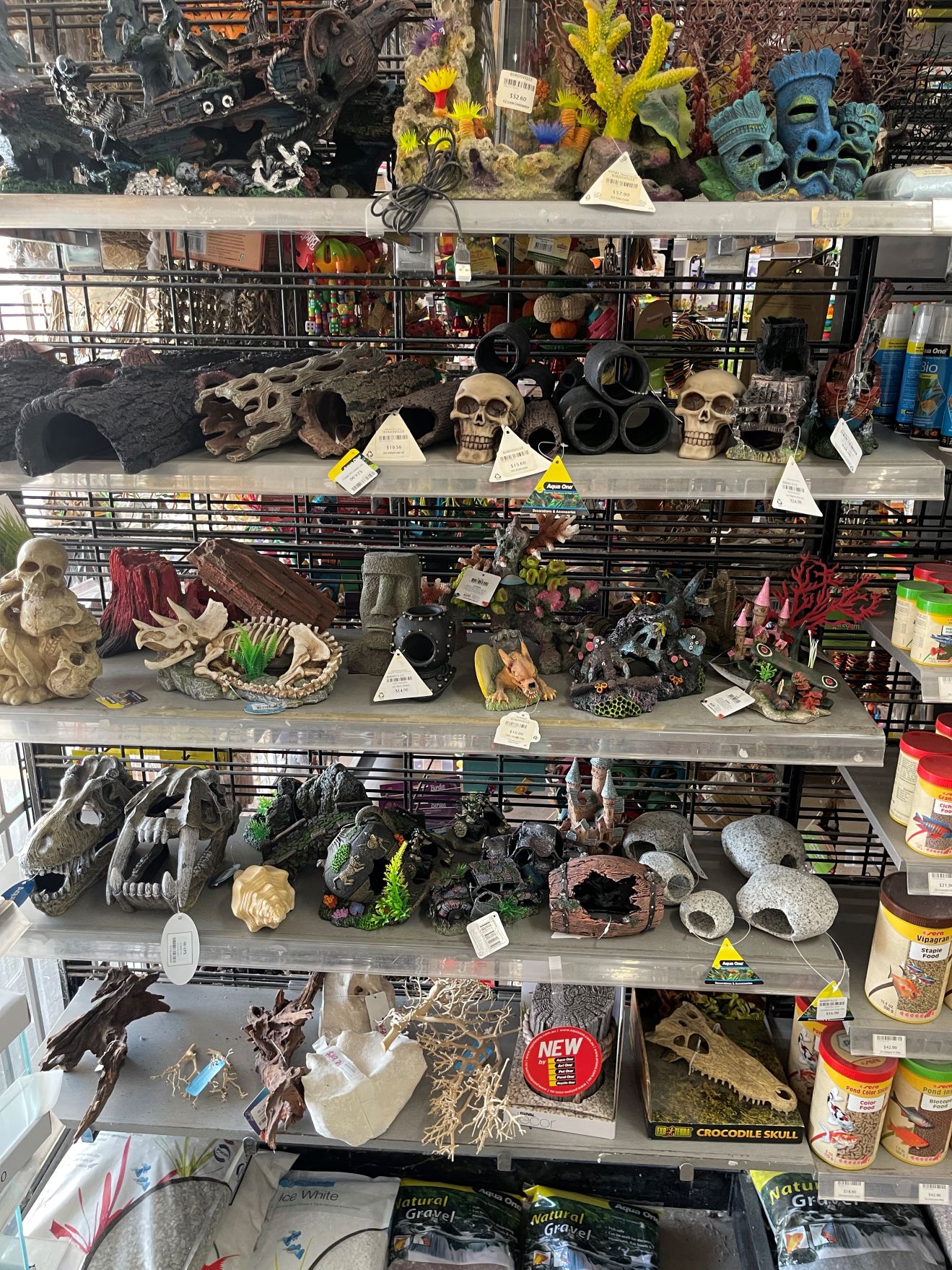
Tropical Aquarium decorations at petsville
Driftwood can come already submerged or dry. The already-submerged driftwood, which is our most popular, often comes with a slow-growing plant called anubias attached, which adds a wow factor to your aquarium. Dry driftwood needs to be soaked for at least 2 weeks until it releases its tannins and sinks, before it is added to the tropical fish aquarium.
For quality tropical freshwater fish and supplies, look no further than Petsville. We have a unique and unusually deep aquarium setup with very large sumps, in fact bigger than most full aquariums, to keep our tropical fish in tip top condition. Our team strives to supply the healthiest stocked fish as humanely as possible. The majority of freshwater fish we stock are community fish, so they will do very well in community tanks and aquariums.
We stock a variety of freshwater tropical fish, snails, crustaceans and plants, including but not limited to a wide range of tetras, suckerfish, loaches, live bearers such as platies, mollies and guppies, angelfish, silver sharks, red tail sharks, gouramis, barbs, catfish, cichlids, fighting fish and more.


