
Sydney Pet Bird Rescue is a genuine, no-kill shelter, run from Birdsville’s own premises rather than a Facebook page or online listing. We will never euthanise a healthy bird; only a bird with health issues would ever be euthanised. Aside from this, we find a loving home for every bird that comes through our doors, and re-homing your bird with us is completely free for you as the owner. You’ll find us at 684 Botany Road, Alexandria NSW 2015, in the bright yellow building with parking out the front.
We’re a proper premises, not attached to bird markets or sales. Our animal attendants come from animal welfare backgrounds, including vet assistants, the RSPCA, zoos and other parts of the pet industry, along with juniors working toward their own goals in animal care. Our team always has the animals’ best interests at heart, and that’s exactly why we hire them.
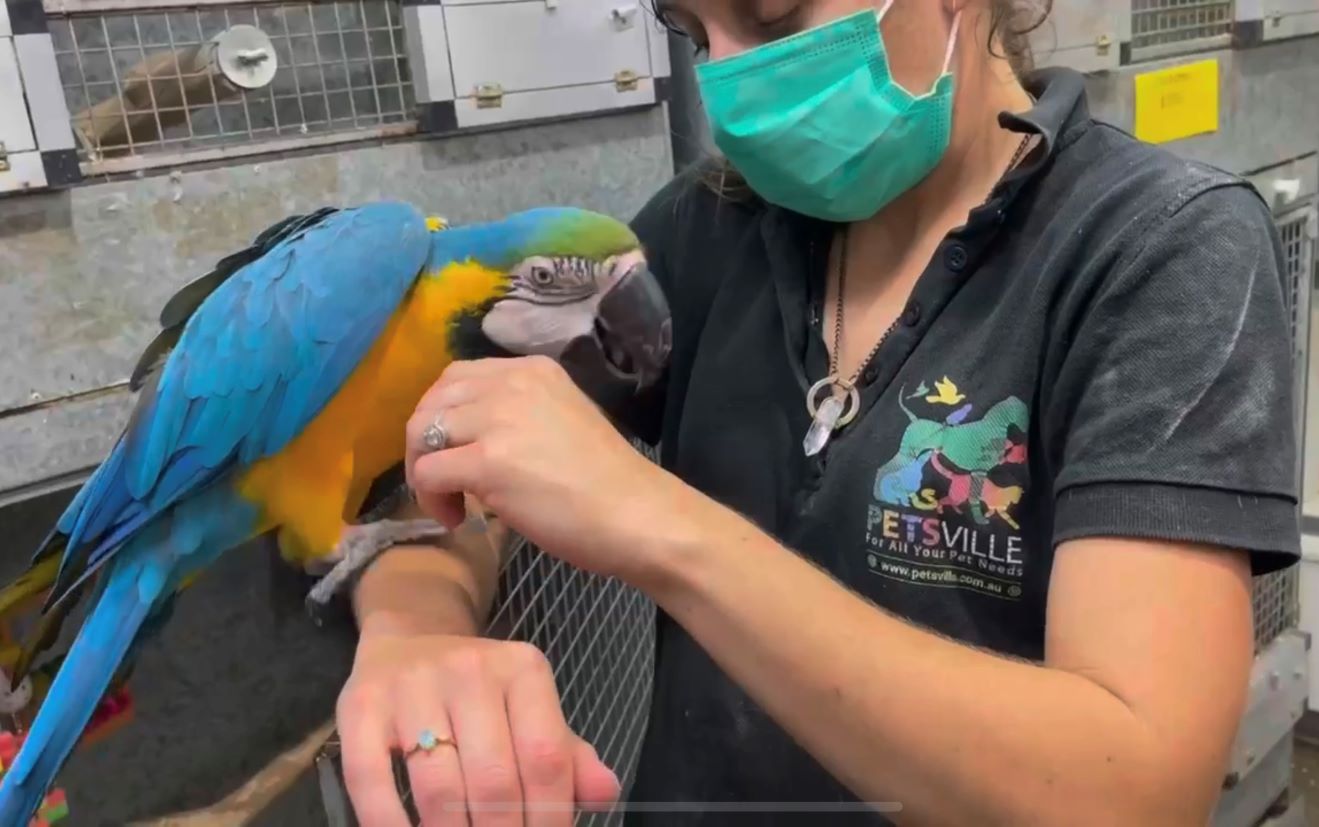
Anyone can start a Facebook page or website, and it can be confusing knowing which re-homing pages are legitimate. Many pages collecting “lost” or “re-homing” birds aren’t registered businesses at all, and some are connected to online sales and market trading. We also run our own Facebook page, which we use to help re-home animals that are a little harder to place. You can also follow us on Instagram to see more of our rescues and re-homing updates.
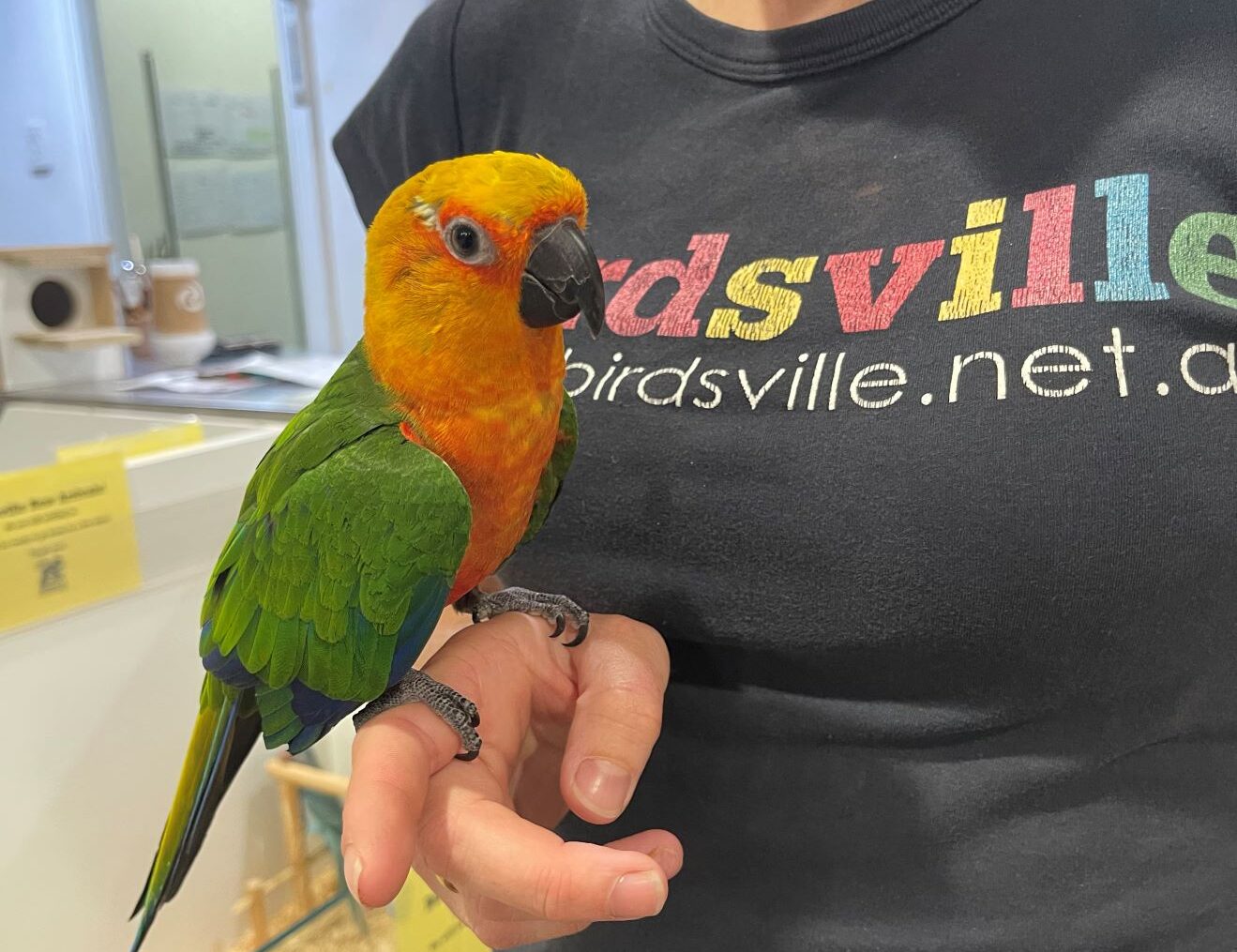
What Birds Can We Re-Home?
We’ve never turned away a healthy pet bird needing a home, as long as we have the space. We’ve found homes for everything from budgies, finches and conures to cockatoos, and we’ve even re-homed several macaws.
Plucked or feather-loss birds need a recent vet report with a clean bill of health before we can accept them. This is a relatively new RSPCA requirement. For 40 years we re-homed plucked parrots without any issues, since plucking is usually a behavioural issue rather than a disease and isn’t contagious to our other birds, but the RSPCA now requires a vet check for every plucked bird regardless. This does add an extra cost to the process, but it’s a rule we need to follow. A plucked bird can often be told apart from a genuinely sick one a few ways: plucked feathers are missing only where the bird can reach with its beak, cockatoos will still have a healthy chalky beak with a dust covering (birds with beak and feather disease or French moult won’t), and a bird can sometimes be seen removing its own feathers. Dirty feathering is more likely to indicate illness, and we won’t accept a bird showing signs of illness without a vet report clearing them.
We can’t re-home wild birds, licensed birds without the correct licence, or sick birds, as we’re not Sydney Wildlife and we’re not a vet. If you’ve found a wild or injured bird, Sydney Wildlife can help. We keep a list of recommended avian vets in Sydney on our site if your bird needs veterinary care first.
Owning a bird is a rewarding experience, but it comes with real responsibility. Some owners find themselves needing to give up their bird for all kinds of reasons, and while it should always be a last resort, we understand that sometimes it’s the right decision. It can be a distressing time for both you and your bird, so we make sure it’s handled the right way. We’ve helped thousands of unwanted birds find a forever home, and given just as many owners peace of mind in making that difficult decision.
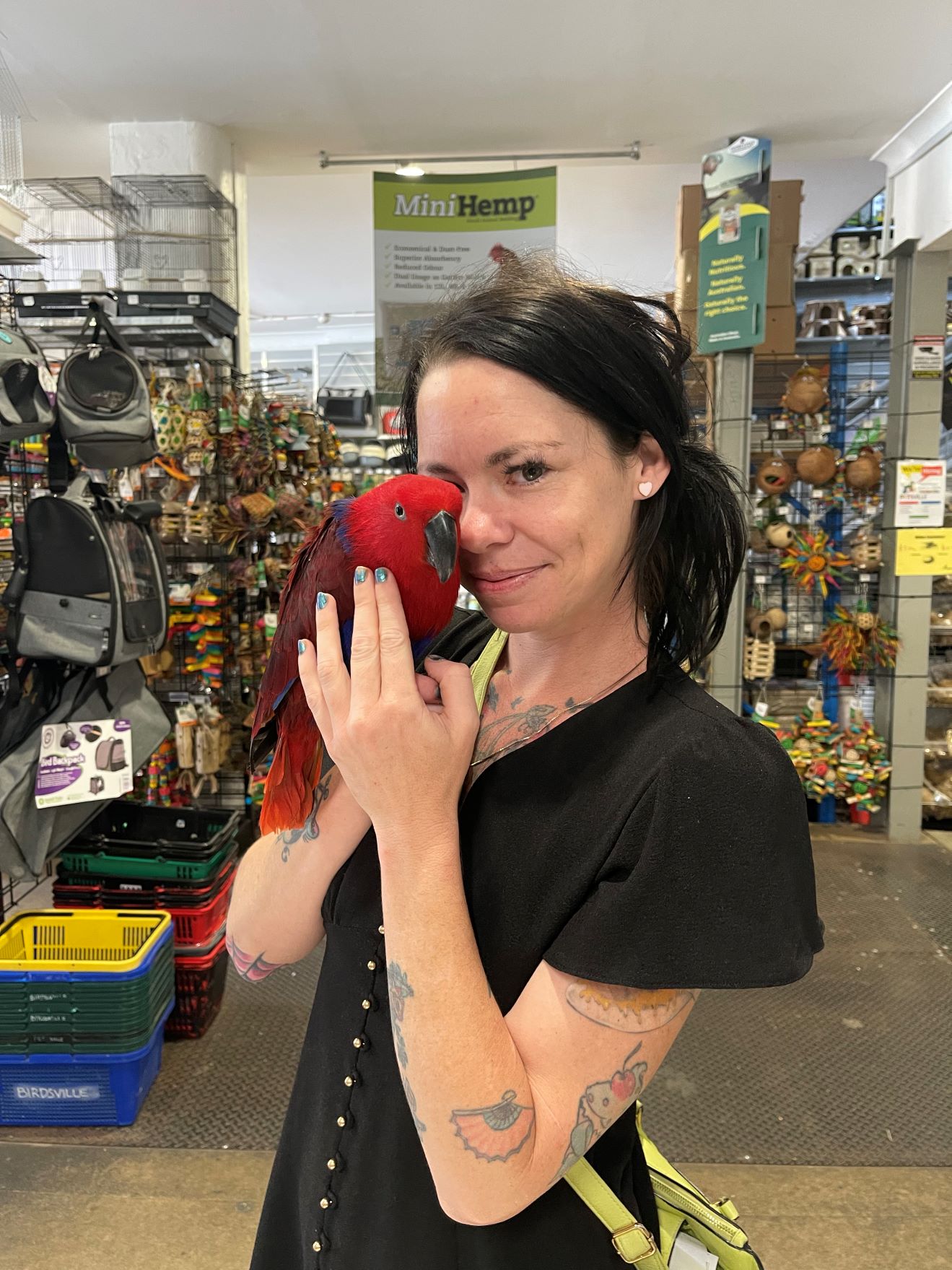
How Does Bird Re-Homing Work at Birdsville?
Re-homing your bird with Birdsville is simple: bring your bird in during our opening hours, and our team will care for them until the right home is found. Our re-homing hours are Monday to Friday, 9:30am to 4:30pm, Saturday 10am to 4pm, and Sunday 10am to 3pm. This gives your bird time to settle into its new surroundings before the lights go off for the night. Lights come back on around 5am when our first cleaner arrives.
You’re welcome to bring your bird in any day of the week, but we recommend emailing or calling Birdsville beforehand, as we regularly have birds coming in from vets and the public across Sydney. Please bring your bird in a cardboard box or a suitable carrier for their species, unless they’re more comfortable riding on your shoulder. If you’re unsure what to do with their enclosure, accessories or food, feel free to bring these in too, as they’re often reused for our rescues.
Your bird will first be placed into an enclosure with their toys for a period of time, depending on their condition, to make sure they’re in good physical and mental condition before re-homing. They’ll be fed a high-quality diet of pellets, quality Avigrain seed, and fresh fruit and vegetables, and will be wormed and mite-sprayed unless you let us know this has recently been done. Once they’ve settled in, sociable birds will come out onto the play stands to spend time with our team and customers. In the rare case a bird has a particularly hard time adjusting, we’ll work with them one on one to make the transition as calm as possible.
It’s optional but recommended to bring a sheet of information about your bird when re-homing them, such as their name, age, likes and dislikes, and suitability with kids. New owners appreciate knowing this history. If your bird has favourite toys or treats they’re attached to, bringing these in too can help them settle.
If you’re considering re-homing your bird and have questions, feel free to email, call or pop in for a chat with the team. As an independent business rather than a chain, we’re often very busy, so it can take us a little while to reply to emails, but we always will.

How Did Birdsville’s Bird Rescue Start?
We never planned to re-home birds and small animals on this scale. It happened almost by accident. We started out as a bird shop specialising in all things avian, and as our team’s knowledge and interests grew, we gradually diversified into bird boarding and re-homing. Our goal was to become Australia’s leading avian and animal specialist, and along the way we noticed more and more people whose circumstances had changed, needing to find new homes for their older pets. That was a turning point: most places only sold baby animals, but we recognised the need for older birds to find the right home with proper care. Years later, it all snowballed from there, and here we are today.
Since 1983, Birdsville has found loving homes for many thousands of re-homed birds, and we continue to do so.

Frequently Asked Questions
Is Birdsville a no-kill bird shelter?
Yes. Birdsville will never euthanise a healthy bird. Only a bird with genuine health issues would ever be euthanised, and this decision is never made lightly. Every other bird that comes through our doors is cared for until we find them a loving, permanent home.
What types of birds does Birdsville re-home?
We re-home a wide range of pet birds, from budgies, finches and conures through to cockatoos, and we’ve even successfully re-homed several macaws. As long as we have space and the bird is healthy, we’ve never turned away a pet bird needing a new home.
How long does it take to find a re-homed bird a loving home?
On average around 7 days, though some birds find a home in a day and others can take a month or so. Sulphur-crested cockatoos and large parrots are usually the most difficult, since they have very specific requirements. It’s a great environment for them to socialise in while we find the right home.
H3: What does someone need to re-home one of our birds?
The person needs to understand what the bird needs, including the correct enclosure size for that species. Birdsville has the right to refuse anyone who doesn’t meet the requirements for the animal they’re hoping to take home.
Can I re-home a bird that’s plucking its feathers?
Yes, but the RSPCA now requires a recent vet report confirming a clean bill of health before we can accept a plucked bird, even though plucking is usually behavioural rather than a disease. This is a relatively new requirement; we re-homed plucked birds without this step for 40 years.
What should I do if I find an injured or wild bird?
Birdsville can’t take in wild or injured birds, as we’re not Sydney Wildlife and we’re not a vet. Contact Sydney Wildlife directly for wild or injured birds, and see our list of recommended avian vets in Sydney if your own pet bird needs veterinary care.
Where are birds kept while they’re waiting to find a home?
This depends on the species. We use holding cages for canaries and finches, and enclosures for parrots and cockatoos. Hand-raised parrots take turns out on the play gym, and some birds are kept in our open enclosures.
Can I bring in my bird’s cage, toys and accessories when I re-home them?
Yes, as long as they’re rust-free. Please don’t bring in anything with rust. Toys your bird is already familiar with can help them settle into their new environment more easily.

Lost a Bird in Sydney?
If you’ve found a lost bird, or lost one of your own, we recommend visiting Parrot Alert. Our team has used this service to help reunite lost birds and can’t recommend it highly enough. Be cautious of anyone claiming a lost bird online, as some people try to claim birds that aren’t theirs. Ask for proof such as photos and leg ring details.
We don’t take in found birds for re-homing unless you’ve actively tried to find the owner for at least 4 weeks, including checking with local veterinary practices. If a found bird is later proven to belong to someone, and has been cared for by our team in the meantime, the owner will need to cover our standard boarding rates for that time.


