Hand raising a baby bird is a wonderful experience for bird lovers. Whatever the reason, love or necessity, taking on a baby bird is a real responsibility, but it’s also incredibly rewarding. Perhaps you’ve found a dove on the footpath, a finch, maybe a Gouldian Finch, or budgie that’s fallen from its nest, or an orphaned bird. Or maybe you’ve found a bird abandoned by its parents in your home aviary, or you simply want to bond more closely with a pet bird.
A bird that hasn’t been hand raised can still be tamed to a degree with plenty of handling and training, but it will never bond with you quite the same way a hand raised bird will. Hand raising a baby bird is a genuinely special experience. The young bird will see you as its own kind, almost as a parent.
On This Page
Hand Raising Baby Birds: Risks and Problems, What Age to Start Hand Raising Baby Birds?, What’s the Right Environment for Hand Raising Baby Birds?, What Should You Feed Baby Birds?, Rule Number One: Always Use a Formula With Probiotics, Feeding Chicks, Guide for Feeding Intervals, What Are the Signs of Illness in a Hand-Raised Baby Bird?, Commercially Available Hand Rearing Formulas, Hand Raising Baby Birds: Frequently Asked Questions
Hand Raising Baby Birds: Risks and Problems
The biggest risk is that your bird could die. If a baby bird isn’t hand raised correctly, or has a pre-existing or genetic condition, the chances of it surviving drop significantly, so hand raising genuinely isn’t for everyone.
We regularly see people arrive at our store who’ve purchased a baby bird online for a cheap price, only for the bird to be close to death. Sadly, this is usually because the new owner wasn’t shown how to hand raise the bird properly, and the seller passed a young, vulnerable bird on to someone without that experience. It’s one of the ways pets pay the price for online livestock sales.
Another common issue is homemade formulas. Many breeders feed baby birds mixes that cause rickets, a vitamin and mineral deficiency, in young birds.
Do your research before buying an unweaned baby bird. For what it’s worth, we don’t sell birds at Birdsville unless they’re fully weaned.
What Age to Start Hand Raising Baby Birds?
There are two approaches to hand raising baby birds. The first is right from the egg. The second is rearing them from around 2 to 3 weeks of age. At Birdsville, we hand raise our own birds from 2 to 3 weeks old, for a few good reasons.
A chick incubated and raised by humans from the moment of hatching misses out on the good bacteria it would normally get from its parents, which affects its ability to fight off disease and bacteria later in life. We’ve also found that birds hand raised right from the egg don’t tend to reach the same maximum size as birds that had the chance to pick up that bacteria from their parents first.
We recommend hand raising from around 2 to 3 weeks of age, especially if you’re a beginner. One thing to keep in mind: if you take on a bird too late, once it’s older, it can still be quite wild and genuinely difficult to hand raise, which is part of why there’s a specific age window that works best.
What’s the Right Environment for Hand Raising Baby Birds?
Don’t place an unfledged baby bird into a bird cage. This happens more often than you’d think because of how many birds are sold online these days to people with no experience.
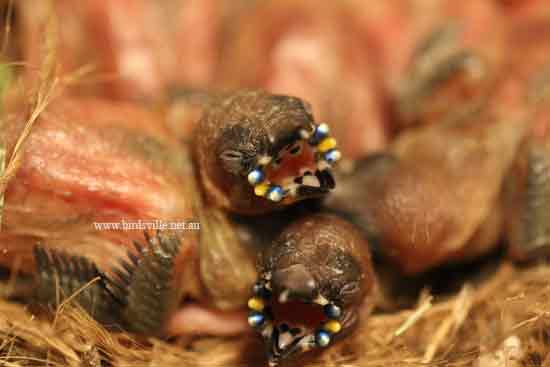
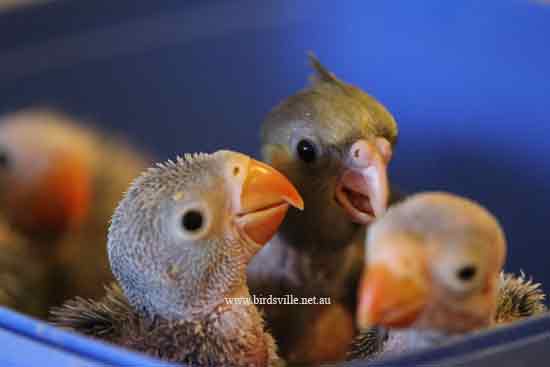
People often see our parrots walking freely around Birdsville, then spot a container with baby parrots huddled together, and ask if it’s okay, isn’t it cruel keeping them in a box while the others walk around? The truth is, every parrot in the wild starts life in a cramped, musty log hollow, and that’s exactly how they like it. Unlike chickens and ducklings, which hatch with their eyes open and can walk almost immediately, parrots, doves and finches are all altricial, meaning they hatch with their eyes closed, little or no down, and take a long time to develop. These birds don’t usually leave the nest until they’re almost the same size as their parents, so it’s completely natural for them to huddle in a corner, waiting until they’re ready to venture out of the nest box, or for a hand raised bird, out of the brooder or container they’re being kept in.
Choosing the Right Substrate
A good friend of mine John turner from another bird shop in SA, this was the oldest bird shop in Australia until it closed down in early 2026 who’d been hand raising birds longer than I’d been alive, taught me one of the most valuable lessons I’ve learned in hand raising: use chick starter as substrate. It surprised me at first, but it makes perfect sense. I’d previously used towels, which caused problems with the birds’ legs and feet, a real hazard, and tissues had a similar issue, since a young bird’s splayed legs are very difficult to correct once it happens. Sawdust seems like an answer but carries its own risk, since young birds can potentially eat the shavings and get sick. To this day, the only substrate I’d recommend for the bottom of the box is chick starter or turkey crumble. If the chicks eat it, it doesn’t harm them. It actually helps with the weaning process and gives them a little extra protein. Dust extracted saw shavings still remains the most popular since its the cheapest.
Brooders and Containers
Brooders are ideal if you’re planning on hand raising a number of parrots, but they’re fairly expensive and not necessary if you’re only raising one baby or a single clutch. Any plastic container works, or even a cardboard box. Just avoid anything glass, since it can get too cold.
Temperature
Keep an ambient temperature of 30 to 35 degrees Celsius for day-old chicks, reducing it by 1 to 2 degrees a day as they grow. Heat coils, heat pads or a heat lamp all work well, and I’ve personally had great success using an ordinary light globe too. Just be careful not to overheat the babies or leave anything that could start a fire. If you see the babies panting, reduce the heat immediately.
What Should You Feed Baby Birds?
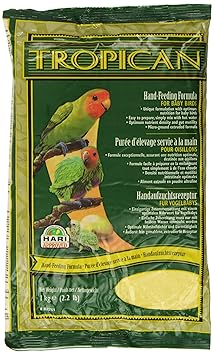
There are many different hand rearing formulas commercially available, each suited to slightly different bird groups. Vetafarm Hand Rearing Formula (https://birdsville.net.au/hand-raising-baby-birds/vetafarm-hand-rearing-formula/) is suitable for all parrots and doves, and we stock the full Vetafarm range in-store. We also stock Passwell Hand Rearing Food (https://birdsville.net.au/hand-raising-baby-birds/passwell-hand-rearing-food/), another reliable option we carry across a wide range of species.
Formulas for Granivores
For seed-eating species like Galahs, White Cockatoos, Major Mitchell’s Cockatoos, Budgies, Doves, Finches (including Gouldian Finches) and Cockatiels, Passwell Hand Rearing Formula, Wombaroo Granivore Rearing Mix (https://birdsville.net.au/hand-raising-baby-birds/wombaroo-grainivore-rearing-mix/) and Vetafarm Hand Rearing Formula all work well. Finches, Gouldians especially, take very small amounts per feed given how tiny their crop is, so a fine-tipped feeding tool and extra care with portion size matters more with finches than with larger granivores.
There are many different lorikeet formula brands too, and Birdsville stocks a range of quality options at wholesale prices. Be wary of supermarket or “homemade” mixes, since a low-quality formula is one of the most common causes of rickets in young birds, and it’s easily avoided by using a proper commercial formula. If you’re ever unsure what you’re buying, ask your local bird and small animal specialist store.
Formulas for Fruit-Eating Parrots
For fruit-eating parrots such as Eclectus, Amazons, Green Cheek Conures, Caiques and Macaws, we’ve had great success using Passwell Hand Rearing Formula, Wombaroo Granivore, and the full Vetafarm range, including Vetafarm Hand Rearing Formula and Vetafarm Neocare. Macaws have a much larger crop capacity than smaller parrots, so they take proportionally more formula per feed, though they still follow the same age-based feeding intervals as other species (see the feeding interval guide below).
Feeding Lorikeets
For hand raising lorikeets, we recommend mixing any of the formulas above 50/50 with a good quality lorikeet food, such as Shep’s Wet (https://birdsville.net.au/lorikeet-food/sheps-lorikeet-food/), Wombaroo Lorikeet (https://birdsville.net.au/lorikeet-food/wombaroo-lorikeet-food-3/), Passwell Lorikeet Formula (https://birdsville.net.au/lorikeet-food/passwell-lorikeet-food/passwell-complete-lorikeet/), Vetafarm Forest Fusion (https://birdsville.net.au/vetafarm-forest-fusion-lorikeet/) or Avione Lorikeet Food (https://birdsville.net.au/lorikeet-food/avione-lorikeet-food/). For more on caring for young lorikeets, see our Lorikeet Care guide: https://birdsville.net.au/pet-bird-advice-and-training/care-sheets/lorikeet-lori-care/
Rule Number One: Always Use a Formula With Probiotics
When feeding a hand rearing formula, make sure it contains probiotics. Hand rearing formula passes through the crop faster than food a baby bird would naturally get from its parents, so the bird can lose some of the good bacteria along the way, and probiotics help keep your bird strong from the inside out. Many formulas already include a probiotic supplement, or you can buy one separately.
Some people use homemade diets to hand raise baby birds. If you go this route, these should be critically assessed for nutritional value and suitability, since getting it wrong can affect a young bird’s development, long-term health and immune system. It’s not uncommon for us to see baby birds with metabolic bone disease or low immune function, which can often be traced back to a nutrient deficiency in the hand rearing formula used.
Feeding Chicks
- Always feed warm formula, but be careful not to burn the baby bird’s crop, as this can kill it. Don’t microwave the formula, since this can create hot pockets.
- Only mix enough food for one feed at a time.
- Never feed a bird that still has food in its crop (the sac under the bird’s neck). This can cause the old food to curdle and will likely kill the baby bird, so wait until the crop is completely empty first.
- Don’t fill the crop until it’s bulging and completely full. This can overstretch it.
- Always mix formula according to the manufacturer’s directions.
- Hygiene is essential. Always disinfect feeding instruments and dishes between feeds.
- Feed baby birds using a syringe, crop needle, or a specialised spoon.
- Always be gentle if you’re using a crop needle.
Only feed a bird with a syringe or spoon when it’s actively begging, which looks like the bird bobbing its head up and down.
Guide for Feeding Intervals
The older a bird gets, the longer it can go between feeds. This is a rough guide for most parrots, though it can vary by species.
- 1 to 7 days old: hourly feeds, 24 hours a day.
- 7 to 14 days old: every 2 hours, with around a 5-hour break overnight.
- 14 to 21 days old: every 3 to 4 hours, with a 6-hour break overnight.
- 21 to 28 days old: every 4 to 5 hours, with a 7-hour break overnight.
- 28 to 42 days old: every 5 to 6 hours.
- By week 8: every 8 hours.
- Once your bird starts eating fruit, seed and pellets on its own: just feed morning and night. Stop hand feeding once your bird no longer wants the formula, since some birds take longer to wean than others.
What Are the Signs of Illness in a Hand-Raised Baby Bird?
If you’re inexperienced with birds, always weigh and examine your bird regularly. Baby and young birds are especially susceptible to bacterial infections.
Signs of illness include, but aren’t limited to:
- Lethargy, or reluctance to feed.
- Not gaining weight, or losing weight.
- Skin changing to red or white.
- Skin looking more wrinkly than normal, a sign of dehydration.
- Vomiting.
- Changes in droppings.
- Crop emptying slowly.
Hand raising baby birds takes real dedication. These are delicate animals that depend entirely on you getting it right.
Commercially Available Hand Rearing Formulas
- Passwell Hand Rearing Food: https://birdsville.net.au/hand-raising-baby-birds/passwell-hand-rearing-food/
- Wombaroo Granivore Rearing Mix: https://birdsville.net.au/hand-raising-baby-birds/wombaroo-grainivore-rearing-mix/
- Vetafarm Neocare
- Vetafarm Hand Rearing Formula: https://birdsville.net.au/hand-raising-baby-birds/vetafarm-hand-rearing-formula/
Hand Raising Baby Birds: Frequently Asked Questions
What age should you start hand raising a baby bird?
We recommend hand raising baby birds from around 2 to 3 weeks of age, especially if you’re a beginner. This age lets the chick receive beneficial bacteria from its parents first, which supports its immune system and long-term growth. Hand raising directly from the egg skips this benefit entirely, and older birds can be too wild to raise easily.
How often do you need to feed a baby bird?
It depends entirely on age. Newly hatched chicks need hourly feeds around the clock, dropping to every 2 hours by 1 to 2 weeks old, then gradually stretching out as they grow. By around 8 weeks, most birds only need feeding every 8 hours, and feeding stops altogether once they’re fully weaned onto solid food.
What’s the safest substrate to use when hand raising a baby bird?
Chick starter or turkey crumble is the safest option. Towels and tissues can cause a baby bird’s legs to splay, which is difficult to correct once it happens, and sawdust can be eaten and make a chick sick. Chick starter is safe even if eaten, and it adds a little extra protein while helping with weaning.
Can homemade formula be used to hand raise a baby bird?
We don’t recommend it. Homemade and low-quality formulas are one of the most common causes of rickets, a serious vitamin and mineral deficiency, in young birds. If you do use a homemade diet, it needs to be critically assessed for proper nutrition first. A quality commercial formula with added probiotics is a far safer choice.
What are the signs a hand-raised baby bird is unwell?
Watch for lethargy or reluctance to feed, weight loss or a failure to gain weight, changes to skin colour, wrinkly skin (a sign of dehydration), vomiting, changes in droppings, or a crop that’s emptying slowly. If you notice any of these signs, or you’re inexperienced with birds generally, weigh and examine your bird regularly and seek advice early.
Hand raising a baby bird isn’t something you need to figure out alone. Drop into Birdsville and our team can help you choose the right formula, substrate, and feeding setup before you get started.


page under construction, add what to use for finches to macaws