
Written by the Birdsville team. Last updated October 2026.
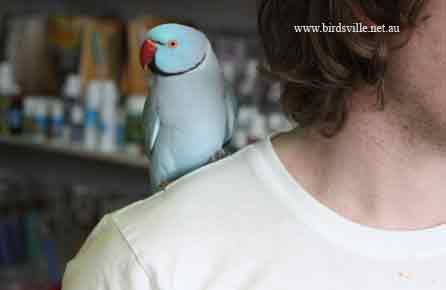
Indian ringnecks are clever, playful parrots with long elegant tails and a huge range of colours, from classic green to blue, yellow, violet and grey. This guide explains how to care for an Indian ringneck at home, covering diet, cage size, toys, taming and health. It comes from the team at Birdsville, a small animal specialist at 684 Botany Road, Alexandria NSW 2015, trading since 1985 and servicing the Eastern Suburbs and Inner South Sydney.
An Indian ringneck needs a roomy cage that suits its long tail, a mix of seed, pellets and fresh food, plenty of toys to chew and daily handling. Young ringnecks often go through a nippy stage, and with patience and regular handling they grow into sweet, affectionate pets that can learn to talk.
Indian Ringneck Key Takeaways
- Indian ringnecks do best on a mix of quality small parrot seed, pellets and fresh fruit and vegetables.
- Give calcium through a calcium perch or a supplement in the water. We don’t recommend cuttlebone for Asiatic parrots like the ringneck.
- Most young ringnecks become nippy for a while after weaning. Keep handling them every day, because a ringneck that isn’t handled soon turns wild.
- Only mature males grow the black and pink neck ring, usually somewhere between 18 months and 3 years old.
- Ringnecks are highly intelligent, so toys and enrichment are essential, not optional.
- Birdsville has hand raised Indian ringnecks once a year, because they breed only once a year.
Indian Ringneck Quick Facts
- Scientific name: Psittacula krameri manillensis
- Other names: Indian ring-necked parakeet, rose-ringed parakeet, IRN
- Native range: India and nearby parts of southern Asia
- Adult size: around 40cm long, including the tail
- Adult weight: around 115 to 140g
- Lifespan: commonly 20 to 30 years
- Diet type: seed, pellets, fruit and vegetables
- Minimum cage size: 90cm long, 60cm wide and 90cm high
- Noise level: moderate, with loud calls at times
- Talking ability: good, with some birds becoming excellent talkers
- Experience level: beginner to intermediate, with patience through the nippy stage
On This Page
- Indian Ringneck Key Takeaways
- Are Indian Ringnecks Available at Birdsville?
- Do Indian Ringnecks Make Good Pets?
- Essential Supplies
- What Size Cage Does an Indian Ringneck Need?
- Toys and Enrichment
- What Do Indian Ringnecks Eat?
- Providing Water
- Calcium and Vitamins
- How Do You Tame an Indian Ringneck?
- Common Health Problems
- Parasite Control
- Health, Hygiene and Safety
- What Is Toxic to Indian Ringnecks?
- How Can You Tell if an Indian Ringneck Is Male or Female?
- Record Keeping
- Holiday Care and Boarding
- Transportation
- Introducing a New Ringneck to Other Birds
- Frequently Asked Questions
- Recommended Avian Vets
Are Indian Ringnecks Available at Birdsville?
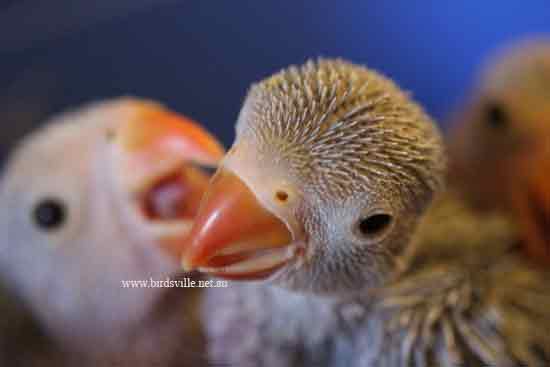
Hand raised Indian ringnecks are only available at one time of year, because ringnecks breed just once a year. In Australia they nest through late winter and early spring, so our hand raised babies usually arrive later in spring. If you’re looking for an Indian ringneck for sale in Sydney, follow us on Facebook (https://www.facebook.com/BirdsvilleRosebery/), Instagram (https://www.instagram.com/petsvillesydney/) and TikTok (https://www.tiktok.com/@birdsvillepets) to see when the new season’s babies come in, or call the store to ask.
Do Indian Ringnecks Make Good Pets?
Yes. With the right training, Indian ringnecks make wonderful pets. A ringneck that’s handled regularly becomes a sweet bird with a gentle, pleasant nature, and many learn to talk with surprisingly clear voices.
Plenty of people are put off by young ringnecks, because they often turn nippy after weaning. This is hormonal and it’s a stage, not the bird’s true personality. With patience, good training and steady care, your ringneck will grow out of it and become a fantastic hand raised companion. Giving up on your bird during this stage is the worst thing you can do.
Ringnecks are also very intelligent, so they need toys, puzzles and daily attention to stay happy. For advice that applies to every parrot, see our How to Care for Parrots guide (https://birdsville.net.au/pet-care-guides/how-to-care-for-parrots/).
Where Do Indian Ringnecks Come From?
In the wild, Indian ringnecks live in semi-desert, open scrub, bushland and evergreen forest across India and southern Asia. They’ve adapted well to people too, and are often seen in gardens, orchards, towns and cities, where fruit trees and locals feeding them keep them well fed.
That adaptability has made ringnecks an introduced pest in several countries, and they have the potential to become one in Australia. Never release a ringneck, and make sure your cage or aviary is escape-proof. Responsible owners make a real difference here.
Essential Supplies for Indian Ringnecks
Housing and Enclosure
- A large cage or aviary with room for the long tail
- Escape-proof clips for every door
- Natural branch perches in different thicknesses (https://petsville.com.au/collections/perches)
- A play stand for time out of the cage (https://birdsville.net.au/bird-play-stands/)
Water and Feeding
- Three food bowls for seed, pellets and fresh food, plus a water bowl (https://petsville.com.au/collections/bird-feeding-accessories)
- Basic Small Parrot Mix (https://petsville.com.au/products/avigrain-seed-small-parrot-mix-2kg)
- Birdsville Blends Tropical Small Parrot (https://petsville.com.au/products/birdsville-blends-tropical-small-parrot-500g)
- Quality pellets, such as Vetafarm Nutriblend Small (https://petsville.com.au/products/vetafarm-nutriblend-pellets-sml-350g)
- Fresh fruit and vegetables every day
Supplements
- Vetafarm Calcivet (https://petsville.com.au/products/vetafarm-calcivet-50ml) for calcium
- A calcium perch (https://petsville.com.au/products/avian-care-trimming-calcium-perch-140mm-small)
- Vetafarm Multivet (https://petsville.com.au/products/vetafarm-multivet-50ml) for vitamins
- Vetafarm Soluvite D (https://petsville.com.au/products/vetafarm-soluvite-d-25g) for birds kept indoors
Enrichment and Toys
- Chewable wood and leather toys (https://petsville.com.au/collections/hanging-bird-toys)
- Foraging and puzzle toys (https://petsville.com.au/collections/foot-toys)
- Swings and ladders (https://petsville.com.au/collections/swings-ladders)
- A shallow bird bath
Hygiene and Cleaning
- A bird-safe disinfectant, such as Vetafarm Avicare (https://petsville.com.au/products/vetafarm-avicare-rtu-500ml)
- Vetafarm Aviclens (https://petsville.com.au/products/vetafarm-aviclens-water-cleanser-100ml) for sprouting seed
Health and First Aid
- A bird wormer, such as Avitrol Plus Bird Worm Syrup (https://petsville.com.au/products/fidos-avitrol-plus-bird-worm-syrup-25ml)
- A mite and lice spray, such as Avitrol Mite and Lice Spray (https://petsville.com.au/products/fidos-avitrol-bird-mite-and-lice-spray-125ml)
- Vetafarm Spark Liquid (https://petsville.com.au/products/vetafarm-spark-liquid-50ml) for the move home and any stressful time
- A digital kitchen scale for weekly weigh-ins
Transport
- A secure, well-ventilated carrier, such as the Deluxe Parrot Carrier (https://petsville.com.au/products/bono-fido-deluxe-parrot-carrier)
What You May Consider
- A bird harness for supervised outdoor time (https://petsville.com.au/products/avi-one-bird-harness-lead-small)
- Birdsville Blends Nut Magic (https://petsville.com.au/products/birdsville-blends-nut-magic-400g) as a training reward
You’ll find every product on this page, and much more, in-store at Birdsville, where our team can help you put together the right setup. You can also order online from Petsville (https://petsville.com.au/), with delivery Australia-wide.
What Size Cage Does an Indian Ringneck Need?
An Indian ringneck needs a cage of at least 90cm long, 60cm wide and 90cm high, with bars about 1.5 to 2cm apart. That long tail needs space too, so look for a cage where your bird can stretch and flap its wings without hitting toys, bowls or the sides.
Your cage should fit at least 3 to 4 toys and 3 food bowls with room to spare. Buy the largest cage you can afford, because a ringneck with space to move stays happier, healthier and tamer. Our team can help you choose one in-store.
Place the cage in a busy family room against a solid wall, away from the kitchen, draughts and air conditioner vents. Use natural branches for perches, since different thicknesses keep the feet strong.
Outdoor Aviaries
If your ringneck lives outside, it must have proper shelter from the weather. Direct sun can overheat and kill a bird, so give plenty of shade, and cover part of the aviary to keep out rain and wind. In a Sydney summer, check the shade moves with the sun through the afternoon.
Toys and Enrichment for Indian Ringnecks
Ringnecks given the wrong setup, or left bored, will in time develop problems like excessive screeching, feather plucking and self-mutilation. These habits are far easier to prevent than to fix.
Our owner is a former zoo keeper, and in zoos every animal must have a variety of enrichment to keep it busy. Pet parrots are no different. A parrot simply can’t thrive with only perches, food and water. Birds given plenty of enrichment are much less likely to develop behaviour problems, and they’re easier to train, less fearful and more relaxed.
Good enrichment for an Indian ringneck includes:
- Chew toys in wood, leather and other safe textures
- Shredding toys, ropes, swings, ladders and bells
- Foraging toys and puzzles that make your bird work for a treat
- Plain cardboard, small boxes and wicker baskets to pull apart
- A tray of wheat grass or bird-safe plants
- Bird baths and fine misting
- Food kabobs, nuts and new foods to explore
You can also collect pinecones (hide treats inside), twigs, bendy branches and bird-safe flowers such as bottlebrush, grevillea, eucalyptus, melaleuca, hibiscus, marigolds, roses, violets and dandelions, leaves and all. Wash anything from outside under running water and disinfect it, and only offer plants you know are non-poisonous. Toys must be non-toxic too.
Rotate toys every week or so. Swapping them around keeps your ringneck interested, as if it’s getting a brand new toy each time. Browse our bird toys online at Petsville (https://petsville.com.au/collections/hanging-bird-toys), or see the bigger range in-store.
What Do Indian Ringnecks Eat?
Indian ringnecks eat a mix of quality small parrot seed, pellets and fresh fruit and vegetables. Feeding a ringneck doesn’t need to be complicated, because they’re good eaters. They will always eat their favourite food first, which is usually the least healthy one. That’s fine. Leave the rest there and they’ll come back to it.
Two Ways to Feed Your Ringneck
We recommend one of these two diets, both with fresh food every day.
- Seed, Blend and pellets: mix Basic Small Parrot Mix (https://petsville.com.au/products/avigrain-seed-small-parrot-mix-2kg) with Birdsville Blends Tropical Small Parrot (https://petsville.com.au/products/birdsville-blends-tropical-small-parrot-500g), and give pellets in a separate bowl. Many customers buy both seeds and combine them, which also makes the Blend go further.
- Pellets and Seed Enhancer: feed pellets as the main food, and sprinkle Birdsville Blends Seed Enhancer (https://petsville.com.au/products/birdsville-blend-mixed-veg-seed-enhancer) over a smaller serve of seed.
For an adult ringneck, aim for about 50% seed, 40% pellets and 10% fresh food.
Why Small Parrot Seed and Birdsville Blends?
Small parrot mix suits ringnecks better than a standard parrot mix, because it has far less sunflower seed. Birdsville Blends Tropical Small Parrot adds real goodness on top, with chillies, pumpkin, sweet potato, beetroot, legumes, dried fruits, dried vegetables and herbs. Pumpkin, sweet potato and chilli are rich in vitamin A, legumes add protein, and dried fruit and herbs bring extra vitamins and antioxidants.
We mix and bag our seed fresh on site, and it sells so quickly it never sits around. Be wary of many chain store and supermarket mixes, which can be stale or bulked out with cheap filler seed that does nothing for your bird’s health. See the full range on our Birdsville Blends page (https://birdsville.net.au/birdsville-blends/).
Pellets
Feed pellets in their own bowl rather than mixed through the seed, as you’ll get better value and less waste. Most ringnecks prefer seed at first, which is normal. For adult birds, don’t top up the seed until both the seed and pellet bowls are empty, so your bird learns to eat both.
Always blow the empty husks off the top of the seed bowl before deciding it’s empty. A bowl can look full when it’s really just husks, and birds have starved this way.
Pellets we’ve trialled with great results include Vetafarm Nutriblend (https://petsville.com.au/products/vetafarm-nutriblend-pellets-sml-350g), Vetafarm Paradise (https://petsville.com.au/products/vetafarm-paradise-pellets-2kg) and Passwell Parrot Pellets (https://petsville.com.au/products/passwell-parrot-pellets-1kg). Browse more in our pellet range (https://petsville.com.au/collections/bird-pellets).
Feeding a Baby Indian Ringneck
Young ringnecks under about 4 months old should get an all-you-can-eat buffet of seed, fruit, vegetables, nuts and pellets. Babies can be fussy and need more encouragement than adults, and a bit of extra fat in the diet isn’t the worry it is for an older bird.
Never rush a baby onto pellets. A baby given only pellets can stop eating and die. Keep seed in front of your young ringneck at all times, with pellets available beside it, and put an extra bowl of seed on the cage floor so it can always find food.
Sprouted Seed
Sprouted seed is a great fresh food for ringnecks. Use a cockatoo seed mix, and rinse it with Aviclens before feeding to kill any bacteria. Our Best Bird Treats page (https://birdsville.net.au/bird-treats-tips-and-sprouted-mix/) explains how to sprout seed step by step.
Fruit and Veggie Guide
Fruits
Apple, guava, mango, pear, stone fruit, rockmelon, orange, and grapes in moderation.
Vegetables
Corn, pumpkin, sweet potato, spinach, silverbeet, bok choy, broccoli, squash, green beans, cucumber, seeding grasses, green grass and chickweed.
Treats
Nuts in small amounts, such as walnuts and almonds, are best saved for training rewards.
Avoid Entirely
Avocado, onion, chocolate or anything containing cocoa, caffeine, alcohol and salty or sugary human food.
Providing Water to Your Ringneck
Give fresh water every day in a heavy bowl your ringneck can’t tip over. Wash the bowl daily, as slime builds up quickly, especially when soft food gets dropped in. Ringnecks love to bathe, so a second shallow dish on warm days is a nice extra.
Calcium and Vitamins for Indian Ringnecks
Calcium
Use a calcium perch (https://birdsville.net.au/calcium-iodine-perch/) or calcium bell, and add Vetafarm Calcivet to the water. We don’t recommend cuttlebone for Asiatic parrots like the ringneck.
Vitamin D
Vitamin D is essential for ringnecks kept indoors without direct, unfiltered sunlight. Sun through a window doesn’t count, because the glass filters out the rays your bird needs. Birds, like people, can’t absorb calcium without vitamin D, so give an indoor bird a supplement such as Soluvite D.
Vitamins
A regular vitamin boost such as Vetafarm Multivet in the water helps every ringneck. If your bird eats mostly pellets, use it less often, as pellets already have vitamins added.
How Do You Tame an Indian Ringneck?
Tame an Indian ringneck by handling it every day in a quiet, relaxed setting. Sitting with your bird while you watch TV or read is perfect. In the first few weeks at home, don’t overdo it, as young birds need plenty of rest. The more time you spend with your ringneck, the better it becomes.
The Nippy Stage
A ringneck can be tame when you take it home and then turn wild a few days later. This is normal. Hormone levels are very high at this age, which is probably a survival tactic in the wild. When it happens, handle your bird as much as you possibly can.
The worst thing you can do is stop handling your bird because you’re scared of being bitten. A ringneck that isn’t handled will turn wild, and it can’t bond with you if you’re not spending time with it. If you’re nervous, a light glove or long sleeves can help you stay calm in the first sessions. Handle your bird for long, quiet stretches and it won’t take long to settle and enjoy your company. Move to bare hands as soon as you can, so your bird gets used to them.
If your ringneck bites, stay calm and don’t yell or pull away fast, as a big reaction can reward the bite. Our Parrot Biting and Aggression page (https://birdsville.net.au/parrot-biting/) explains why parrots bite and how to stop it. For a nippy or noisy bird, we often suggest Birdsville Blends Healthy Parrot (https://petsville.com.au/products/birdsville-blends-healthy-parrot-500g) mixed with Basic Budgie Mix (https://petsville.com.au/products/avigrain-seed-budgie-blue-2kg), plus Vetafarm Parrot B-Calm Pellets (https://petsville.com.au/products/vetafarm-parrot-b-calm-pellets-350g), because a healthier bird is usually a calmer one.
Training and Talking
Ringnecks learn quickly with short, positive training sessions and a favourite treat as a reward. With patience, many learn to talk, whistle and do simple tricks. Our How to Train Your Parrot page (https://birdsville.net.au/pet-bird-advice-and-training/bird-training-clicker-training-parrot-body-language/) covers step-up training, target training and more. If your bird is getting loud, see How to Stop a Parrot Screaming and Squawking (https://birdsville.net.au/screaming-and-squawking-parrots-how-to-stop/).
Common Health Problems in Indian Ringnecks
Feather Plucking
Boredom is the most common reason a ringneck pulls its feathers, though diet, stress and illness can play a part. Our How to Stop Feather Plucking in Parrots page (https://birdsville.net.au/pet-bird-advice-and-training/feather-plucking/) covers the causes and what to do.
Vitamin A Deficiency
A diet of mostly plain seed is low in vitamin A, which can lead to sinus and breathing problems and dull feathers. Orange and dark green foods like pumpkin, sweet potato and spinach help prevent it.
Obesity
Ringnecks that pick out only sunflower seed and nuts can gain weight fast. Weigh your bird weekly, stick to small parrot mix and keep fatty treats for training.
Beak and Feather Disease (PBFD)
Psittacine Beak and Feather Disease is a virus that damages the feathers, beak and immune system, and young birds are most at risk. Our Common Bird Illnesses page (https://birdsville.net.au/common-bird-illnesses/) explains the signs.
Signs Your Ringneck Is Unwell
Fluffed up feathers, sleeping a lot during the day, sitting on the cage floor, weight loss, a dirty vent, runny droppings or a change in appetite all mean your bird needs an avian vet straight away. Birds hide illness well, so act early.
Parasite Control
Your new ringneck will need worming a few weeks to two months after you take it home, so check with our team when you buy your bird. Recently weaned babies are still building up healthy gut bacteria, and worming too early can upset that. After the first dose, worm every 6 months. Lice and mites are the two most common parasites in ringnecks, and both are easy to control with a bird-safe spray.
Health, Hygiene and Safety
- Daily: remove old fresh food, wash the water bowl and change the cage liner.
- Weekly: wash all bowls in hot soapy water and scrub the perches.
- Monthly: strip the cage and disinfect it with a bird-safe cleaner.
Throw away damaged toys and replace worn perches.
What Is Toxic to Indian Ringnecks?
Avocado, onion, chocolate, caffeine and alcohol are toxic to Indian ringnecks. Around the home, watch out for:
- Fumes from overheated non-stick pans, which can kill a bird quickly
- Aerosol sprays, smoke, scented candles and air fresheners
- Lead and zinc in old cages, keys, jewellery and painted items
- Poisonous houseplants and garden plants
- Open doors and windows, ceiling fans and hot stovetops
- Cats and dogs, however friendly they seem
How Can You Tell if an Indian Ringneck Is Male or Female?
A mature male Indian ringneck grows a black and pink ring around his neck, usually somewhere between 18 months and 3 years old. Females never develop a full ring and look like a juvenile all their lives. Some colour mutations make the ring harder to see.
Because young birds all look alike, the only way to know the sex of a baby ringneck is a DNA test. DNA Solutions (https://dnasolutions.com.au/animal-dna-testing/) offers bird DNA sexing from a feather or blood sample.
Indian Ringneck Colours
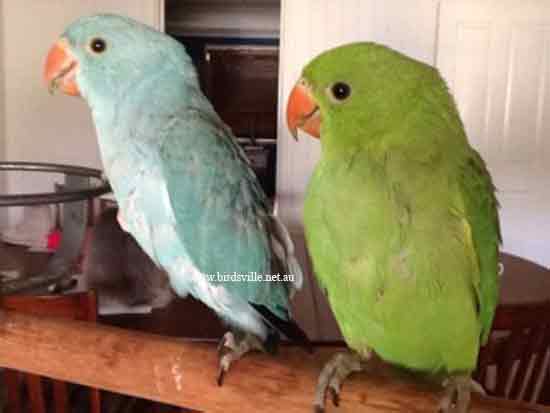
The natural Indian ringneck is green with a red hooked beak. Breeders have produced many colours in captivity, including blue, yellow (lutino), white (albino), grey, violet and mixed patterns.
Record Keeping
Keep a simple notebook with your ringneck’s weekly weight in grams, worming dates and vet visits. Weight loss is often the first sign something is wrong, so a written record makes it easy to spot.
Holiday Care and Boarding
If you’re away, someone needs to visit every day to change fresh food and water and spend a little time with your bird. For longer trips, see our Bird Boarding in Sydney page (https://birdsville.net.au/parrot-bird-boarding-sydney/), or book with Petsville Hotel (https://www.petsvillehotel.com).
Transportation
Move your ringneck in a secure, ventilated carrier, never loose in the car. Cover part of the carrier to help your bird feel safe, keep the car cool and never leave your bird in a parked car. After a move, add Vetafarm Spark Liquid to the water for a few days to help your bird settle.
Introducing a New Ringneck to Other Birds
When you bring home a second ringneck, keep it in a separate room in its own cage for at least 4 to 6 weeks as quarantine, so it can’t pass on any illness or parasites. After that, place the two cages side by side so the birds can get to know each other, then introduce them on neutral ground under supervision. Use this time to bond with your new bird and start its training. Our guide to introducing new birds (https://birdsville.net.au/pet-bird-advice-and-training/new-avian-introductions-mixing-species/) explains more.
Indian Ringneck Frequently Asked Questions
How long do Indian ringnecks live?
Indian ringnecks commonly live 20 to 30 years with good care, so they’re a long-term commitment. A fresh diet, a roomy cage, plenty of toys and regular vet checks all help your bird live a long life. Think ahead about who would look after your ringneck if your circumstances change over the years.
Why has my young Indian ringneck started biting?
Most young ringnecks go through a nippy stage soon after weaning, caused by high hormone levels. It’s normal and it passes. Keep handling your bird every day in a calm, quiet setting, and never stop because you’re worried about being bitten. A ringneck that isn’t handled through this stage will quickly turn wild.
Can Indian ringnecks talk?
Yes. Indian ringnecks are good talkers, and some become excellent, with clear voices that surprise their owners. They can learn words, short phrases and whistles. Talking varies from bird to bird, so there’s no guarantee, but daily chat, repetition and patience give your ringneck the best chance of picking up words.
What should I feed my Indian ringneck?
Feed a mix of small parrot seed, pellets and fresh fruit and vegetables. For adults, aim for about 50% seed, 40% pellets and 10% fresh food. Birdsville Blends Tropical Small Parrot mixed with Basic Small Parrot Mix is a great base. Avoid avocado, onion, chocolate and salty food.
How can I tell if my Indian ringneck is male or female?
Mature males grow a black and pink neck ring, usually between 18 months and 3 years old, while females never grow a full ring. Before then, males and females look the same. A DNA test from a feather or blood sample is the only reliable way to sex a young ringneck.
Are Indian ringnecks loud?
Ringnecks are moderately noisy. They’re quieter than cockatoos, but they have a loud, high-pitched call, especially in the morning and evening. A bored ringneck calls much more, so plenty of toys, foraging and daily attention make a big difference. They’re usually manageable in a house, but neighbours may hear them in an apartment.
When can I buy a hand raised Indian ringneck in Sydney?
Birdsville has hand raised Indian ringnecks once a year, because ringnecks only breed once a year. Babies usually arrive later in spring after the late winter nesting season. Follow Birdsville on Facebook, Instagram and TikTok, or call the store on (02) 9669 1766, to find out when the next babies are due.
Recommended Avian Vets for Indian Ringnecks in Sydney
- SASH (Small Animal Specialist Hospital), 24/7 emergency, 5/476 Gardeners Rd, Alexandria NSW 2015, 02 8913 4000, sashvets.com
- The Wild Vet, 22A Bridge Road, Glebe, 1300 945 3838, thewildvet.com.au
- SERV, 57-63 Herbert St, Artarmon, 02 9436 4884, exoticsvet.com.au
- Southern Cross Veterinary Clinic, 60 Princes Hwy, St Peters, 02 9516 0234, southerncrossvet.com.au
- Carlingford Animal Hospital, 772 Pennant Hills Road, Carlingford, 02 9871 6036, birdhealth.com.au
- The Unusual Pet Vets, 995 Bourke Street, Waterloo NSW 2017, 02 9319 6111, unusualpetvets.com.au
- Vetafarm (avian health products), vetafarm.com.au
Visit Us
Come and meet our team at Birdsville, 684 Botany Road, Alexandria NSW 2015, on the corner of Gardeners Road, or call (02) 9669 1766. We’re a small business that does things in a big way, and we only stock what we’d use on our own birds. If you ever need to find a new home for a parrot, our Sydney Pet Bird Rescue page (https://birdsville.net.au/re-homing-parrot-adoption/) explains how we can help. Follow us on Facebook (https://www.facebook.com/BirdsvilleRosebery/), Instagram (https://www.instagram.com/petsvillesydney/) and TikTok (https://www.tiktok.com/@birdsvillepets) for live updates and the next season’s baby ringnecks.


