Last updated: October 2026
Written by the Birdsville team. We have been feeding and raising small parrots at our Alexandria store since 1985.
The best food for small parrots is a mix of quality seed, pellets, fresh vegetables and some fruit, with a calcium source and a regular vitamin boost. That goes for Indian ringnecks, conures, quakers and other parrots around their size, such as moustache parrots, Alexandrines and caiques. Seed alone doesn’t give a small parrot everything it needs, and pellets alone take away the natural foraging these birds enjoy. This page covers which seed to buy, how to feed pellets alongside it, the best fresh foods, treats, supplements and the foods to avoid. Our own Birdsville Blends Tropical Small Parrot (https://petsville.com.au/products/birdsville-blends-tropical-small-parrot-500g) is mixed by hand at our store in Alexandria, Sydney.
Small Parrot Food Key Takeaways
The best food for small parrots combines a quality seed mix, pellets, fresh vegetables, a little fruit and a calcium source.
Birdsville feeds seed and pellets in two separate bowls and only refills the seed once both bowls are empty.
Small parrot mixes contain less sunflower than standard parrot mixes, which suits conures, quakers and ringnecks.
Every small parrot benefits from a regular vitamin boost in its drinking water.
Calcium perches and calcium bells are a better calcium source than shell grit for small parrots.
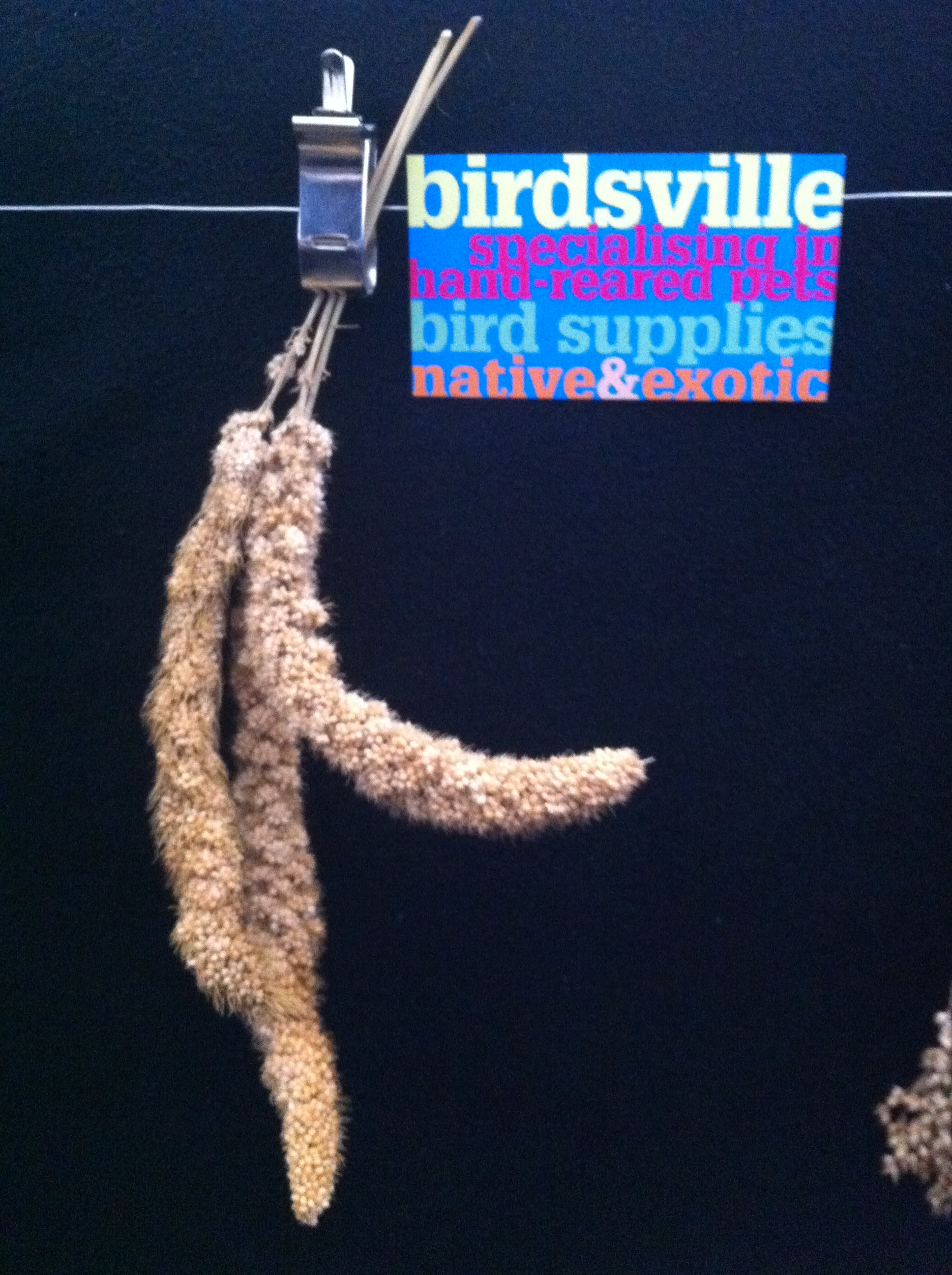
Millet sprays are a great treat and a must for weaning, young and older birds.
Avocado, onion, chocolate, caffeine and alcohol are dangerous for small parrots.
Birdsville Blends Tropical Small Parrot is made at Birdsville in Alexandria, Sydney, with grains, nuts, legumes, dried fruit and vegetables.
Small Parrot Quick Facts
Indian ringneck (Psittacula krameri): about 40cm long including the tail, 20 to 30 year lifespan, native to India, Asia and parts of Africa
Green cheek conure (Pyrrhura molinae): about 26cm long, 60 to 80g, native to South America
Quaker parrot (Myiopsitta monachus): about 29cm long, 25 year lifespan, native to Argentina, Uruguay and southern Brazil
Other birds this page suits: sun conures, blue throated conures, moustache parrots, Alexandrines, caiques and similar sized parrots
Wild diet: seeds, grains, fruit, berries, leaf buds, blossoms and nuts
Recommended seed: small parrot mix, with less sunflower than a standard parrot mix
Pellets: served in a second bowl beside the seed mix
Calcium: calcium and iodine perch or calcium bell
Vitamins: added to the drinking water regularly
Water: fresh every day
What Do Small Parrots Eat in the Wild?
Wild small parrots eat a varied diet of seeds, grains, fruit, berries, leaf buds, blossoms and nuts, depending on where they come from.
Quakers from South America feed heavily on thistle and grass seeds, grain crops, buds and fruit, according to the World Parrot Trust (https://parrots.org/encyclopedia/monk-parakeet/). Indian ringneck parrots come from forest and farmland across Asia and Africa, where they eat seeds, fruit, nuts and blossoms. Conures from South America eat seeds, fruit, berries and flowers. Pet birds burn far less energy than wild ones, so their diet needs less fat and more vegetables, pellets and minerals to stay healthy.
What Is the Best Seed for Small Parrots?
The best seed for small parrots is a quality small parrot mix, which has a good spread of millets, oats and grains with less sunflower than a standard parrot mix.
Our first choice is Birdsville Blends Tropical Small Parrot (https://petsville.com.au/products/birdsville-blends-tropical-small-parrot-500g), made up by hand in our store for conures, quakers, caiques, Indian ringnecks and other Asiatic, African and South American parrots. White French millet, cracked corn, oats, rolled oats, wheat and safflower form the base, with grey striped sunflower kept in check. Almonds, walnuts, peanuts and pumpkin seeds go in with red lentils, split peas and mung beans, plus banana chips, dates, coconut, beetroot, pumpkin, sweet potato, carrot, spinach, chillies, parsley and flower petals. It comes in 500g, 1kg and 2kg bags.
For an everyday seed, Basic Small Parrot Mix (https://petsville.com.au/products/avigrain-seed-small-parrot-mix-2kg) contains French white millet, grey striped sunflower, canary seed, oats, wheat and safflower. Our team often suggests small parrot mix for younger quakers and conures, and a peachface or cockatiel mix for older birds that are carrying extra weight.
Steer clear of cheap supermarket mixes that claim added vitamins. Many are mostly filler seed that small parrots leave in the bowl.
Should Small Parrots Eat Pellets?
Yes, pellets are an important part of a small parrot’s diet, and Birdsville recommends feeding them in their own bowl beside the seed.
Each pellet is a complete mouthful of vitamins, minerals and protein, while seed gives natural nutrition and keeps a bird busy husking and foraging. Good choices include Vetafarm Nutriblend Pellets Small (https://petsville.com.au/products/vetafarm-nutriblend-pellets-sml-350g) for ringnecks and Alexandrines, Vetafarm South American Pellets (https://petsville.com.au/products/vetafarm-south-american-mix-350g) for conures, Vetafarm Parrot Maintenance (https://petsville.com.au/products/vetafarm-parrot-maintenance-pellets-350g) for quakers, and Passwell Parrot Pellets (https://petsville.com.au/products/passwell-parrot-pellets-1kg) for most small parrots.
Vet advice leans further towards pellets. Currumbin Vet Services (https://currumbinvetservices.com.au/diet-for-asiatic-parrots-indian-ringnecks-alexandrines-etc/) suggests about 80% pellets for Asiatic parrots, and VCA Animal Hospitals (https://vcahospitals.com/know-your-pet/quaker-or-monk-parakeets-feeding) puts quakers on at least 70% pellets. Our experience is that small parrots do best with seed and pellets side by side, as the seed keeps them foraging the way they would in the wild.
How Much Should You Feed a Small Parrot?
Feed a small parrot enough seed and pellets that both bowls are emptied before you refill, rather than topping up the seed every day.
Small parrots eat their favourite food first, which is usually sunflower. If the seed bowl is refilled daily, many birds end up living on sunflower and never touch their pellets. Leave the pellets in place until they’re eaten and the bird will soon eat a fuller diet. Weigh your parrot on digital kitchen scales once a month so you notice any weight gain early.
What Fruit and Vegetables Can Small Parrots Eat?
Small parrots can eat almost any fruit and vegetable except onion and avocado, and our team also leaves lettuce out because it has little nutrition.
What Vegetables Can Small Parrots Eat?
Sweet potato, carrot, pumpkin, corn, beans, peas, broccoli, cauliflower, spinach, silverbeet, bok choy, zucchini, squash, capsicum and seeding grasses are all good choices. Chop them into pieces about the size of your thumbnail. Lightly steamed sweet potato, pumpkin and broccoli are easier to digest and often win over a fussy bird.
What Fruit Can Small Parrots Eat?
Rockmelon, apple, orange, kiwifruit, pear, banana, mango, pineapple and berries can all be offered in small pieces. Grapes are fine in moderation. Fruit is high in sugar, so give it a few times a week and keep vegetables as the bigger share.
Is Sprouted Seed Good for Small Parrots?
Yes. Conures and quakers especially love sprouted seed, which is softer, lower in fat and richer in vitamins than dry seed. We sprout cockatoo mix for our small parrots and clean it with Vetafarm Aviclens (https://petsville.com.au/products/vetafarm-aviclens-water-cleanser-100ml) to remove bacteria before serving. Step by step sprouting instructions are on our Best Bird Treats page (https://birdsville.net.au/bird-treats-tips-and-sprouted-mix/).
What Treats Can Small Parrots Have?
Millet sprays, nuts and fruit and nut mixes are the best treats for small parrots, given in small amounts.
Millet Sprays (https://petsville.com.au/products/millet-sprays-mixed-100g) are a great treat for all small parrots and a must for weaning, young and older birds. Almonds and walnuts make a good training reward, but nuts are high in fat, so a couple a day is plenty for an adult. Troppo Blue Fruit and Nut Medley (https://petsville.com.au/products/avigrain-seed-fruit-nut-medley-500gm-troppo-blue), once sold as Avigrain Tropical Blue, is a mix of dried tropical fruit, nuts and sunflower that works well as an occasional treat.
Do Small Parrots Need Supplements?
Yes, small parrots need a regular vitamin boost, a calcium and iodine source and vitamin D to stay healthy.
Do Small Parrots Need Vitamins?
Yes, every small parrot benefits from a regular vitamin boost. Once a week or more, mix Vetafarm Multivet (https://petsville.com.au/products/vetafarm-multivet-50ml) through its water. Birds that won’t eat pellets need it most, because seed alone is low in several vitamins.
Do Small Parrots Need Calcium and Iodine?
Yes. Give a calcium and iodine perch (https://petsville.com.au/products/avian-care-trimming-calcium-perch-140mm-small) or a calcium bell, or add Vetafarm Calcivet (https://petsville.com.au/products/vetafarm-calcivet-50ml) to the water. We don’t recommend shell grit for small parrots, as it can sit in the crop. For ringnecks and Alexandrines our team prefers a calcium perch or bell over cuttlebone. See our Calcium and Iodine Perch page (https://birdsville.net.au/calcium-iodine-perch/) for more.
Do Small Parrots Need Vitamin D?
Yes. Small parrots need vitamin D to absorb calcium, and window glass blocks the sunlight they make it from. Give indoor birds time in direct, unfiltered sun, or add Vetafarm Soluvite D (https://petsville.com.au/products/vetafarm-soluvite-d-25g) to the drinking water.
How Should You Feed a Small Parrot Through Sydney’s Seasons?
Sydney’s hot summers and cool winters both change how you should feed a small parrot.
In summer, change the water twice a day, keep cages out of direct afternoon sun and take fresh food and sprouts out within a couple of hours before they spoil. In winter, from June onwards, a little extra hulled oats (https://petsville.com.au/products/avigrain-seed-hulled-oats-1kg) or a warm serve of steamed sweet potato helps older birds and any bird that has lost condition.
A Tip From Our Staff
Use two bowls, one for seed and one for pellets, and don’t refill the seed until both are empty. We see it time and again: owners who top up the seed every day end up with a bird that eats only the sunflower. Once the bird has no other choice, it eats its pellets too, and within a few weeks its feathers look brighter and healthier. We also rotate pellet brands about every six months to keep the diet varied.
What Do Young Small Parrots Need?
Newly weaned small parrots need an all you can eat supply of seed, pellets, fruit and vegetables while they settle in.
For the first two weeks in a new home, sprinkle some seed and pellets on the cage floor as well as in the bowls, as young birds often eat from the ground before they find their feeders. Keep the buffet going for about four weeks, then move to the two bowl routine. Millet sprays help nervous young birds eat. For tame birds, a little hand rearing formula at night, such as Passwell Hand Rearing Food (https://petsville.com.au/products/passwell-hand-rearing-food-300g), can keep them friendly. Our Hand Raising Baby Birds page (https://birdsville.net.au/hand-raising-baby-birds/) covers formula feeding in detail.
What Foods Are Bad for Small Parrots?
Avocado, onion, chocolate, caffeine and alcohol can make a small parrot seriously ill.
Keep salty, fatty and processed human food off the menu, along with dairy, as parrots can’t digest lactose well. Remove stone fruit pits before serving, and throw out any fresh food that has started to go off or ferment.
Small Parrot Food Frequently Asked Questions
What is the best food for small parrots?
The best food for small parrots is a quality small parrot seed mix fed with pellets in a separate bowl, plus fresh vegetables, some fruit, a calcium perch or bell and a weekly vitamin boost. Our Birdsville Blends Tropical Small Parrot adds nuts, legumes, dried fruit and vegetables for extra variety and nutrition.
Can conures eat budgie seed?
Conures can eat budgie seed, but it isn’t the best everyday food because the small millets are too fine for their bigger beaks and appetites. A small parrot, cockatiel or peachface mix suits conures much better. If you keep budgies and a conure, give each bird its own bowl and its own mix.
Can small parrots eat sunflower seeds?
Yes, but only in moderation. Sunflower is high in fat, and small parrots that eat mostly sunflower can put on weight and develop fatty liver problems. Choose a small parrot mix, which has less sunflower than a standard parrot mix, and don’t refill the seed bowl until the pellets have been eaten too.
Do Indian ringnecks need pellets?
Indian ringnecks do best with pellets alongside their seed, because pellets fill the vitamin and mineral gaps that seed leaves. Feed them in a separate bowl, such as Vetafarm Nutriblend Small. Some ringnecks are slow to accept pellets, so leave them in place and avoid topping up the seed bowl every day.
What fruit can quaker parrots eat?
Quaker parrots can eat apple, banana, pear, rockmelon, kiwifruit, pineapple, mango, orange and stone fruit with the pit removed. Offer small pieces a few times a week. Many quakers prefer vegetables and greens, and a quaker that ignores fruit is nothing to worry about as long as it eats its vegetables.
How often should I feed my small parrot?
Small parrots should always have seed and pellets available, with fresh vegetables offered every day or every second day. Give fresh food in the morning and remove leftovers after a few hours. Refill the seed bowl only once both the seed and pellet bowls are empty so your bird eats a balanced diet.
Where Can I Buy Small Parrot Seed in Sydney?
Birdsville sells small parrot seed, including our Birdsville Blends Tropical Small Parrot, plus pellets, millet sprays, treats and supplements at 684 Botany Road, Alexandria NSW 2015, servicing the Eastern Suburbs and Inner South Sydney. Drop in and talk to our team, or give us a call on (02) 9669 1766. Our doors are open weekdays from 9:30am to 5:30pm, Saturdays 10am to 5pm and Sundays 10am to 4pm. Find directions on our Contact page (https://birdsville.net.au/contact-birdsville/).
Outside Sydney, Petsville (https://petsville.com.au/) sends small parrot food across Australia, and the full seed range is in the Petsville seed collection (https://petsville.com.au/collections/seed-1). Seed orders aren’t able to go to WA or Tasmania because of quarantine laws.
Small parrot food on Petsville:
Birdsville Blends Tropical Small Parrot (https://petsville.com.au/products/birdsville-blends-tropical-small-parrot-500g)
Basic Small Parrot Mix (https://petsville.com.au/products/avigrain-seed-small-parrot-mix-2kg)
Vetafarm Nutriblend Pellets Small (https://petsville.com.au/products/vetafarm-nutriblend-pellets-sml-350g)
Vetafarm South American Pellets (https://petsville.com.au/products/vetafarm-south-american-mix-350g)
Passwell Parrot Pellets (https://petsville.com.au/products/passwell-parrot-pellets-1kg)
Millet Sprays (https://petsville.com.au/products/millet-sprays-mixed-100g)
Vetafarm Multivet (https://petsville.com.au/products/vetafarm-multivet-50ml)
Read more about the birds this page covers on our Indian Ringneck (https://birdsville.net.au/animals-for-sale/birds-for-sale/indian-ringneck/), Green Cheek Conure (https://birdsville.net.au/hand-reared-birds-diet-nutrition/conures/hand-raised-green-cheek-conure-for-sale/), Quaker Parrot (https://birdsville.net.au/hand-reared-birds-diet-nutrition/hand-raised-quaker-parrot-for-sale/) and Moustache Parrot (https://birdsville.net.au/hand-reared-birds-diet-nutrition/moustache-parrot-information/) pages. For bigger birds, see our Large Parrot Seed page (https://birdsville.net.au/seeds-grains/large-parrot-seed/).
About Birdsville
Birdsville has been at 684 Botany Road, Alexandria NSW 2015 since 1985, specialising in birds and small animals. Our Birdsville Blends (https://birdsville.net.au/birdsville-blends/) range is mixed in store for small parrots, large parrots, cockatoos, cockatiels, lovebirds, budgies, canaries and finches, and you can buy it in store or through Petsville.
Sources
Feeding method, seed choice, pellets, calcium, sprouting and young bird care: Birdsville Indian Ringneck, Green Cheek Conure, Quaker Parrot and Moustache Parrot pages
Vet pellet proportions for ringnecks: Currumbin Vet Services, Dietary Advice for Asiatic Parrots
Vet pellet proportions for quakers: VCA Animal Hospitals, Feeding Quaker or Monk Parakeets
Quaker wild diet and size: World Parrot Trust, Monk Parakeet
Product ingredients and bag sizes: Petsville product listings
Seasonal advice and the two bowl tip: the Birdsville team
Small Parrot Seed for Sale Sydney
Here is the small parrot seed range on our shelves. Pick them up in store or order many of them online.
Avigrain Small Parrot
French white millet, grey striped sunflower, cracked corn, oats, wheat, canary seed and/or safflower. A wide variety of small seeds and coarse grains makes this mix suitable for neophemas right up to bigger parrots.
Avigrain Peachface
Contains French white millet, grey striped sunflower, canary seed, hulled oats and/or safflower. A good choice for older or overweight small parrots.
Avigrain Cockatiel
Contains canary seed, French white millet, grey striped sunflower, Japanese millet, panorama, shirohie millet, safflower and/or hulled oats. More canary seed and a bigger range of millets.
Troppo Blue Fruit and Nut Medley
Formerly Avigrain Tropical Blue. Contains grey striped sunflower, safflower, banana chips, raw peanuts, almonds, peanuts in shell, coconut chips, pawpaw, pineapple, snow white pumpkin seeds, chillies, dried mango and/or dried apple. A treat for all types of parrots.
French White Millet
French white millet is the most digestible seed for all birds, and it’s especially good for weaning, young and overweight birds.
Grey Striped Sunflower
Grey striped sunflower seeds are lower in fats and oils than black sunflower seeds. In the right amount they’re a healthy treat for a small parrot, but too much can lead to weight gain.
Safflower
Safflower seeds look like sunflower seeds but are white. They contain protein, nutrients and carbohydrate.
Hulled Oats
Hulled oats are a good source of calcium, iron, B vitamins and niacin. They’re mostly fed to small parrots in winter or to birds that are underweight.
Canary Seed
100% canary seed.
Millet Sprays
French white millet and panicum millet sprays. A great treat for all small parrots and a must for weaning, young and older birds.
Avigrain Small Parrot
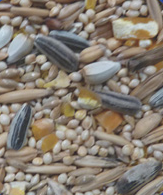
French White Millet, Grey Striped Sunflower, Cracked Corn, Oats, Wheat, Canaryseed and/or Safflower.
A wide variety of small seeds and coarse grains makes this suitable for neophemas up to the largest parrots.
Avigrain Peachface
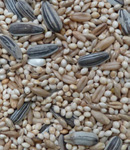
Contains: French White Millet, Grey Striped Sunflower, Canaryseed, Hulled Oats and/or Safflower.
Recommended and suitable for all parrots.
Avigrain Cockatiel
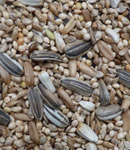
Contains: Canaryseed, French White Millet, Grey Striped Sunflower, Jap Millet, Panorama, Shirohie Millet, Safflower and/or Hulled Oats,
More Canaryseed. Bigger range of millet.
Avigrain Tropical Blue (Fruit and Nut)
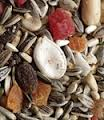
Contains: Grey Striped Sunflower, Safflower, Banana Chips, Raw Peanuts, Almonds, Peanuts in Shell, Coconut Chips, Paw-Paw, Pineapple, Snow White Pumpkin Seeds, Chillis, Dried Mango and/or Dried Apple.
A treat for all parrot types.
French White Millet
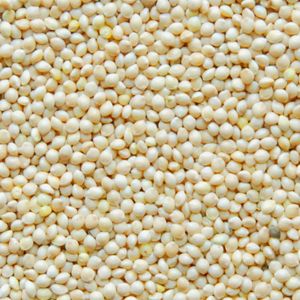
French White Millet is the seed that is most digestible for all birds, especially for good wean, young and over weight birds.
Grey Striped Sunflower Seeds
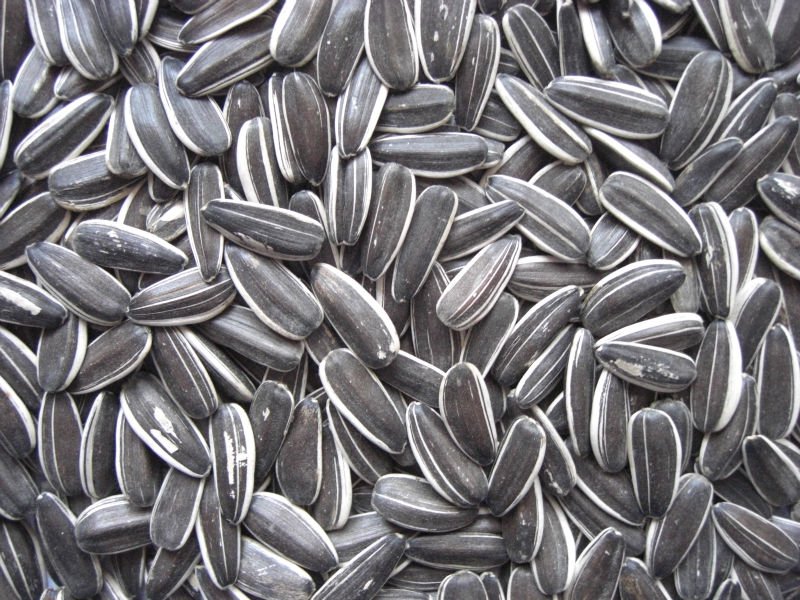
Grey Striped Sunflower Seeds are lower in fats and oils compare to Black Sunflower Seeds. In the right proportion it can be a healthy treat for a small parrot, but if it is over done, there could be problems.
Safflower Seed

Safflower seeds look simular to Sunflower seeds except for the colour. They contain protein, nutrients and carbohydrates.
Hulled Oats
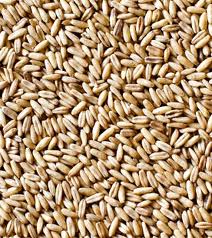
Hulled oats are a good source of calcium, iron, vitamin B and nicotinic acid. Hulled oats are mostly feed to parrot in winter or if the bird is under weight.
Canary Seed
100% Canary Seed
Millet Sprays – French White Millet and Panicum Millet