Last updated: October 2026
Written by the Birdsville team, who have hand blended budgie seed in Alexandria since 1985. The our combined expertise and oldest bird specialist store in Australia since emblem aviaries closed in 2025.
The best food for budgies is a mix of good quality budgie seed, budgie pellets and fresh vegetables, with a little fruit and the odd treat. So what do budgies eat in the wild? Mostly small grass seeds, which is why seed still belongs at the heart of a pet budgerigar’s diet. Plain seed on its own is too low in vitamins to keep a budgie healthy through its usual lifespan of 6 to 12 years, and up to 15 with good care. This budgie food guide explains how to balance your budgie’s bowl, which seed mix to choose, how much to feed and which foods to leave out. Our biggest selling budgie seed, Birdsville Blends Budgie Gourmet (https://petsville.com.au/products/birdsville-blends-budgie-500g), is blended by hand in store, and everything mentioned here is on the shelves at Birdsville in Alexandria, Sydney.
Budgie Food Key Takeaways
The best food for budgies combines a seed mix, budgie pellets, fresh vegetables and a small amount of fruit.
Birdsville recommends a budgie diet of about 65% quality seed blend, 25% pellets or crumbles and 10% fresh vegetables, greens and fruit.
Budgies come from arid inland Australia, where grass seed is the base of their diet, and a good budgie seed blend of canary seed, millets and panicum closely resembles that natural diet.
Budgie seed, pellets and other budgie food are sold by Birdsville at 684 Botany Road, Alexandria, Sydney, and online through Petsville.
Each adult budgie gets through roughly one or two level teaspoons of seed daily.
Budgies fed mostly seed especially low grade seed many chain stores sell often become overweight and can develop fatty liver, fatty lumps, poor feathers and iodine or vitamin A deficiency.
Birdsville Blends Budgie Gourmet (https://petsville.com.au/products/birdsville-blends-budgie-500g) is Birdsville’s best selling budgie seed mix mostly from the darling downs in queensland, blended by hand at the Alexandria store in Sydney.
Budgie Food Quick Facts
Budgerigar: Melopsittacus undulatus, a small grass parrot native to inland Australia
Natural habitat: arid and semi arid grasslands and scrub across inland Australia
Natural diet: small grass and herb seeds, often eaten green
Adult weight: about 30 to 40g, with show budgies often heavier
Lifespan: typically 6 to 12 years, with some reaching 15
Diet type: Granivore, eating mainly grass seeds in the wild
Birdsville’s recommended balance: 65% seed blend, 25% pellets, 10% fresh food
Daily seed amount: 1 to 2 level teaspoons
Treats: no more than about 5% of the diet
Breeding extras: egg and biscuit food and a calcium source
Water: fresh every day
What Do Wild Budgies Eat?
Budgies come from the arid inland of Australia, where small grass seeds are the base of their diet.
The budgerigar (https://en.wikipedia.org/wiki/Budgerigar) lives in flocks across Australia’s dry interior (https://www.australiangeographic.com.au/fact-file/budgerigar), following rain to find native grasses and herbs as they come into seed, often eating the seed while it’s still green and soft. That’s why the budgie seed blends we recommend are built on small grass seeds like canary seed, white French millet, Japanese millet and panicum. Grass seed blends like these closely resemble a budgie’s natural diet, giving a captive budgie the food its body is designed for and the best chance of good health. Pet budgies don’t fly the distances wild birds do, though, so a diet of dry seed alone gives them more fat than they burn. Mixing in pellets and fresh food brings their diet closer to the green, varied food wild birds find. Budgies also crack open each seed and drop the husk, which is why a full looking bowl can be empty underneath.
What Is the Best Seed Mix for Budgies?
For most pet budgies, we recommend Birdsville Blends Budgie Gourmet (https://petsville.com.au/products/birdsville-blends-budgie-500g), our own mix made fresh on site in Alexandria and our biggest selling budgie seed.
Budgie Gourmet is built on 50% canary seed, then adds white French millet, panorama, Japanese millet, panicum, shirohie millet, red panicum and hulled oats. On top of the seed we mix in niger, sunflower kernels, dried apple, carrot, dates, red lentils, split peas, rolled oats, pumpkin seed, beetroot, spinach and parsley. The extra ingredients give budgies far more to pick through than a plain seed mix. Budgie Gourmet comes in 500g, 1kg or 2kg bags, and parrotlets, Bourke parrots and other small grass parrots enjoy it just as much. For a simple everyday mix, Basic Budgie Mix (https://petsville.com.au/products/avigrain-seed-budgie-blue-2kg), also sold as Avigrain Budgie Blue, is half canary seed and a favourite with breeders. To give any budgie mix a vegetable boost, shake a little Birdsville Blend Seed Enhancer (https://petsville.com.au/products/birdsville-blend-mixed-veg-seed-enhancer) over the top.
Should Budgies Eat Pellets?
Yes, pellets help balance a budgie’s diet by adding the vitamins, minerals and amino acids that seed lacks, but they work best as the smaller partner to a quality seed blend.
At Birdsville, we feed our budgies roughly two thirds seed blend, such as Birdsville Blends Budgie Gourmet, one quarter pellets or crumbles, and the remaining tenth as fresh greens, vegetables and fruit. This is how we feed the budgies we raise, and our Hand Raised Budgies page (https://birdsville.net.au/animals-for-sale/birds-for-sale/budgerigars-information/) explains it in more detail. Some avian vets suggest more pellets, such as The Unusual Pet Vets’ budgie care sheet (https://www.unusualpetvets.com.au/wp-content/uploads/2020/06/Avian-Budgie-Care-Sheet.pdf) at 30 to 50% and YourVetOnline’s budgie feeding guide (https://www.yourvetonline.com/what-to-feed-your-budgie/) at up to 70%, but a grass seed blend stays closest to what budgies eat in the wild. Choose pellets made for budgies, not larger parrots, as small crumbles are easier to eat and waste less. Good choices include Vetafarm Finch and Budgie Crumbles (https://petsville.com.au/products/vetafarm-finch-budgie-crumbles-450g), Passwell Budgie Starter and Harrison’s High Potency Super Fine (https://petsville.com.au/products/harrisons-high-potency-super-fine-454g). Introduce pellets slowly by mixing a few through the seed, and never swap a budgie straight onto pellets, as some birds won’t recognise them as food and can starve. Weaning a budgie onto pellets can take months. Budgies eating pellets often drink more, so keep the water topped up.
Seed or Pellets: Which Is Better for Budgies?
Neither seed nor pellets is best on its own for budgies. A budgie does best on a mix of seed and pellets, plus fresh vegetables.
Budgie seed: natural for budgies, well liked, gives foraging and husking activity, but high in fat and low in vitamin A, calcium and iodine.
Budgie pellets: balanced vitamins and minerals in every bite, but less interesting to eat and slow for some budgies to accept.
Seed and pellets together: gives budgies the natural feeding behaviour of seed with the nutrition of pellets, which is why most vets and breeders now use both.
How Much Food Does a Budgie Need Each Day?
An adult budgie needs about 1 to 2 level teaspoons of seed a day, plus pellets and a small dish of fresh food.
Vetafarm suggests about 4g of crumbles a day for a 40g budgie. Husks pile up on top of the seed, so check underneath each morning to see how much food is really left. Budgies are hungriest first thing, so put fresh food in early and clear it away by early afternoon before it turns. A set of kitchen scales is the easiest way to keep an eye on body weight. Budgies put on weight easily, and a bird that’s getting heavy needs less seed and more vegetables.
Daily Budgie Feeding Routine
- Blow the empty husks off the seed dish and add the day’s seed, 1 to 2 level teaspoons, using a quality mix such as Budgie Gourmet (https://petsville.com.au/products/birdsville-blends-budgie-500g).
- Add the day’s pellets or crumbles to a separate dish.
- Offer a small dish or clip of fresh vegetables, plus a little fruit a few times a week.
- Empty, rinse and refill the water dish.
- Remove uneaten fresh food after a few hours.
- Check the cuttlebone and replace it when it’s worn down.
- Weigh your budgie every week or two and adjust the seed if its weight changes.
What Vegetables and Fruit Do Budgies Eat?
Budgies can eat most vegetables and a little fruit, and fresh food should make up around 10% of their diet, alongside their seed blend and pellets.
What Vegetables Can Budgies Eat?
Almost any fresh vegetable suits a budgie, and chopped vegetables should be offered every day. Budgies enjoy broccoli, spinach, carrot, beetroot, snow peas, green beans, celery, kale, silverbeet, capsicum, zucchini, pumpkin and sweet potato. Spinach is fine in small amounts, as it contains oxalates that can block calcium. Orange vegetables like carrot, pumpkin and sweet potato are rich in beta carotene, which budgies turn into vitamin A, a vitamin seed diets are short of. Chop vegetables finely or grate them, mix them through sprouted seed, or thread them onto a bird skewer to make them more tempting. Clip a few leaves or a broccoli floret to the side of the cage, as many budgies prefer to nibble food at perch height. Seeding native grasses are a favourite too, as long as they haven’t been sprayed or soiled by wild birds.
Is Sprouted Seed Good for Budgies?
Yes, sprouted seed is softer, lower in fat and higher in vitamins than dry seed, and budgies take to it easily. Use Australian grown seed for sprouting, as imported seed is irradiated and won’t sprout. Budgie seed, mung beans, alfalfa and buckwheat all sprout well. Adding Vetafarm Aviclens to the soaking water helps prevent mould and bacteria. Soak the seed overnight, rinse it well, leave it to sprout in a warm spot, and feed it within two days, rinsing it daily. There are more sprouting tips on our Best Bird Treats page (https://birdsville.net.au/bird-treats-tips-and-sprouted-mix/).
What Fruit Can Budgies Eat?
Budgies can eat most fruit in small amounts. Keep fruit to a small part of the fresh food portion, offered a few times a week. Apple, pear, banana, blueberries, strawberries, mango, kiwifruit, papaya, melon and grapes are all suitable in small pieces. Remove apple and pear pips first, as they’re toxic to birds. Citrus is best left out, as it’s acidic and many budgies refuse it anyway.
How Do You Get a Budgie to Try New Foods?
Budgies are naturally wary of anything new, so it can take weeks of patient offering before a budgie tries a new food.
Offer a budgie one new food at a time, in the same spot each morning, and don’t give up after a few refusals. Many budgies copy their owners or cage mates, so eating a piece of the same vegetable in front of them can help. Hanging greens from the cage bars, scattering chopped food over the seed or offering it wet after a bath also encourages a nibble. Budgies that are used to seed often learn to eat pellets faster when they’re mixed with a small amount of their usual mix.
What Treats Can Budgies Have?
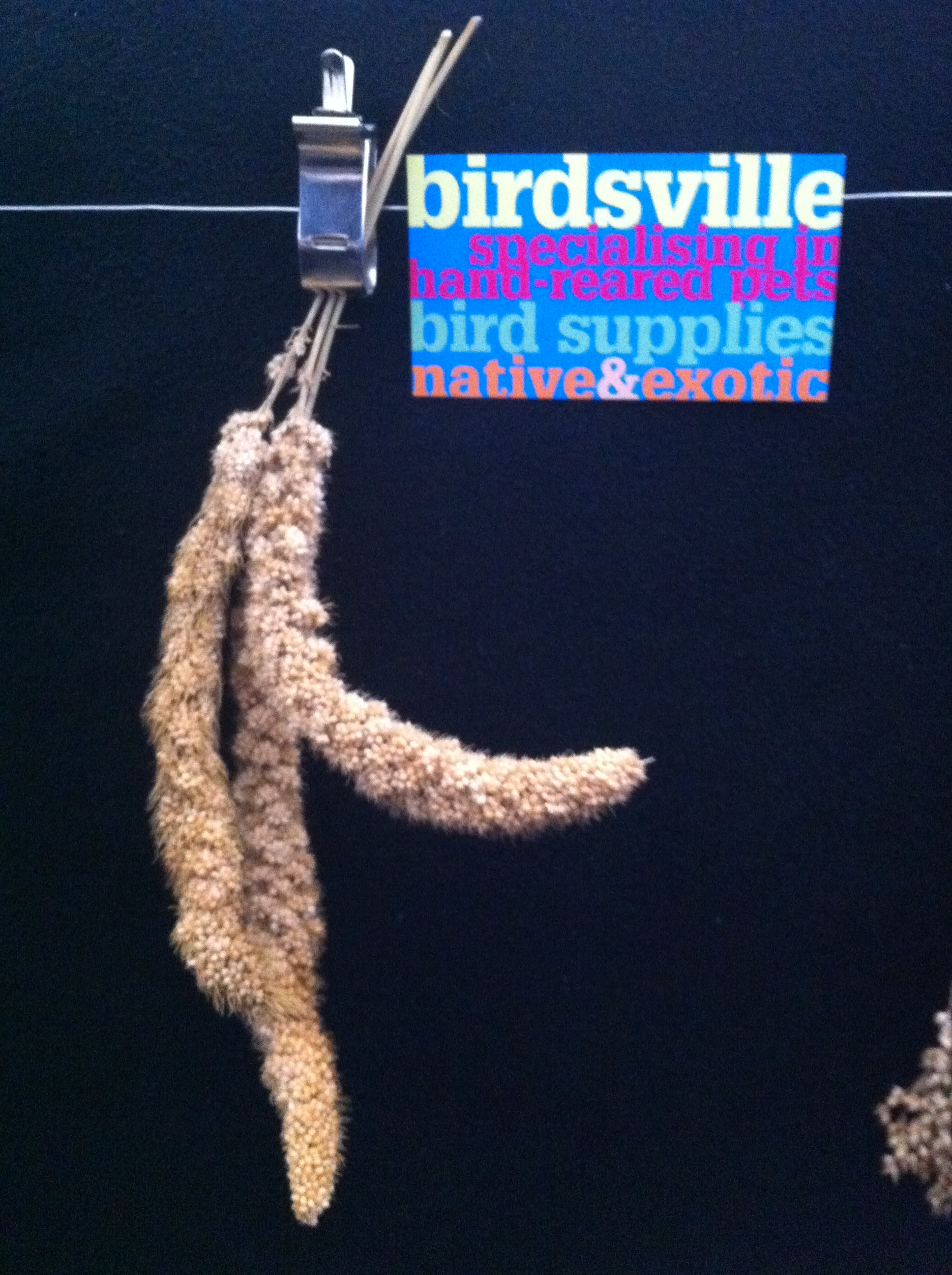
Millet sprays are the classic budgie treat, but they should be given in small pieces, not as a whole spray every day.
A short length of Millet Sprays (https://petsville.com.au/products/millet-sprays-mixed-100g) a few times a week makes a great training reward, and a Millet Spray Holder (https://petsville.com.au/products/jw-insight-feeder-millet-spray-holder) keeps it clean and off the cage floor. A Budgie Delight Treat Bar (https://petsville.com.au/products/passwell-delight-budgie-75g) gives a budgie something to work at. Other good treats include a little cooked egg, plain cooked brown rice or pasta, and a crumb of unsalted walnut or macadamia. Keep all treats to about 5% of what your budgie eats, so the healthy food doesn’t get pushed aside.
Do Budgies Need Supplements?
Every budgie benefits from extra calcium, iodine and a regular vitamin boost, and indoor and breeding birds need them most. Don’t double up, though, as vets warn that too many supplements cause problems of their own.
Do Budgies Need Calcium and Iodine?
Yes, budgies need both, and seed fed budgies often run short of iodine. A cuttlebone (https://petsville.com.au/products/avi-one-cuttlebone-with-stainless-steel-clip) gives budgies calcium, and hens use it most when laying. Laying hens can also have Vetafarm Calcivet (https://petsville.com.au/products/vetafarm-calcivet-50ml) added to their water. Budgies on seed diets are prone to iodine deficiency, which affects the thyroid. An Iodine Grit Button (https://petsville.com.au/products/iodine-grit-button) or iodine bell covers this. Read more about mineral options on our Calcium and Iodine Perch page (https://birdsville.net.au/calcium-iodine-perch/).
Should You Give Budgies Vitamins?
Yes, every budgie benefits from a regular vitamin boost, whatever its diet, because seed, pellets and fresh food alone rarely supply every single vitamin a budgie needs. Adding Vetafarm Multivet (https://petsville.com.au/products/vetafarm-multivet-50ml) to the drinking water twice a week helps fill the gaps. Budgies kept indoors also need help with vitamin D, as window glass filters out the UV light they use to make it. Aim for around 10 hours a week of unfiltered sunlight, use an avian UVB globe, or add Vetafarm Soluvite D (https://petsville.com.au/products/vetafarm-soluvite-d-25g) to the water.
Do Budgies Need Grit?
No, budgies don’t need grit as long as they have another calcium source, such as a cuttlebone or a calcium bell. Budgies remove the husk from each seed before swallowing it, so unlike pigeons and doves they don’t need grit to grind their food. Leaving a dish of grit in the cage can do more harm than good, as some budgies eat too much of it.
How Should You Feed a Budgie Through a Sydney Summer and Winter?
Sydney’s hot summers and cool winters both change what a budgie needs from its food and water.
In summer, fresh food and sprouted seed spoil quickly in the heat, so offer smaller amounts and remove leftovers within an hour or two. Change the water twice a day on hot days, keep the cage out of direct afternoon sun, and add a few drops of Vetafarm Aviclens to the water to stop bacteria building up. In winter, budgies burn more energy keeping warm, so many keepers add a little extra hulled oats (https://petsville.com.au/products/avigrain-seed-hulled-oats-1kg) to the seed blend from June to August. Keep weighing your budgie, as indoor birds can put on weight over the cooler months.
A Tip From Our Staff
If you’re not sure your budgie likes its seed, try what we do in store: put two bowls side by side, one with your current mix and one with Birdsville Blends Budgie Gourmet, and see which one empties first. Budgies are fussy about stale or dusty seed, and they’ll tell you quickly which mix they prefer. For a budgie that’s getting heavy, we also mix in extra white French millet, which is lighter than canary seed.
What Should You Feed Breeding and Young Budgies?
Breeding budgies need extra protein and calcium, and young budgies need soft, easy to digest food while they learn to eat on their own.
Give breeding budgie pairs a daily dish of egg and biscuit food, for example Shep’s Egg & Biscuit (https://petsville.com.au/products/sheps-egg-biscuit-500g) while they have chicks in the nest box. Outside breeding, keep protein moderate, as vets link high protein diets with kidney problems in budgies. Passwell Budgie Starter (https://petsville.com.au/products/passwell-budgie-starter-1kg) is a protein rich crumble with added iodine, made for breeding, moulting and weaning budgies, and can be mixed with diced vegetables or soaked seed. For newly weaned birds, white French millet (https://petsville.com.au/products/avigrain-seed-french-white-millet-1kg) goes down most easily. Hand rearing budgie chicks is covered on our Hand Raising Baby Birds page (https://birdsville.net.au/hand-raising-baby-birds/).
What Foods Are Bad for Budgies?
Never feed budgies avocado, chocolate, onion, garlic, caffeine, alcohol or salty and sugary snacks.
Fruit pips and stones, rhubarb, tomato leaves, mushrooms and mouldy food are also dangerous to budgies. We also recommend leaving out lettuce, corn, dried beans, breakfast cereal, bread, biscuits and lollies. None of these are poisonous, but each is too watery, starchy, sugary or hard to digest to be good food for a small bird.
Budgie Food Frequently Asked Questions
Can budgies live on seed alone?
A budgie can survive on seed alone, but it won’t stay healthy. we can actually tell the health of a bird and usually visibly see when a bird is on a low grade seed mix when we trim customers budgies nails. Unblended seed lacks vitamin A, calcium and iodine, so seed only budgies often become overweight or develop thyroid problems. Birdsville Blends Budgie Gourmet with about 25% pellets, fresh greens and a cuttlebone sets your budgie up for a long and healthy life.
What is the difference between Budgie Blue and Budgie Green?
Budgie Blue and Budgie Green are Avigrain mixes of the same small grass seeds. Budgie Blue, sold as Basic Budgie Mix (https://petsville.com.au/products/avigrain-seed-budgie-blue-2kg), contains 50% canary seed, favoured by breeders. Budgie Green is mostly white French millet with about 20% canary seed, a lighter everyday mix. Birdsville Blends Budgie Gourmet (https://petsville.com.au/products/birdsville-blends-budgie-500g) is also 50% canary seed, plus fruit, vegetables and legumes.
Is millet good for budgies?
Yes, millet is one of the main seeds in every budgie mix, and white French millet is the easiest seed for budgies to digest. Budgies love millet sprays so much they’ll fill up on them and skip healthier food, so treat them as a reward. One budgie needs only a few centimetres of spray, two or three days a week.
Can budgies eat canary seed?
Yes, canary seed is one of the best seeds for budgies and makes up half of the better budgie mixes. Canary Plain Seed (https://petsville.com.au/products/avigrain-seed-canary-plain-2kg) is a handy top up for budgies that pick it out of their bowl first. Our Canary Seed page (https://birdsville.net.au/seeds-grains/canary-seed/) explains more about this seed and the canary mixes we stock.
Can budgies eat apples?
Yes, budgies can eat apple. Wash it, remove the core and every pip then cut it into small pieces. Offer apple as a treat a few times a week, as part of the 10% fresh food in a budgie’s diet, and remove any left after a few hours.
Can budgies eat bananas?
Yes, budgies can eat banana, but it’s high in sugar, so offer only a thin slice or two at a time. Peel it and chop it small. Banana works well as an occasional treat or training reward. Fruit should only ever play a minor role next to a quality seed blend, pellets and fresh vegetables.
How often should I feed my budgie?
Feed your budgie every day, with seed and pellets available from morning until night. Budgies eat little and often, so they shouldn’t go long without food. Top up the seed each morning after blowing off the husks, offer fresh vegetables early in the day, and clear away anything uneaten by early afternoon so nothing spoils in the cage.
What human food can budgies eat?
Budgies can share a few plain human foods, such as cooked brown rice, plain pasta, a little scrambled or boiled egg, and most fresh vegetables. Everything must be unsalted, unbuttered and unseasoned. Never share avocado, chocolate, onion, garlic, coffee, alcohol, chips or lollies. Human food should stay a small extra, never a replacement for a budgie’s seed blend.
Can budgies eat bread?
Budgies can nibble plain bread without being poisoned, but it’s a poor food for them. Bread fills a small bird up with starch and offers almost none of the vitamins, minerals or protein a budgie needs. Salted, buttered or mouldy bread is harmful. A crumb of plain wholemeal is fine now and then, but seed, pellets and vegetables come first.
Can budgies eat lettuce?
We recommend leaving lettuce out of a budgie’s diet. Lettuce is mostly water with very little nutrition, and it often gives budgies loose, watery droppings. Darker greens such as kale, silverbeet, spinach and broccoli are far better choices. Wash all greens well, offer them fresh each morning, and remove any that start to wilt.
Where Can I Buy high quality Budgie Seed and Budgie Food in Sydney?
Birdsville sells budgie seed, including our best selling Birdsville Blends Budgie Gourmet (https://petsville.com.au/products/birdsville-blends-budgie-500g), along with pellets and supplements, at 684 Botany Road, Alexandria NSW 2015, servicing the Eastern Suburbs and Inner South Sydney now we are online all over Australia. Visit us in store or call us on (02) 9669 1766. We’re open 9:30am to 5:30pm Monday to Friday, 10am to 5pm Saturday and 10am to 4pm Sunday, and directions are on our Contact page (https://birdsville.net.au/contact-birdsville/). Ask our staff in store if you’d like help choosing the best food for budgies or changing your bird over to a healthier diet.
Outside Sydney, you can order from Petsville (https://petsville.com.au/), which delivers across Australia, and browse the whole Petsville seed range (https://petsville.com.au/collections/seed-1). Biosecurity laws stop seed being posted to WA and Tasmania.
Budgie food you can order from Petsville:
Birdsville Blends Budgie Gourmet (https://petsville.com.au/products/birdsville-blends-budgie-500g)
Basic Budgie Mix (https://petsville.com.au/products/avigrain-seed-budgie-blue-2kg)
Canary Plain Seed (https://petsville.com.au/products/avigrain-seed-canary-plain-2kg)
Vetafarm Finch and Budgie Crumbles (https://petsville.com.au/products/vetafarm-finch-budgie-crumbles-450g)
Millet Sprays (https://petsville.com.au/products/millet-sprays-mixed-100g)
Shep’s Egg & Biscuit (https://petsville.com.au/products/sheps-egg-biscuit-500g)
Thinking about a budgie? Our Budgerigars page (https://birdsville.net.au/animals-for-sale/birds-for-sale/budgerigars-information/) covers the budgies we breed and sell, and our Pet Care Guides page (https://birdsville.net.au/pet-care-guides/) has advice on many more animals. Our Seeds and Grains page (https://birdsville.net.au/seeds-grains/) lists every seed we sell.
About Birdsville
Since 1985, Birdsville has looked after Sydney’s bird and small animal keepers from 684 Botany Road, Alexandria NSW 2015. Our Birdsville Blends (https://birdsville.net.au/birdsville-blends/) range covers budgies, canaries, finches, cockatiels and larger parrots, mixed by hand in store and also sold on Petsville.
Sources
Recommended diet ratio, foods to avoid and pellet weaning: Birdsville, Hand Raised Budgies for Sale Sydney
Vet diet proportions, vegetables, fruit and treats: The Unusual Pet Vets, Avian Budgie Care Sheet
Pellet proportions, safe and unsafe foods, sprouting and vitamin A: YourVetOnline, Budgie Feeding Guide
Weight and lifespan: Australian Geographic, Budgerigar fact file
Pellet feeding amounts and changing over from seed: Vetafarm Finch and Budgie Crumbles product listing, Petsville
Budgie Gourmet ingredients and sizes: Birdsville Blends Budgie Gourmet product listing, Petsville
Budgerigar: Wikipedia, Budgerigar
Seed amounts, seasonal feeding, staff tips and breeding feed: Birdsville’s own experience blending budgie seed since 1985
Budgie Seed for Sale Sydney
Below are the budgie seed mixes and single seeds Birdsville stocks. All of them are available at our Alexandria store, and many can be ordered through Petsville.
Avigrain Budgie Blue
Alt text: Avigrain Budgie Blue seed mix with 50% canary seed
Canary seed (50%), white French millet, panorama, Japanese millet, panicum, shirohie millet, red panicum and/or hulled oats.
With 50% canary seed, this mix is a favourite of top budgerigar breeders.
Avigrain Budgie Green
Alt text: Avigrain Budgie Green seed mix for budgies
White French millet, panorama, canary seed (20%), Japanese millet, panicum, shirohie millet, red panicum and/or hulled oats.
A lighter, millet based everyday mix.
Plain Canary Seed
Alt text: Plain canary seed for budgies
100% canary seed.
French White Millet
Alt text: White French millet seed for budgies
French white millet is the most digestible seed for all birds, and it’s especially good for young birds being weaned and for budgies that are overweight.
Hulled Oats
Alt text: Hulled oats for budgies
Oats are a source of calcium, iron, B vitamins and niacin. Hulled oats are mostly fed to budgies in winter.
Japanese Millet
Alt text: Japanese millet seed for budgies
Japanese millet is a small, soft, triangular seed that budgies digest easily.
Panicum
Alt text: Panicum seed for budgies
Panicum is a small, round millet seed that budgies love, and it’s a staple of every good budgie mix. Its small size makes it easy to husk, so it’s a favourite with young birds learning to crack seed. Panicum is also sold on the spray, which makes a popular treat and training reward.
Millet Sprays
Alt text: French white and panicum millet sprays for budgies
French white millet and panicum millet sprays. Budgies love picking seed straight off the stem, which makes sprays a great treat and training reward. Offer a few centimetres at a time, two or three days a week.
Avigrain Budgie Blue
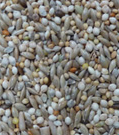
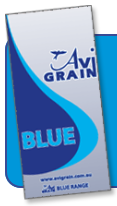
50% canary makes this mix the favourite of top budgerigar breeders.
Avigrain Budgie Green
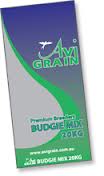
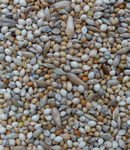
French White Millet, Panorama, Canaryseed (20%), Jap Millet, Panicum, Shirohie Millet, Red Panicum and/or Hulled Oats.
Sets The Standard
Plain Canary
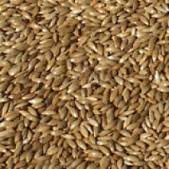
100% Canary Seed
French White Millet
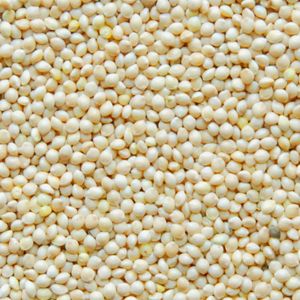
French White Millet is the seed that is most digestible for all birds, especially good for young weaning birds and birds over weight.
Hulled Oats
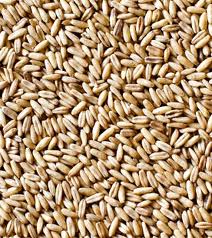
Oats are a source of calcium, iron, vitamin B and nicotinic acid. Hulled oats are mostly feed to budgies in winter.
Jap Millet

Jap Millet is a small, soft, triangular shape seed, that is easily digestible by budgies.
Panicum
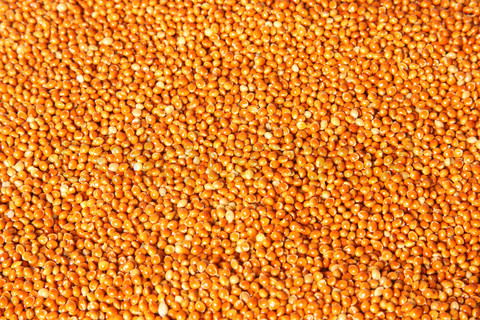
Panicum is full of vitamins and minerals.
Millet Sprays – French White Millet and Panicum Millet