Last updated: October 2026
Written by the Birdsville team. We’ve mixed seed and developed our craft for Sydney’s lovebird owners in Alexandria since 1985.
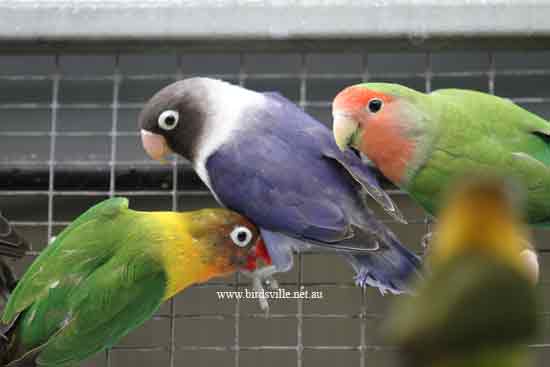
This guide covers the diet of peachface lovebirds, as well as Fischer’s, masked and Nyasa lovebirds, which all eat a similar diet.
The best food for lovebirds is a quality seed blend, topped up with pellets, fresh greens, a little fruit and a calcium source. Peachface lovebirds are small, busy parrots that burn plenty of energy, but a diet of plain seed alone leaves them short of vitamins and minerals. Below you’ll find what wild lovebirds eat, the seed mix we recommend, daily amounts, and the foods to keep out of the cage. Our Birdsville Blends Cockatiel and Lovebird (https://petsville.com.au/products/birdsville-blends-cockatiel-lovebird-500g) is mixed by hand in store, and you’ll find peachface seed on our shelves in Alexandria, Sydney, every month of the year.
Lovebird Food Key Takeaways
A healthy lovebird diet starts with a good seed blend, then adds pellets, daily greens, occasional fruit and calcium.
Peachface lovebirds come from the dry southwest of Africa, where they eat grass seeds, berries, buds and leaves.
A good lovebird seed blend is built on millets, canary seed and hulled oats, with smaller amounts of sunflower and safflower.
An adult peachface lovebird eats about one heaped tablespoon of seed mix a day.
Lovebirds fed only seed often run short of vitamin A, calcium and iodine.
Birdsville Blends Cockatiel and Lovebird contains 21 natural ingredients and is hand mixed at Birdsville’s Alexandria store in Sydney.
Peachface lovebird seed is stocked all year at Birdsville, 684 Botany Road, Alexandria, and can also be ordered from Petsville.
Lovebird Food Quick Facts
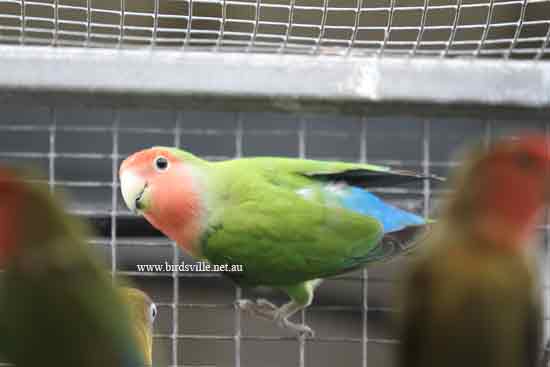
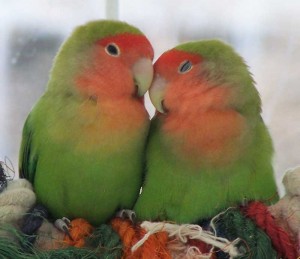
Peachface lovebird: Agapornis roseicollis, also called the rosy faced lovebird
Fischer’s lovebird: Agapornis fischeri
Masked lovebird: Agapornis personatus
Nyasa lovebird: Agapornis lilianae
Native range: peachface from the dry southwest of Africa, Fischer’s and masked from Tanzania, Nyasa from Zambia, Malawi and Mozambique
Adult size: about 15 to 18cm long
Lifespan: about 10 to 15 years with good care
Diet type: Granivore, eating mainly seeds, with fruit, buds and greens
Daily seed amount: about one heaped tablespoon per adult bird
Fresh food: greens daily, fruit two or three times weekly
Calcium: a cuttlebone or calcium bell at all times
Breeding pairs: extra protein from egg food
Water: fresh every day
What Do Lovebirds Eat in the Wild?
Wild peachface lovebirds eat mostly grass seeds, along with berries, buds, flowers and leaves. Our team has watched wild Fischer’s and masked lovebirds feeding in Kenya on bird watching trips in East Africa, and they forage the same way, picking seeds from grasses and low plants.
The peachface lovebird (https://en.wikipedia.org/wiki/Rosy-faced_lovebird) lives in flocks in the dry savanna and semi desert of southwest Africa, rarely far from water. Wild lovebirds feed on grass seeds and other small seeds, and add berries, flower buds and fresh leaves when they’re in season. Pet lovebirds do best on a diet that copies this mix: a seed base for energy, plus fresh greens and pellets to supply the vitamins and minerals that dry seed lacks.
Which Seed Mix Is Best for Lovebirds?
For most pet lovebirds, we recommend Birdsville Blends Cockatiel and Lovebird (https://petsville.com.au/products/birdsville-blends-cockatiel-lovebird-500g), hand blended in our Alexandria store.
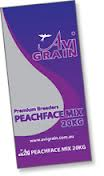
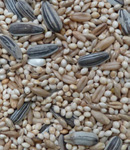
Cockatiel and Lovebird is specially designed and packed with nutrient rich food. It’s built on white French millet and hulled oats, then adds rolled oats, mung beans, split peas, red lentils, niger, pumpkin seeds and sunflower kernels. We also mix in dried beetroot, sweet potato, carrot, apple, paw paw, banana, dates, coconut, spinach, parsley and flower petals, giving a lovebird plenty to sort through each day. Bags are sold in 500g, 1kg and 2kg sizes, and the same blend feeds cockatiels, kakarikis and princess parrots. For a plain everyday mix, Basic Peachface Mix (https://petsville.com.au/products/avigrain-seed-peachface-mix-2kg), also sold as Avigrain Peachface, contains white French millet, grey stripe sunflower, canary seed, hulled oats and safflower. Sprinkle Birdsville Blend Seed Enhancer (https://petsville.com.au/products/birdsville-blend-mixed-veg-seed-enhancer) over either mix to add dried vegetables.
When choosing any lovebird mix, avoid cheap packets bulked out with filler seed, coloured pieces and added shell grit that lovebirds won’t eat. Keep shell grit in a separate dish, as it sinks to the bottom of the seed.
Should Lovebirds Eat Pellets?
Pellets are worth adding for lovebirds, as each piece carries an even spread of vitamins and minerals that loose seed can’t match.
Vetafarm Nutriblend Pellets Mini (https://petsville.com.au/products/vetafarm-nutriblend-pellets-mini-350g) are made for small parrots, including lovebirds, while Harrison’s High Potency Super Fine (https://petsville.com.au/products/harrisons-high-potency-super-fine-454g) is a quality organic option. Aviculture Hub’s peach faced lovebird guide (https://aviculturehub.com.au/peach-faced-lovebird) notes that many breeders now use pellets for a more balanced diet with less waste. Offer pellets in their own dish next to the seed blend. Lovebirds raised on seed can take a while to accept pellets, so start by scattering a handful among the seed and build up gradually over several weeks. A sudden switch is risky, because a lovebird that doesn’t see pellets as food may simply stop eating.
How Much Should You Feed a Lovebird?
Give an adult peachface lovebird roughly one heaped tablespoon of seed each day, alongside its pellets and greens.
Empty husks settle on top of the bowl and hide how little seed may be left underneath, so clear them away every morning before refilling. Offer fresh greens in the morning, when lovebirds are most active, and take out anything uneaten by lunchtime. Lovebirds kept on their own with little room to fly can put on weight, so weigh your bird now and then on kitchen scales.
What Vegetables and Fruit Can Lovebirds Eat?
Lovebirds can have fresh greens and vegetables daily, with fruit offered on two or three days each week.
What Vegetables Can Lovebirds Eat?
Peachface lovebirds enjoy silverbeet, bok choy, kale, endive, broccoli, spinach, capsicum, carrot, corn on the cob and peas. Seeding grasses, chickweed and milk thistle are favourites too, provided they come from a garden free of sprays and wild bird droppings. Chop vegetables small or clip leafy greens to the cage bars so your lovebird can shred them.
What Fruit Can Lovebirds Eat?
Good fruit choices include apple, pear, rockmelon, kiwifruit, guava, stone fruit, banana and berries, cut into small pieces. Take out the stones from stone fruit before serving. Fruit is high in sugar, so keep it as a small part of the diet.
Is Sprouted Seed Good for Lovebirds?
Yes. Sprouting turns dry seed into a soft, fresh food with less fat and more vitamins, and most lovebirds eat it eagerly. Only Australian grown seed will sprout, because imported seed has been irradiated. Our Best Bird Treats page (https://birdsville.net.au/bird-treats-tips-and-sprouted-mix/) explains how to sprout seed at home.
What Treats Can Lovebirds Have?
Millet sprays are the favourite lovebird treat, and white French millet sprays are the healthiest choice.
Break off a short piece of Millet Sprays (https://petsville.com.au/products/millet-sprays-mixed-100g) on training days and your lovebird will quickly link stepping up with a reward. Lafeber’s Classic Nutri Berries (https://petsville.com.au/products/lafebers-classic-nutri-berries-284g) give a lovebird something to forage through. Too many treats fill a small bird up, so ration them and the main diet won’t get left behind.
Do Lovebirds Need Supplements?
Lovebirds need a steady calcium source, extra iodine and a regular vitamin boost, and laying hens and indoor birds need them most.
Do Lovebirds Need Calcium and Iodine?
Yes. Clip a cuttlebone (https://petsville.com.au/products/avi-one-cuttlebone-with-stainless-steel-clip) or calcium bell inside the cage and replace it once it’s worn, and add Vetafarm Calcivet (https://petsville.com.au/products/vetafarm-calcivet-50ml) to the water for laying hens. An Iodine Grit Button (https://petsville.com.au/products/iodine-grit-button) helps prevent iodine deficiency in seed fed birds. Our Calcium and Iodine Perch page (https://birdsville.net.au/calcium-iodine-perch/) covers more mineral options.
Should You Give Lovebirds Vitamins?
Yes, a regular vitamin boost helps every lovebird. Put Vetafarm Multivet (https://petsville.com.au/products/vetafarm-multivet-50ml) in the water bowl, not on the seed, as lovebirds shell their seed and leave powdered vitamins behind. Lovebirds kept indoors also need vitamin D, because window glass blocks the sunlight they use to make it, so give them supervised time in natural sun or use Vetafarm Soluvite D (https://petsville.com.au/products/vetafarm-soluvite-d-25g) in their water. Don’t double up on supplements, as too much can be as harmful as too little.
How Does a Lovebird’s Diet Change With Sydney’s Seasons?
Sydney’s humid summers and chilly winter mornings call for small changes to a lovebird’s food and water.
From December to February, greens and sprouts go off fast, so serve smaller portions and pull them out before lunchtime. Refresh the water morning and evening on hot days, with Vetafarm Aviclens (https://petsville.com.au/products/vetafarm-aviclens-water-cleanser-100ml) added to slow bacteria. Lovebirds love a bath in the heat, so offer a shallow dish of water most days. Through the cooler months, lovebirds use extra energy staying warm, and a spoonful more hulled oats in the seed helps cover it.
A Tip From Our Staff
We add The Good Oil to our lovebird seed, a liquid supplement with omega 3 and 6 and vitamins A, D3 and E. Mix 15ml through every kilogram of seed, then leave it to stand for at least four hours at room temperature so the oil soaks in before feeding. Ask for The Good Oil in store.
What Do Breeding Lovebirds Need?
A breeding pair needs more protein and calcium from the time the hen starts laying until the chicks leave the nest.
Put out a fresh dish of Shep’s Egg & Biscuit (https://petsville.com.au/products/sheps-egg-biscuit-500g) each day once chicks hatch, along with extra greens and sprouted seed. Laying hens need a cuttlebone and calcium in the water. Hand rearing lovebird chicks is covered on our Hand Raising Baby Birds page (https://birdsville.net.au/hand-raising-baby-birds/).
What Foods Are Bad for Lovebirds?
Avocado, chocolate, onion, garlic, rhubarb, caffeine, alcohol, and salty or sugary snacks can all poison a lovebird.
Keep raw potato, uncooked dried beans, stone fruit pits and anything mouldy well away too. Bread, biscuits and chips aren’t toxic, but they fill a small bird up without giving it the nutrition it needs.
Lovebird Food Frequently Asked Questions
What is the best seed for lovebirds?
The best seed for lovebirds is a fresh blend based on white French millet, canary seed and oats, with small amounts of sunflower and safflower. Birdsville Blends Cockatiel and Lovebird adds legumes, dried vegetables and fruit for extra variety. Avoid cheap mixes full of filler and shell grit, and add pellets and fresh greens alongside the seed.
Can lovebirds eat budgie seed?
Lovebirds can eat budgie seed for a short time, but it isn’t ideal. Budgie mixes are made mostly of small millets and canary seed, and peachface lovebirds do better with a slightly larger mix that includes oats, sunflower and safflower. A lovebird or small parrot blend suits their bigger beaks and higher energy needs.
Can lovebirds eat sunflower seeds?
Yes, lovebirds can eat sunflower seeds in small amounts, and most good lovebird mixes include some. Sunflower is high in fat, so lovebirds that pick out only the sunflower can become overweight. Choose a balanced mix where sunflower is a small part, and avoid feeding sunflower seed on its own.
Can lovebirds eat apples?
Yes, lovebirds can eat apple, and most enjoy it. Rinse it, cut out the core, then slice it thinly so a small beak can manage it. Red and green apples are both fine. Apple works well on a few days each week, and any pieces left by the afternoon should come out of the cage.
How often should I feed my lovebird?
Lovebirds should have seed and pellets in the cage all day, every day, because small parrots graze constantly. Check and refill the bowl each morning after clearing the husks, offer fresh greens at breakfast time, and remove whatever fresh food is left later in the day before it sours.
Do lovebirds need grit?
No, grit isn’t needed when a lovebird has a cuttlebone or calcium bell, because lovebirds crack and discard the husk before swallowing each seed. If you do offer shell grit, keep it in a small separate dish, not mixed through the seed, so your lovebird doesn’t eat too much of it.
Where Can I Buy Lovebird Seed in Sydney?
Birdsville sells peachface and lovebird seed all year round, including our Birdsville Blends Cockatiel and Lovebird, along with pellets and supplements, at 684 Botany Road, Alexandria NSW 2015, servicing the Eastern Suburbs and Inner South Sydney. Visit us in store or call us on (02) 9669 1766. We’re open 9:30am to 5:30pm Monday to Friday, 10am to 5pm Saturday and 10am to 4pm Sunday, and directions are on our Contact page (https://birdsville.net.au/contact-birdsville/).
Lovebird owners further afield can shop through Petsville (https://petsville.com.au/), with delivery Australia wide, and the full Petsville seed range (https://petsville.com.au/collections/seed-1) is online too. Quarantine rules mean seed can’t be sent to Western Australia or Tasmania.
Lovebird products on Petsville:
Birdsville Blends Cockatiel and Lovebird (https://petsville.com.au/products/birdsville-blends-cockatiel-lovebird-500g)
Basic Peachface Mix (https://petsville.com.au/products/avigrain-seed-peachface-mix-2kg)
Vetafarm Nutriblend Pellets Mini (https://petsville.com.au/products/vetafarm-nutriblend-pellets-mini-350g)
Millet Sprays (https://petsville.com.au/products/millet-sprays-mixed-100g)
Shep’s Egg & Biscuit (https://petsville.com.au/products/sheps-egg-biscuit-500g)
Vetafarm Multivet (https://petsville.com.au/products/vetafarm-multivet-50ml)
Thinking about a lovebird? Our Peachface Lovebird page (https://birdsville.net.au/animals-for-sale/birds-for-sale/lovebird/peachface-lovebird/) and Hand Raised Peachface Lovebird guide (https://birdsville.net.au/hand-reared-birds-diet-nutrition/hand-raised-peachface-lovebird-for-sale/) tell you more about the lovebirds we raise, and our Lovebirds page (https://birdsville.net.au/animals-for-sale/birds-for-sale/lovebird/) covers Fischer’s and masked lovebirds too.
About Birdsville
Birdsville is a bird and small animal specialist at 684 Botany Road, Alexandria NSW 2015, open since 1985. We blend our own Birdsville Blends (https://birdsville.net.au/birdsville-blends/) seed for lovebirds, cockatiels, budgies, canaries, finches and parrots, and sell them in store and on Petsville.
Sources
Lovebird diet, seed quality, supplements and The Good Oil: Birdsville, Hand Raised Peachface Lovebird care guide
Greens, pellets and breeding feed: Aviculture Hub, Peach faced Lovebird
Native range and wild diet: Wikipedia, Rosy faced lovebird
Ingredients and sizes: Birdsville Blends Cockatiel and Lovebird and Basic Peachface Mix product listings, Petsville
Seed amounts, seasonal feeding and staff tips: Birdsville’s own experience since 1985
Peachface Seed for Sale Sydney
Peachface seed is available all year round in store. Below is the peachface mix we stock.
Avigrain Peachface
Alt text: Avigrain Peachface seed mix for lovebirds
White French millet, grey stripe sunflower, canary seed, hulled oats and/or safflower. Also sold online as Basic Peachface Mix (https://petsville.com.au/products/avigrain-seed-peachface-mix-2kg).
Avigrain Peachface