
Feather plucking is when a parrot pulls out or damages its own feathers, usually anywhere its beak can reach. It’s one of the most common physical and psychological health issues we see in domestic parrots, and there’s no single medication that fixes it, plucking is rarely caused by disease alone, it’s usually a behavioural issue with an underlying trigger. This guide is based on our own experience treating feather plucking in the parrots we rehome and board at Birdsville, not just general theory. We’ll cover why parrots pluck, how to spot the early signs, and how to stop feather plucking, including a full guide to products and fixes matched to different species.
On This Page
Feather Plucking in Parrots: Why Do Parrots Pluck?, How Do You Spot a Parrot That’s Plucking?, How Do You Stop a Parrot From Feather Plucking?, Feather Plucking in Parrots: Frequently Asked Questions
Feather Plucking in Parrots: Why Do Parrots Pluck?
There are many reasons a parrot plucks, and it’s often more than one at once. The large majority of cases we see come down to diet and environment.
Plucking most commonly stems from a poor diet. This applies to any species of parrot, though the exact cause can shift slightly depending on the species and its nutritional needs.
Chronic liver issues can also cause plucking. Liver problems are mostly diet related, and liver health is usually reversible, all of our recommended parrot diets are formulated with this in mind.
A break in routine matters more than most owners expect. Parrots are creatures of habit, and a sudden change can genuinely distress them. A common example is a parrot that’s used to coming out of its cage every day at 6pm, and then its owner goes on holiday. Its routine falls apart, and that stress can trigger plucking.
Stress or anxiety from other animals, kids, loneliness, a lack of toys, poor nutrition, or an unsuitable cage or environment can all contribute as well.
Allergies or a damp environment can also be behind it, sometimes alongside a lack of bathing or preening. Both can cause irritation to the feather follicles.
Not enough toys is one of the most common causes we see. A lack of environmental enrichment, whether that’s the same toys for too long or simply not enough of them, wears a parrot down over time. We often hear owners say their parrot doesn’t like toys, or is scared of them. When we hear that, it’s usually a sign the bird wasn’t given enough toys while it was growing up, and with these birds it’s often just a matter of time before plucking starts.
Poor sleep is a cause that’s often missed entirely. Parrots need around 10 to 12 hours of genuinely dark, uninterrupted sleep each night to stay settled, and a cage left in a busy, lit room, or only half-covered, can leave a bird chronically sleep-deprived. Over time that lack of proper rest shows up as the same stress and irritability that leads to plucking.
Hormonal imbalances can be a trigger too, and poor hormonal regulation often stems from a poor nutritional profile in the first place.
Other Possible Causes to Rule Out With a Vet
Less commonly, plucking can point to something a vet needs to diagnose directly rather than a diet or environment fix. Parasites such as mites, lice, worms or giardia are the most common of these, our mite, lice and worm treatment below covers this. Rarer still are viral conditions like Beak and Feather Disease and polyomavirus, bacterial or fungal skin infections, and heavy metal poisoning from chewing unsafe cage materials, all of which can look identical to ordinary plucking. If your bird is young, newly rehomed, or the plucking came on suddenly, it’s worth a vet check to rule these out, see our Common Bird Illnesses guide for more on Beak and Feather Disease.
How Do You Spot a Parrot That’s Plucking?
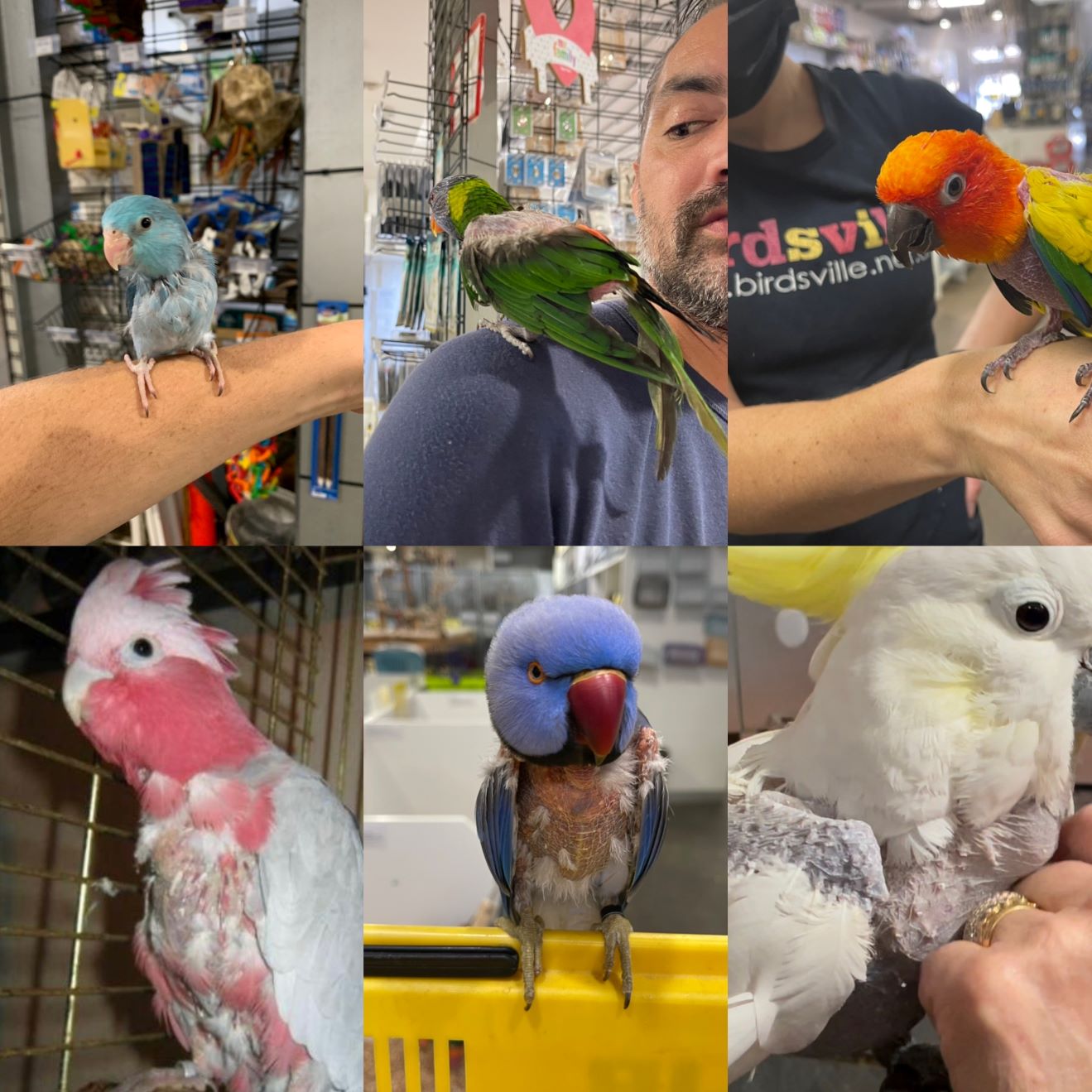
A plucking bird will only lose feathers where its own beak can reach, it physically can’t pluck its own head, so intact head feathers alongside bare patches elsewhere is a strong sign of plucking rather than illness or moulting.
Many owners miss the early signs. It usually starts small, a white or bare area appearing on the wings, around the legs, or on the chest. If you think your bird may be starting to pluck, work through this whole page and the product guide below.
How Do You Stop a Parrot From Feather Plucking?
We recommend focusing on the most common causes first, this gives you a genuinely high chance of resolving the problem before it becomes established.
We won’t repeat the full species-specific diet advice already covered in detail on our individual species care pages, including vitamins, minerals, supplements, fruit and vegetables. Below is what to add or change specifically for plucking.
One thing worth avoiding from the outset is cheap supermarket seed mixes loaded with sunflower. It’s easy to be swayed by attractive packaging on a product that’s genuinely worth less than the seed inside it.
Parrot B-Calm Pellets
We’ve seen great results using B-Calm pellets to calm anxious parrots. Suitable for: macaws, Amazons, eclectus, conures, Quakers, cockatoo species, cockatiels and African greys. (vetafarm.com.au/product/parrot-b-calm/)
High Grade Budgie Seed
If you can’t source our blend, look for a high grade budgie seed from another bird shop with plenty of French white and canary seed. Avoid heavily marketed boxed mixes, since many are bulked out with filler seed that does little for your bird’s health. Suitable for: all parrots and cockatoos. (birdsville.net.au/seeds-grains/budgie-seed/)
Birdsville Healthy Parrot Blend or Birdsville Cockatoo Blend
A healthy, high-nutrient blend packed with vitamin-rich vegetables, grains and legumes, with no peanuts or sunflower seeds. Mixing it with our high grade budgie seed works well. Suitable for: all parrots and cockatoos. (birdsville.net.au/birdsville-blends/)
Wombaroo Lorikeet Powder
A high grade lorikeet food, fed as directed on the packet. Suitable for: lories and lorikeets. (birdsville.net.au/lorikeet-food/wombaroo-lorikeet-food-3/)
Synbiotic
Many of our customers have seen genuine improvement in plucking from this product alone. Suitable for: all parrots and cockatoos. (birdsville.net.au/vetafarm-synbiotic/)
Vitamin D
A very common deficiency in parrots kept mostly indoors. Add Calcivet to your bird’s water twice a week. Suitable for: all parrots and cockatoos. (vetafarm.com.au/product/calcivet/)
The Good Oil
Many parrot owners unknowingly have their bird on a lower-quality diet than they realise. This product supports liver function with fat-soluble vitamins A, D3 and E. Mix it through seed, or add it to a lorikeet’s wet mix. Suitable for: all parrots and cockatoos. (wombaroo.com.au/product/good-oil-for-birds/)
Toys
A minimum of 8 toys, including a swing and a ladder, spread across all levels of the cage. Keep 2 spares aside to rotate in regularly and keep your parrot engaged. Suitable for: all parrots and cockatoos.
Stay Calm Yourself
Birds are perceptive creatures, and an owner who’s stressed often has a bird that over-preens or plucks in response. Our bird training guide covers parrot body language, which can help you work out what’s actually stressing your bird. Suitable for: all parrots and cockatoos.
Radio
Birds don’t like silence. We care for plucking parrots regularly at our boarding facility, and it’s rare to see plucking start there, usually the opposite, we often see improvement during a stay, likely because our store is a busy, noisy environment. Suitable for: all parrots and cockatoos.
Bird Bath
If feather follicle irritation is behind the plucking, a bird bath can help with preening and general comfort. A spray bottle works well if your bird won’t use a bath. Suitable for: all parrots and cockatoos.
Out-of-Cage Time
This one takes some adjusting to, since routine itself can become the problem once it breaks. Aim for regular but slightly random out-of-cage time, roughly every second day, rather than a fixed daily slot no one can maintain forever, including through holidays. Suitable for: all parrots and cockatoos.
Proper Sleep
Aim for 10 to 12 hours of genuinely dark, uninterrupted sleep every night, ideally in a quiet separate room rather than just draping a cover over a cage in a room where the TV or lights are still on. Good quality sleep alone resolves plucking in some birds. Suitable for: all parrots and cockatoos.
Follow Your Species’ Specific Diet Needs
Fresh vegetables, fruit, nuts, calcium and iodine, as covered in detail on each species’ own care page. Suitable for: all parrots and cockatoos.
Mite, Lice and Worm Treatment
Parasites can cause a range of health issues in parrots, including plucking. Follow the packet instructions closely. Suitable for: all parrots and cockatoos, though eclectus parrots should be given half the recommended dose.
Manage the Hormonal Environment
Remove anything your parrot might see as a potential nesting spot. Birds can become protective and stressed over these areas, this includes nesting boxes and happy huts. Suitable for: all parrots and cockatoos.
Avoid or Drastically Reduce
Sunflower seeds, peanuts, safflower seeds, bread, sugary treats, and low-quality seed sold in fancy packaging. Suitable for: all parrots and cockatoos.
If nothing here resolves the plucking, an Elizabethan or soft collar is sometimes used as a genuine last resort, but only for a short period and only under an avian vet’s direct supervision. It isn’t something to fit yourself, and it doesn’t address the underlying cause on its own.
When you move your parrot onto this diet, feed a 50/50 mix of pellets and seed. Don’t top up the seed until your parrot has finished the pellets in front of it, this way your bird gets the benefit of both, and you’ll likely spend less on food overall.
It can take at least 6 months to see real improvement, since a bird may not moult and grow new feathers again before then. If your parrot genuinely hasn’t improved after that, it’s time to see an avian vet.
If your bird is plucking and you’d like some help, come in and see us in store, we’re happy to work through it with you and your bird anytime during opening hours. Because every bird’s plucking is different, we’re not able to give specific advice over the phone or by email.
Feather Plucking in Parrots: Frequently Asked Questions
Why do parrots pluck their feathers?
Feather plucking usually comes down to one or more triggers: poor diet, liver issues, stress from a change in routine, boredom from too few toys, allergies, or hormonal imbalance. It’s rarely caused by disease alone, most cases are behavioural, so working through these causes together gives you the best chance of stopping it.
How can you tell if a parrot is plucking rather than moulting?
A plucking bird will only lose feathers where its own beak can reach, its head stays fully feathered, since it can’t pluck itself there. Moulting is more even across the whole body and grows back quickly. Early plucking often starts as small bare or white patches on the wings, legs or chest.
How long does it take to stop feather plucking?
It can take at least 6 months to see real improvement, because a bird may not moult and grow new feathers again until then. Sticking consistently with diet changes, extra toys and a calmer routine over that period gives you the best results. If nothing has improved after 6 months, book a vet visit.
Can feather plucking be cured with medication?
Rarely. Feather plucking is usually a behavioural issue rather than a disease, so there’s no single medication that fixes it. The exception is when an underlying cause like parasites or giardia is found, a vet can treat that specifically. For most birds, correcting diet, environment and routine works far better than medication alone.
Is feather plucking always behavioural, or could it be something more serious?
Usually it’s behavioural, but not always. Viral conditions like Beak and Feather Disease, bacterial or fungal skin infections, and heavy metal poisoning from chewing unsafe cage materials can all cause feather loss that looks identical to plucking. A vet visit with proper testing is the only way to rule these out with certainty.
Does diet really affect feather plucking?
Yes, diet is the most common cause we see. A poor diet can trigger chronic liver issues and hormonal imbalances, both of which show up as plucking. Switching to a proper mix of pellets and quality seed, avoiding sunflower-heavy blends, and adding supplements where needed makes a genuine difference for most birds.
Should I take a plucking parrot to the vet?
It’s worth it if plucking is new, sudden or severe, or if you suspect parasites, giardia or a liver issue. A vet can test for these directly rather than you guessing. If you’d rather start at home first, come in and see us in store, we’re happy to talk it through with you.
Subtitle for this section
Feather Gallery
under construction


