Updated throughout, all three “2 weeks” mentions are now 4 weeks, along with the FAQ answer.
With any new arrival, we recommend keeping your bird isolated from other animals in the house for at least 4 weeks. This gives your resident animals time to get used to the new arrival before any direct contact happens.
On This Page
New Avian Introductions and Mixing Species: Introducing a New Bird to Your Household, Bringing a New Bird Home, Can You Keep Different Bird Species Together?, How Do You Know If Bird Species Are Compatible?, New Avian Introductions and Mixing Species: Frequently Asked Questions
New Avian Introductions and Mixing Species: Introducing a New Bird to Your Household
With any new arrival, we recommend keeping your bird isolated from other animals in the house for at least 4 weeks. This gives your resident animals time to get used to the new arrival before any direct contact happens.
Bringing a New Bird Home
If you already have birds and plan to introduce a new one to a friend or a flock, soft releasing them properly matters for a number of reasons. Just placing a new arrival straight into a cage with a resident bird can be a disaster. If the resident bird is aggressive or protective of its space, the new arrival could be attacked. Baby birds are especially vulnerable, since they aren’t able to stand up for or defend themselves. An adult new arrival could go either way, depending on whether either bird is aggressive by nature. The same goes for disease: the new arrival could be harbouring something and pass it on to your existing bird, or the other way around.
A young bird already has an underdeveloped immune system, and the stress of moving to a new environment weakens it further. If that stressed, immune-compromised bird is then introduced to a resident bird that looks perfectly healthy but is actually an asymptomatic carrier, it can fall seriously ill. Many birds carry pathogens with no visible symptoms at all. When any bird becomes stressed, its immune system drops, and it can succumb to a pathogen that a fully functioning immune system would normally fight off. This risk is even greater for baby birds, since their immune systems are still developing. To read more about pathogens and stress, see our Common Bird Illnesses guide: https://birdsville.net.au/common-bird-illnesses/
While your new arrival is in quarantine, a few simple habits reduce the risk of anything passing between it and your resident birds. Keep it in a separate room where possible, ideally without shared airflow, and use separate food bowls, water containers and cleaning tools for each space. Always care for your resident birds first, then the new arrival, and wash your hands thoroughly in between. It’s also worth booking your new bird in with an avian vet during this period, a check-up can catch parasites or infections early, before they’ve had any chance to spread.
Soft releasing means placing the new arrival in a holding cage within visible view of your other birds. Birdsville stocks a range of holding and hospital cages that work well for this purpose. This gives the new arrival time to recover from the stress of the move, build up its immune system, and get used to the sights and sounds of the resident birds or other animals it’s about to be introduced to. If your newly arrived bird is carrying something undesirable, you’re more than likely to see signs of it within this period. This process protects both the new arrival and your resident birds.
Some birds are stubborn and take longer to get used to each other. Even after the 4 weeks, keep an eye on them. If one bird is aggressive towards the other, give it another week, but socialise them somewhere outside the cage that’s unfamiliar to both birds, such as the lounge room. This helps them grow more comfortable with each other over time.
Can You Keep Different Bird Species Together?
The idea of mixing different species in the same cage or aviary is nearly as old as keeping birds in captivity.
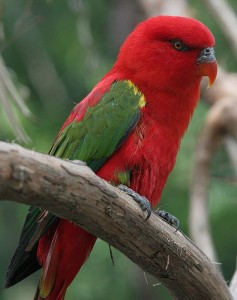
Mixing different species is genuinely complex, and unfortunately there are no foolproof rules, since all birds are individuals and can be unpredictable. Birds that are normally placid and peaceful can become aggressive in the wrong circumstances, while species known for aggression can sometimes be kept in mixed collections and live in harmony.
The difficulty of mixing species is roughly inversely proportional to the size of the cage or aviary, the larger the space, the fewer the problems. If the space is large enough, you should be able to house a number of different species, even large parrots, together without issue. If one bird is aggressive towards another, that bird needs to be able to escape to a part of the aviary where it won’t be harassed or attacked.
The smaller the aviary, the more critical the selection of birds placed within it.
For the average small backyard aviary, if you keep parrots such as Indian Ringnecks, it would be very unwise to also house budgies, since Ringnecks are aggressive and would likely kill the budgies in a short period of time. That said, all birds are individuals, and some combinations can work well even in a small cage, my own pet birds at home are a Quaker and a Caique.
A few other combinations are worth flagging specifically. Lovebirds are best kept as a single bonded pair rather than mixed with other birds, they’re notoriously territorial and can turn on cage mates of any species. Hookbill parrots, even smaller ones, carry a real bite risk for other birds sharing their space, so pairing them with non-hookbill species needs extra caution. It’s also worth avoiding new introductions during breeding season, when even normally easygoing birds can become territorial and defensive.
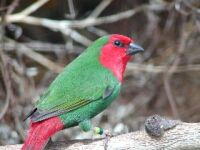
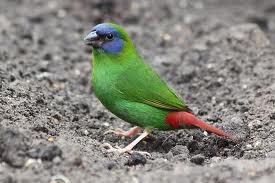
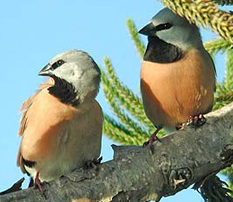
Different finch species are mixed and bred together successfully, and this works well for most species, since they naturally flock with other species in the wild. Most finches live well alongside other types, but there are still some semi-antisocial finches that will attack and harass other species, sometimes fatally. Budgies are a common exception here too, despite being a similar size to many finches, they can be surprisingly aggressive towards them, so this particular pairing is best avoided.
How Do You Know If Bird Species Are Compatible?
Whether your goal is simply a beautiful enclosure or aviary, or prolific breeding, housing your birds with compatible species is critical for their health and your overall success. The first rule, especially with parrots, is to keep similarly sized birds together, since a big parrot could turn on a smaller one overnight and kill it with a single bite. You also need to research the temperament of different species, since some are known to be placid and others quite aggressive. Diet matters too, some birds have completely different nutritional needs, so it’s better to house birds together that can all eat a similar diet.
Age also plays a role, young birds introduced to each other at a similar life stage tend to adapt more easily than adult birds meeting for the first time. In any shared aviary, set up multiple feeding and water stations spread across the space, along with some plant cover or visual barriers, so less confident birds always have somewhere to retreat and feed without confrontation.
New Avian Introductions and Mixing Species: Frequently Asked Questions
How long should you quarantine a new bird?
We recommend isolating a new bird from your other animals and birds for at least 4 weeks. This gives it time to recover from the stress of the move and lets you watch for any signs of illness before introducing it to your resident birds, protecting both the newcomer and your existing flock.
Should a new bird see a vet before being introduced?
Yes, ideally within the first week of quarantine. A vet check during isolation lets you catch parasites or infections before they can spread to your resident birds, and gives you a clear baseline for your new arrival’s health. If anything unusual turns up, your vet can advise on extending the quarantine period.
What is soft releasing and why is it important?
Soft releasing means placing a new arrival in a holding cage within view of your resident birds, rather than putting them straight in together. It lets both birds get used to each other’s presence, gives the new arrival time to build up its immune system, and reduces the risk of a stressed, unfamiliar introduction turning aggressive.
Can budgies be kept with Indian Ringnecks?
It’s not recommended. Indian Ringnecks are known to be aggressive towards smaller, more docile birds, and budgies are especially at risk in a shared cage or aviary. While every bird is an individual, this combination has a genuine history of ending badly, so it’s best avoided rather than left to chance.
Can different finch species live together?
Yes, in many cases. Finches naturally flock with other species in the wild, and different finch species are commonly mixed and bred together successfully. That said, a few semi-antisocial finch species will attack and harass others, so it’s worth researching the specific species you’re considering before mixing them.
What should you consider before mixing bird species in an aviary?
Look at size, temperament and diet. Similarly sized birds are safer together, since a larger parrot can seriously injure or kill a smaller one. Research each species’ typical temperament, since some are naturally placid and others more aggressive, and choose species with compatible dietary needs so feeding everyone properly is straightforward.