
Written by the Birdsville team. Last updated October 2026.
The Peachface Lovebird is a cheeky little parrot from south western Africa, with a rosy pink face, a green body and a flash of bright blue on the rump. It’s the most common lovebird kept as a pet in Australia, and for good reason. Peachface Lovebirds are hardy, easy to feed, come in dozens of beautiful colours and have huge personalities for their size. This guide explains how to care for a Peachface Lovebird, from the best diet and cage setup to toys, breeding and health.
Birdsville sells Peachface Lovebirds, and we stock everything they need, including our own Birdsville Blends seed. Shop in-store at 684 Botany Road, Alexandria NSW 2015, or online through Petsville with delivery anywhere in Australia.
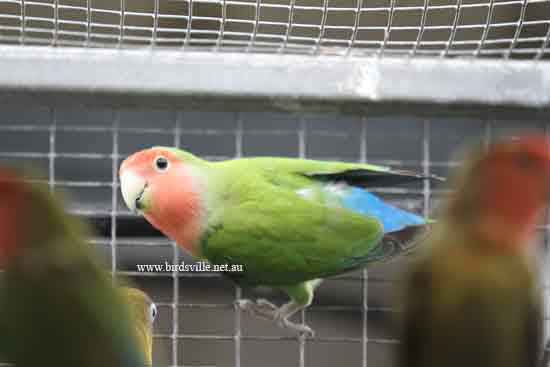
Peachface Lovebird Quick Facts
- Scientific name: Agapornis roseicollis
- Other names: Peach Faced Lovebird, Rosy Faced Lovebird
- Native to: Namibia, south western Angola and the dry north west of South Africa
- Adult size: about 15 to 18cm, 46 to 63g
- Lifespan: around 12 to 20 years with good care
- Colours: wild green with a peach face, plus lutino, blue, pied, cinnamon, orange faced, violet and many more mutations
- Diet: lovebird seed, a Birdsville Blend, pellets, greens and vegetables
- Cage: at least 90 x 60 x 60cm
- Clutch: 4 to 6 eggs
- Experience level: one of the easiest parrots for beginners
On This Page
- Peachface Lovebirds as Pets
- Peachface Lovebird Colours
- The Best Diet for Peachface Lovebirds
- Essential Supplies
- Cage and Aviary Setup
- Toys and Behavioural Enrichment
- Bathing
- Handling and Training
- Health and Medicating Your Birds
- Cleaning
- Household Dangers
- Choosing a Healthy Peachface
- Sexing Peachface Lovebirds
- Breeding Peachface Lovebirds
- Holiday Care and Travel
- Mixing With Other Birds
- FAQ
- Recommended Vets and Links
Peachface Lovebirds as Pets
In the wild, Peachface Lovebirds live in small, noisy flocks in the dry, rocky country of Namibia and northern South Africa, never far from water. They huddle together for warmth and spend their days chattering, preening each other and searching for seeds.
At home, they are bold, busy and very entertaining. A hand raised Peachface can be a loving shoulder companion, while a pair in an aviary will keep you amused for hours. They are tough little birds that handle Sydney’s climate well, which is one reason they’re such a popular first parrot. Be aware that they have a sharp, shrill call and love to chew, so they suit owners who enjoy a lively bird.
Peachface Lovebird Colours
Few pet birds come in as many colours as the Peachface Lovebird. As well as the wild green form with its rosy face, breeders have produced lutino (yellow with a red face), blue and aqua forms with a creamy face, pied birds with patches of colour, cinnamon, orange faced, violet, dark factor and many combinations of these. Whatever colour you choose, the care is exactly the same.
What we have in store changes all the time, so call us or check our socials to see which colours are in.
The Best Diet for Peachface Lovebirds
Most health problems in pet lovebirds come back to diet. A cheap, seed only diet is low in vitamins and often full of filler seed your bird won’t eat. At Birdsville, we recommend one of two easy options.
Option 1: Our Three Part Diet
This is how we recommend feeding all our parrots, and it’s what most of our customers do.
- Use our Basic Peachface Mix as the base seed.
- Mix in Birdsville Blends Cockatiel and Lovebird, one of our most popular blends. It’s loaded with goodness you won’t find in a basic mix, including chillies, pumpkin, legumes, dried fruits, dried vegetables and herbs, on top of a wide variety of quality seeds. Mixing it through the basic seed makes every meal more nutritious and helps your Birdsville Blend go further.
- Offer pellets, such as Vetafarm Nutriblend Small, for complete vitamins, minerals and protein.
Option 2: Pellets and Seed Enhancer
For a simpler setup, feed pellets alongside your seed and sprinkle our Birdsville Blend Seed Enhancer over the top. The Seed Enhancer is full of healthy goodies such as dried vegetables, dried fruits, legumes and herbs, and it turns plain seed into a much richer, more varied meal that Peachfaces love to forage through.
Birdsville Blends: Fresh, Nutritious and Made by Us
We make our Birdsville Blends ourselves, using fresh, high quality ingredients and high nutrient extras like chillies, pumpkin, legumes, dried fruits, dried vegetables and herbs. Everything is bagged on site, and because we go through so much of it, it’s always fresh. Many chain store mixes are old and dusty, with low quality grains and filler seed that affect your bird’s health and vitality. Buying from the people who blend it also means better value.
Fresh Foods
Add fresh food to whichever option you choose:
- Greens and vegetables: bok choy, silverbeet, spinach, broccoli, carrot, corn, peas, capsicum and sweet potato.
- Fruit, a few times a week: apple, pear, melon, berries and a little orange.
- Sprouted seed: rinse sprouts with Aviclens before feeding.
- Millet sprays: a favourite treat and great for training.
- Egg and biscuit: extra protein for breeding birds and young lovebirds.
- Seeding grasses and willow: great for nibbling and nest building.
Make sure anything from the garden hasn’t been sprayed.
Foods to Avoid
Avocado, onion, chocolate, caffeine, alcohol, and salty or fatty food.
How Much to Feed
Adults: about 1 to 2 level tablespoons of seed and pellets a day, plus a serve of fresh food each morning. Blow the husks off the seed dish daily so you can see how much is really left.
Breeding birds and young birds: keep food available at all times and add egg and biscuit every day.
Calcium, Vitamins and Water
Calcium should always be available. Hang a cuttlebone or calcium bell in the cage and add Vetafarm Calcivet to the water, especially for indoor birds that don’t get direct sun.
Add a vitamin supplement such as Vetafarm Multivet to the drinking water once or twice a week. Every bird benefits from a regular vitamin boost, whatever its diet.
Fresh water must be available at all times. Change it daily and add Aviclens to keep it clean.
Essential Supplies for Peachface Lovebirds
All of these, and plenty more, are available in-store at Birdsville and online at Petsville.
Food
- Basic Peachface Mix (https://petsville.com.au/products/avigrain-seed-peachface-mix-2kg)
- Birdsville Blends Cockatiel and Lovebird (https://petsville.com.au/products/birdsville-blends-cockatiel-lovebird-500g)
- Birdsville Blend Seed Enhancer (https://petsville.com.au/products/birdsville-blend-mixed-veg-seed-enhancer)
- Vetafarm Nutriblend Small Pellets (https://petsville.com.au/products/vetafarm-nutriblend-pellets-sml-350g)
- Millet sprays (https://petsville.com.au/products/millet-sprays-mixed-100g)
- Egg and biscuit (https://petsville.com.au/products/sheps-egg-biscuit-500g)
Vitamins and Calcium
- Vetafarm Calcivet (https://petsville.com.au/products/vetafarm-calcivet-50ml)
- Vetafarm Multivet (https://petsville.com.au/products/vetafarm-multivet-50ml)
- Cuttlebone with clip (https://petsville.com.au/products/avi-one-cuttlebone-with-stainless-steel-clip)
Toys and Enrichment
- Hanging toys (https://petsville.com.au/collections/hanging-bird-toys)
- Foot toys (https://petsville.com.au/collections/foot-toys)
- Swings and ladders (https://petsville.com.au/collections/swings-ladders)
- Perches (https://petsville.com.au/collections/perches)
Health and Hygiene
- Aviclens water cleanser (https://petsville.com.au/products/vetafarm-aviclens-water-cleanser-100ml)
- Avitrol Mite and Lice Spray (https://petsville.com.au/products/fidos-avitrol-bird-mite-and-lice-spray-125ml)
- Vetafarm Wormout Gel (https://petsville.com.au/products/vetafarm-wormout-gel-50ml)
- Vetafarm Spark Liquid (https://petsville.com.au/products/vetafarm-spark-liquid-50ml)
- F10 Veterinary Disinfectant (https://petsville.com.au/products/f10-veterinary-disinfectant-200ml)
Housing
- Cage at least 90 x 60 x 60cm, with bar spacing of about 1.25cm
- Natural perches in different thicknesses
- Lovebird nest box or sleeping hut
- Shallow bath dish
- Carry cage
Cage and Aviary Setup
Peachface Lovebirds are active fliers, so give them as much room as you can. A pet bird needs a cage at least 90cm long, 60cm deep and 60cm high, plus supervised time out every day. Choose length over height, as lovebirds fly side to side, and pick a sturdy cage, as they chew through flimsy wire and timber.
Aviaries for Breeding
For a breeding colony, an aviary of around 3 metres long, 2.4 metres wide and at least 1.8 metres high gives the birds space to fly, settle disputes and claim their own nest box. The more birds you keep, the more space they need, so don’t overcrowd.
Give them a solid roof and walls at one end for shelter from wind, rain and cold, while still allowing good airflow so the aviary doesn’t get stuffy or damp. Fit plenty of perches of different sizes, spread out so birds can get away from each other. Clean the floor regularly so droppings and old seed don’t build up.
Setting Up a Pet Cage
- Place the cage in a bright room where the family spends time, away from the kitchen and draughts.
- Fit natural perches at different heights.
- Mount food and water dishes high, away from perches.
- Hang a swing, a bell and a couple of chew toys.
- Add a sleeping hut for night time roosting.
- Cover the cage at night for 10 to 12 hours of sleep.
Toys and Behavioural Enrichment
Peachface Lovebirds are clever, curious and born chewers. Without enough to do, they can become noisy, nippy or start plucking their feathers. You’ll find our full range of hanging toys, foot toys, swings, ladders and perches on Petsville.
- Shredding toys: paper, cardboard, palm leaf and soft wood they can tear apart.
- Bells and rattles: noisy toys are always a hit.
- Swings and ladders: for exercise and balance.
- Foraging: hide treats in paper cups, cardboard tubes or foraging toys.
- Nesting play: give them strips of paper or palm leaf. Many Peachface hens tuck them into their rump feathers to carry, which is fun to watch.
- Fresh branches: unsprayed eucalyptus, bottlebrush, willow or fruit tree branches.
- Toy rotation: change toys over every week to keep things interesting.
Bathing
Peachface Lovebirds come from dry country, but they still love a bath. Offer a shallow dish of clean water a few times a week, or lightly mist them on warm days.
Handling and Training
Hand raised Peachface Lovebirds can be very affectionate, but they are also strong willed and can give a firm nip. Give a new bird a day or two to settle in before handling, then build trust with short, gentle sessions and a little millet spray.
Train with rewards only: praise and treats for good behaviour, no reaction to bad behaviour, and never punish. Teach “step up” first, then build from there. Daily contact keeps a lovebird tame. Our parrot training guide has more tips (https://birdsville.net.au/pet-bird-advice-and-training/bird-training-clicker-training-parrot-body-language/).
Health and Medicating Your Birds
Birds hide illness. If your Peachface sits fluffed up, stops eating or has messy droppings, act quickly. Read our Common Bird Illnesses guide for more (https://birdsville.net.au/common-bird-illnesses/).
Worming
Worm every 3 months for aviary birds and every 6 months for indoor birds. Use an all wormer in the drinking water, as many wormers don’t kill tapeworm. Check with our team on timing for newly weaned birds.
Mites and Lice
Spray under the wings and around the vent with a bird mite and lice spray. Avoid the face, as it stings the eyes.
New Birds and Moving
Moving or adding a new bird is stressful. Add Vetafarm Spark Liquid to the water for a few days to help with energy and settling in. Quarantine new birds for 4 to 6 weeks before they join your others.
Sick Birds
Keep a sick bird warm straight away with a heat lamp or heater, then see an avian vet as soon as possible.
Beak and Feather Disease
Lovebirds are prone to PBFD, a virus spread through feather dust and droppings. There’s no vaccine, so buy healthy birds, quarantine new arrivals and keep your birds well fed and stress free.
Egg Binding
Hens can lay with or without a mate. A hen straining or sitting fluffed on the floor may be egg bound and needs a vet urgently. Calcium helps prevent it.
Cleaning
- Daily: change water, blow husks off the seed and remove old fresh food.
- Weekly: clean the tray, perches, dishes, toys and bath, and weigh your bird.
- Monthly: disinfect the whole cage or aviary with a bird safe disinfectant such as F10.
Household Dangers
See Foods to Avoid in the diet section. Also watch for:
- Cats and dogs left alone with birds
- Ceiling fans, windows and mirrors
- Fumes from non-stick cookware, aerosols and smoke
- Zinc and lead in cheap metal and old paint
- Cleaning products and insect spray
- Open water such as sinks and cups
- Power cords
- Cold draughts
Choosing a Healthy Peachface
Look for these signs when choosing a Peachface Lovebird, and check your own bird regularly.
- Eyes: bright, clear and free of discharge.
- Body condition: as a bird handler, I always feel a bird’s keel, the breast bone under the chest. A healthy bird has firm muscle on both sides, and a sick bird loses it quickly.
- Beak: clean and not overgrown.
- Nostrils: clear.
- Feathers: smooth and complete.
- Vent: clean.
- Behaviour: active, alert and chattering.
- Appetite: eating keenly.
Birdsville offers wing and nail clipping in-store (https://birdsville.net.au/wing-clipping-nail-clipping/).
Sexing Peachface Lovebirds
Male and female Peachface Lovebirds look the same. Hens are often a little larger and bossier, and they carry nesting material tucked in their rump feathers. Experienced keepers can also check the spacing of the pelvic bones, which is wider in mature hens. For a sure answer, DNA Solutions can sex your bird from a few plucked feathers (https://dnasolutions.com.au/animal-dna-testing/).
Breeding Peachface Lovebirds
Peachface Lovebirds breed readily from about 10 to 12 months old. Give each pair a vertical lovebird nest box of around 23 x 15 x 18cm, hung high, and provide more nest boxes than pairs in a colony, all at the same height. Supply plenty of nesting material, such as palm fronds, willow, bark strips and grass. The hens tuck it into their rump feathers to carry it to the nest.
The hen lays 4 to 6 eggs, usually a day or two apart, and incubates them for about 23 days. Chicks leave the nest at around 6 weeks and are weaned a few weeks later. Feed egg and biscuit daily while chicks are being raised, and keep calcium available for the hen.
Peachfaces will breed all year if allowed. Remove the nest box after two or three clutches to rest the hen. Vetafarm Breeding Aid (https://petsville.com.au/products/vetafarm-breeding-aid-100ml) helps support breeding birds. Keep Peachfaces apart from other lovebird species when breeding.
Holiday Care and Travel
Ask someone to visit every day to change water and top up food, or book your bird into our bird boarding in Sydney (https://birdsville.net.au/parrot-bird-boarding-sydney/). For travel, use a small, ventilated carry cage, keep the trip short and never leave your bird in a parked car. See our carry cages (https://birdsville.net.au/carry-cages/).
Mixing With Other Birds
Peachface Lovebirds are best kept with their own kind. They can be territorial and may bully or injure finches, budgies and other small birds, especially when breeding. Give colonies plenty of room and introduce new birds slowly, in their own cage inside the aviary for about two weeks first.
Peachface Lovebird FAQ
What should I feed my Peachface Lovebird?
Feed our Basic Peachface Mix with Birdsville Blends Cockatiel and Lovebird mixed through it, plus pellets. The blend adds chillies, pumpkin, legumes, dried fruits, dried vegetables and herbs. Offer greens and vegetables daily and fruit a few times a week. Or feed pellets with our Seed Enhancer sprinkled over the seed.
Are Peachface Lovebirds good for beginners?
Yes. Peachface Lovebirds are hardy, easy to feed and handle Sydney’s weather well, which makes them one of the best first parrots. They are lively, chatty and love to chew, so they need a roomy cage, plenty of toys and daily attention to stay happy and tame.
Should I get one Peachface Lovebird or two?
A single hand raised Peachface bonds closely with its owner but needs company every day. If you’re out a lot, a pair keeps each other entertained, though they may be less interested in people. Introduce lovebirds slowly, as they can be territorial with birds they don’t know.
How long do Peachface Lovebirds live?
With good care, Peachface Lovebirds usually live around 12 to 15 years, and some reach 20. A balanced diet of seed, a Birdsville Blend and pellets, fresh greens, calcium, clean water, regular worming and plenty of exercise all help your bird live a long and healthy life.
How can you tell if a Peachface Lovebird is male or female?
Males and females look the same. Hens are often bigger and bossier, and they tuck nesting material into their rump feathers. The pelvic bones are also wider apart in mature hens. These signs aren’t always reliable, so a DNA test from a few plucked feathers is the best way to know.
What colours do Peachface Lovebirds come in?
Peachface Lovebirds come in a huge range of colours. As well as the wild green form, there are lutino, blue, aqua, pied, cinnamon, orange faced, violet and many combinations. The care and diet are the same for every colour. Call Birdsville or check our socials to see which colours are in.
Recommended Vets and Links
- SASH (Small Animal Specialist Hospital), 5/476 Gardeners Rd, Alexandria NSW 2015, 02 8913 4000, sashvets.com (24/7 emergency)
- The Wild Vet, 22A Bridge Road, Glebe, 1300 945 3838, thewildvet.com.au
- SERV, 57-63 Herbert St, Artarmon, 02 9436 4884, exoticsvet.com.au
- Southern Cross Veterinary Clinic, 60 Princes Hwy, St Peters, 02 9516 0234, southerncrossvet.com.au
- Carlingford Animal Hospital, 772 Pennant Hills Road, Carlingford, 02 9871 6036, birdhealth.com.au
- The Unusual Pet Vets, 995 Bourke Street, Waterloo NSW 2017, 02 9319 6111, unusualpetvets.com.au
- Vetafarm, vetafarm.com.au
Further reading:
- World Parrot Trust, Rosy-faced Lovebird (https://parrots.org/encyclopedia/rosy-faced-lovebird/)
- DNA Solutions, bird DNA sexing (https://dnasolutions.com.au/animal-dna-testing/)
Peachface Lovebirds and Supplies at Birdsville
Birdsville has been Sydney’s bird specialist since 1985. We’re a small business that does things in a big way, and because nobody tells us how to run our shop, we keep our birds, seed and Birdsville Blends the best of the best.
We sell Peachface Lovebirds in a range of colours. Visit us at 684 Botany Road, Alexandria NSW 2015, on the corner of Gardeners Road, servicing the Eastern Suburbs and Inner South Sydney. Call (02) 9669 1766 to see what’s in, or shop Birdsville Blends, pellets and toys on Petsville (https://petsville.com.au/collections/shop-small-parrot-products) with delivery Australia-wide.
Follow us on Facebook (https://www.facebook.com/BirdsvilleRosebery/), Instagram (https://www.instagram.com/petsvillesydney/) and TikTok (https://www.tiktok.com/@birdsvillepets) for new arrivals.


