
Written by the Birdsville team. Last updated October 2026.
Blue faced parrot finch care comes down to a quality finch seed mix, plenty of greens and live food, a roomy aviary, and the right wormer, because this species is sensitive to praziquantel. The blue faced parrot finch is a lively grass green finch with a bright blue face and a red tail. Like most parrot finches, they’re very active and a great choice for a mixed aviary. This guide covers how to care for blue faced parrot finches, from diet and breeding to housing and health, with a full shopping list of the supplies we recommend, delivered Australia-wide by Petsville.
Written by the Birdsville team. Last updated October 2026.
Blue faced parrot finch care comes down to a quality finch seed mix, plenty of greens and live food, a roomy aviary, and the right wormer, because this species is sensitive to praziquantel. The blue faced parrot finch is a lively grass green finch with a bright blue face and a red tail. Like most parrot finches, they’re very active and a great choice for a mixed aviary. This guide covers how to care for blue faced parrot finches, from diet and breeding to housing and health, with a full shopping list of the supplies we recommend, delivered Australia-wide by Petsville.
Blue Faced Parrot Finch Quick Facts
Scientific name: Erythrura trichroa
Also known as: Blue-faced Parrot-finch, Blue Face Parrot Finch
Native range: Cape York in far north Queensland, Papua New Guinea and nearby islands
Adult length: around 12 cm
Lifespan: commonly around 5 to 7 years
Diet: finch seed mix, greens, live food, egg and biscuit
Housing: pairs or groups, ideally in an aviary
Breeding season: all year, mostly October to April
Clutch: around 5 eggs, incubated for about 13 to 14 days
Sexing: males have more, darker blue on the face
Mutations: lutino and pied
Health note: sensitive to praziquantel, an ingredient in many wormers
Experience level: intermediate
Blue Faced Parrot Finch Shopping List
Everything in this guide is available from Petsville, which delivers Australia-wide, or in-store at Birdsville in Sydney.
Food
Birdsville Blends Finch & Canary (https://petsville.com.au/products/birdsville-blends-finch-canary-500g)
Millet sprays (https://petsville.com.au/products/millet-sprays-mixed-100g)
Shep’s Egg & Biscuit (https://petsville.com.au/products/sheps-egg-biscuit-500g)
Insectivore Rearing Mix (https://petsville.com.au/products/wombaroo-insectivore-rearing-mix-250g)
Vetafarm Insecta-Pro (https://petsville.com.au/products/vetafarm-insecta-pro-450g)
Health
Vetafarm Calcivet (https://petsville.com.au/products/vetafarm-calcivet-50ml)
Vetafarm Multivet (https://petsville.com.au/products/vetafarm-multivet-50ml)
Vetafarm Spark Liquid (https://petsville.com.au/products/vetafarm-spark-liquid-50ml)
Shell grit (https://petsville.com.au/products/shell-grit-5kg)
Avitrol Mite & Lice Spray (https://petsville.com.au/products/fidos-avitrol-bird-mite-and-lice-spray-125ml)
Breeding and Cleaning
Vetafarm Breeding Aid (https://petsville.com.au/products/vetafarm-breeding-aid-100ml)
Nesting material, including coconut fibre (https://petsville.com.au/collections/bird-subsrate)
Vetafarm Aviclens (https://petsville.com.au/products/vetafarm-aviclens-water-cleanser-100ml)
Vetafarm Avicare disinfectant (https://petsville.com.au/products/vetafarm-avicare-rtu-500ml)
Live food, wicker nests and semi open finch nest boxes are available in-store at Birdsville.
On This Page
Blue Faced Parrot Finches in the Wild
Sexing and Description
Mutations
Choosing a Healthy Bird
Housing
Blue Faced Parrot Finch Diet
Breeding Blue Faced Parrot Finches
What If I Lose a Mate?
Worming and Health
Cleaning
Compatibility with Other Finches
Frequently Asked Questions
Recommended Vets and Links
Blue Faced Parrot Finches in the Wild
Blue faced parrot finches are found in Cape York in far north Queensland, Papua New Guinea and many nearby islands. In Australia, they live deep in the rainforest, in small cleared pockets where grass can grow, which makes them hard to spot.
Ash’s Sighting Near Port Douglas
Birdsville owner Ash was lucky enough to spot and photograph blue faced parrot finches in the wild, after many days staying in the rainforest about an hour north of Port Douglas in far north Queensland. Seeing these elusive birds in their natural home is something few keepers ever get to do.
Sexing and Description
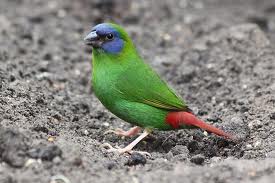
Blue faced parrot finches are around 12 cm long, with a grass green body, a blue face and a red rump and tail.
To sex them, hold a pair together and compare. The male has more blue on the face, and his blue is slightly darker. On the hen, the blue often doesn’t pass her eye. The male is also a brighter grass green. Both sexes have the red tail area.
Mutations
There are a few colour mutations of the blue faced parrot finch, including the lutino and the pied.
Choosing a Healthy Bird
Always choose a finch with good condition on the breast. Don’t choose birds with closed eyes, fluffed up feathers, or scaly legs and beak. Blue faced parrot finches moult very heavily, so look for birds in good feather. In the breeding season, hens can have a bare patch on the back of the head from males trying to mate, which is normal.
Housing Blue Faced Parrot Finches
Blue faced parrot finches are very active and need plenty of flying space. An aviary with greenery and cover suits them best. Provide perches of different thicknesses, a shallow bath, and separate dishes for seed, grit, live food and water. They’re social birds, so don’t keep one alone in a cage.
Seasonal tip: Blue faced parrot finches come from tropical rainforest and feel the cold. In winter, keep them out of draughts, shelter outdoor aviaries from cold southerly winds, and add gentle heating in cold areas. In summer, give them shade, a bath, and Vetafarm Spark Liquid (https://petsville.com.au/products/vetafarm-spark-liquid-50ml) in the water on very hot days.
Blue Faced Parrot Finch Diet
Blue faced parrot finches need a quality finch seed mix, greens, live food, egg and biscuit, grit, vitamins, calcium and fresh water every day.
Seed
Always feed your birds a good quality seed mix if you want any success breeding them, because finches need to be in top condition to breed. That’s why breeders are so fussy about seed. Our top pick is Birdsville Blends Finch & Canary (https://petsville.com.au/products/birdsville-blends-finch-canary-500g), our biggest selling finch blend. It’s bagged fresh on site with a high turnover, so the seed never sits on a shelf, and buying from the people who mix it means better value. Many supermarket and chain store mixes are poor quality and full of filler seed, and some even add heavy shell grit to bump up the weight. If you’re unsure about your seed, ask a bird specialist.
Sprouted Seed
A great addition to your finches’ diet. Clean it thoroughly with Vetafarm Aviclens (https://petsville.com.au/products/vetafarm-aviclens-water-cleanser-100ml) to remove bacteria before feeding.
Millet Sprays
Fresh seed still on the stem, relished by finches. French white is the best for blue faced parrot finches. Buy them on Petsville (https://petsville.com.au/products/millet-sprays-mixed-100g).
Greens
Greens are very important for the vitality of parrot finches and shouldn’t be ignored. Offer seeding grasses, chickweed, bok choy, Lebanese cucumber and endive. Never feed finches lettuce.
Live Food
Mealworms, maggots and fly pupae are essential for breeding birds. Feed them with a few pinches of insectivore mix, such as Insectivore Rearing Mix (https://petsville.com.au/products/wombaroo-insectivore-rearing-mix-250g) or Vetafarm Insecta-Pro (https://petsville.com.au/products/vetafarm-insecta-pro-450g). Live food is available in-store at Birdsville.
Egg and Biscuit
An important source of extra protein, fed daily, especially for breeding birds. It can be mixed with the live food. Try Shep’s Egg & Biscuit (https://petsville.com.au/products/sheps-egg-biscuit-500g).
Vitamins
Vitamins add what we can’t provide in an aviary. They must go in the water, because vitamins added to seed are wasted when finches hull it. Vetafarm Multivet (https://petsville.com.au/products/vetafarm-multivet-50ml) is a good choice.
Calcium and Vitamin D
All birds need a steady supply of calcium for strong bones, healthy feathers and good eggs. We recommend Vetafarm Calcivet (https://petsville.com.au/products/vetafarm-calcivet-50ml), a liquid calcium supplement with vitamin D3 that goes in the drinking water. It’s especially important for birds kept indoors or out of direct sunlight, because window glass blocks the UV light birds need to make their own vitamin D. Breeding hens need extra calcium to lay strong eggs.
Grit
Feed a proper fine finch grit containing shell, baked egg shell, crushed cuttlebone, charcoal and limestone, such as shell grit (https://petsville.com.au/products/shell-grit-5kg), in its own dish.
Breeding Blue Faced Parrot Finches
Blue faced parrot finches can breed all year round, but they usually breed in the warmer months, from October to April.
Here’s a tip from our team. In our opinion, aviaries are much better than breeding cabinets for all finches, because aviary bred young seem happier and stronger.
They nest in wicker nests or semi open wooden finch nest boxes, both available in-store, and build with coconut fibre and blades of grass (https://petsville.com.au/collections/bird-subsrate). Don’t check the nests too often while they’re breeding, or the parents may desert the young.
The hen lays around 5 eggs, which take 13 to 14 days to hatch. The chicks fledge at around 3 weeks, and the parents keep feeding them for several more weeks while they learn to eat seed. Blue faced parrot finches are very clean, and the parents remove the chicks’ droppings to keep the nest clean until the young leave.
Feed egg and biscuit daily during breeding, plus plenty of mealworms, maggots and fly pupae. Vetafarm Breeding Aid (https://petsville.com.au/products/vetafarm-breeding-aid-100ml) on the seed also helps support fertility and chick growth.
What If I Lose a Mate?
If one bird from a pair escapes or passes away, it’s quite easy to pair the lone bird with a new partner. In the wild, these birds often split up and re-pair. They’re social birds, so they shouldn’t be kept alone in a cage.
Worming and Health
It’s important to worm your birds, but blue faced parrot finches are especially sensitive to praziquantel, an ingredient in many bird wormers. Always check that your wormer doesn’t contain praziquantel before using it on this species. Ask our team or an avian vet to recommend a safe, praziquantel-free option.
Watch for fluffed up feathers, sitting still and inactive, a dirty vent, or a thin chest where the keel bone sticks out. A sick finch can go downhill within hours. Move it to a small, warm cage straight away, add Spark Liquid to its water, and see an avian vet. For more on finch health, see our Finch Care page [Finch Care page link].
For lice and mites, spray birds, nests and the aviary with Avitrol Mite & Lice Spray (https://petsville.com.au/products/fidos-avitrol-bird-mite-and-lice-spray-125ml) every 3 months, avoiding the eyes. Keep new birds separate for 4 to 6 weeks before introducing them, and give them Spark Liquid in their water for the first few days after a move.
Cleaning
Daily: fresh water and seed in clean dishes, blow husks off the seed, and remove old live food and greens.
Weekly: clean the aviary thoroughly.
Monthly: disinfect with Vetafarm Avicare (https://petsville.com.au/products/vetafarm-avicare-rtu-500ml), clean or replace branches, and clean out nests after the young have left.
Compatibility with Other Finches
Like most parrot finches, blue faced parrot finches are very active and mix well with other finches, making them a great choice for a mixed species aviary. Avoid housing them with other parrot finch species they could crossbreed with. For more on mixing birds, see our Mixing Different Species of Bird page (https://birdsville.net.au/pet-bird-advice-and-training/mixing-different-species-of-bird/).
Blue Faced Parrot Finch Frequently Asked Questions
What do blue faced parrot finches eat?
A quality finch seed mix such as Birdsville Blends Finch & Canary, plus sprouted seed, French white millet sprays and plenty of greens like seeding grasses, chickweed and bok choy. Live food such as mealworms and fly pupae with insectivore mix, plus egg and biscuit, is essential when breeding. Add grit, vitamins and calcium too.
How do you tell a male blue faced parrot finch from a female?
Hold a pair side by side. The male has more blue on the face, slightly darker, and it usually extends past the eye, while the hen’s blue often stops before her eye. Males are also a brighter grass green. Both sexes have a red rump and tail.
Where do blue faced parrot finches come from?
Blue faced parrot finches are found in Cape York in far north Queensland, Papua New Guinea and many nearby islands. In Australia, they live in small grassy clearings deep in the rainforest, which makes them hard to spot. Birdsville owner Ash has seen them about an hour north of Port Douglas.
What wormer is safe for blue faced parrot finches?
Blue faced parrot finches are especially sensitive to praziquantel, an ingredient in many bird wormers, so always check the label before worming them. Choose a praziquantel-free wormer, and ask our team or an avian vet if you’re unsure which product is safe to use.
What happens if my blue faced parrot finch loses its mate?
It’s quite easy to pair a lone blue faced parrot finch with a new partner, as wild birds often split up and re-pair. They’re social birds and shouldn’t be kept alone, so find your bird a new companion as soon as you can.
Can blue faced parrot finches live in a mixed aviary?
Yes. Like most parrot finches, blue faced parrot finches are very active and mix well with other finches, which makes them a great choice for a mixed aviary. Give them plenty of flying space, greenery and cover, and avoid housing them with other parrot finch species they could crossbreed with.
Recommended Vets and Links
SASH (Small Animal Specialist Hospital), 02 8913 4000, 5/476 Gardeners Rd, Alexandria NSW 2015, sashvets.com (24/7 emergency)
The Wild Vet, 1300 945 3838, 22A Bridge Road, Glebe, thewildvet.com.au
SERV, 02 9436 4884, 57-63 Herbert St, Artarmon, exoticsvet.com.au
Southern Cross, 02 9516 0234, 60 Princes Hwy, St Peters, southerncrossvet.com.au
Carlingford Animal Hospital, 02 9871 6036, 772 Pennant Hills Road, Carlingford, birdhealth.com.au
The Unusual Pet Vets, 02 9319 6111, 995 Bourke Street, Waterloo NSW 2017, unusualpetvets.com.au
Vetafarm, vetafarm.com.au
Related Birdsville pages: Finch Care [Finch Care page link], Finch Seed (https://birdsville.net.au/seeds-grains/finch-seed/), Mixing Different Species of Bird (https://birdsville.net.au/pet-bird-advice-and-training/mixing-different-species-of-bird/), Birdsville Blends (https://birdsville.net.au/birdsville-blends/).
Blue Faced Parrot Finches and Supplies at Birdsville
We get blue faced parrot finches in from time to time at Birdsville, 684 Botany Road, Alexandria NSW 2015, servicing the Eastern Suburbs and Inner South Sydney. Call (02) 9669 1766, or check our Facebook (https://www.facebook.com/BirdsvilleRosebery/), Instagram (https://www.instagram.com/petsvillesydney/) and TikTok (https://www.tiktok.com/@birdsvillepets) to see what’s in. Every product in this guide is available online from Petsville, delivered Australia-wide, or in-store. Live food, wicker nests and finch nest boxes are available in-store. Our team will help you set up the right home and diet for your birds.
About Birdsville
Birdsville has been trading in Sydney since 1985, and we believe we’re now the oldest bricks and mortar bird shop still open in Australia. Owner Ash brings experience from vet clinics and from zoo keeping at the Rainforest Habitat in Port Douglas, now Wildlife Habitat. We’re a small business that does things in a big way. Nobody tells us how to run things, so we keep our products the best of the best.


