
Written by the Birdsville team. Last updated October 2026.
Red faced parrot finch care comes down to a quality finch seed mix, lots of greens, live food and egg and biscuit for breeding, and the right wormer, because this species is sensitive to praziquantel. The red faced parrot finch, also called the red headed parrot finch, has a grass green body with a bright red face, neck and tail, and it’s a favourite with South Sydney Rabbitohs supporters for its red and green colours. They’re active, curious birds that make excellent members of an aviary community. This guide covers how to care for red faced parrot finches, from diet and breeding to housing and health, with a full shopping list of the supplies we recommend, delivered Australia-wide by Petsville.
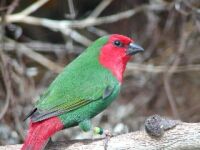
Red Faced Parrot Finch Quick Facts
Scientific name: Erythrura psittacea
Also known as: Red-headed Parrot-finch, Red Face Parrot Finch
Native range: New Caledonia
Adult length: around 12 cm
Lifespan: commonly around 5 to 7 years
Diet: finch seed mix, plenty of greens, live food, egg and biscuit
Housing: pairs or groups, ideally in an aviary
Clutch: 4 to 6 eggs, incubated for about 12 to 14 days
Sexing: difficult, males have more red past the eye
Health note: sensitive to praziquantel, an ingredient in many wormers
Temperament: active, curious and mostly peaceful
Experience level: beginner to intermediate
Red Faced Parrot Finch Shopping List
Everything in this guide is available from Petsville, which delivers Australia-wide, or in-store at Birdsville in Sydney.
Food
Birdsville Blends Finch & Canary (https://petsville.com.au/products/birdsville-blends-finch-canary-500g)
Millet sprays (https://petsville.com.au/products/millet-sprays-mixed-100g)
Shep’s Egg & Biscuit (https://petsville.com.au/products/sheps-egg-biscuit-500g)
Insectivore Rearing Mix (https://petsville.com.au/products/wombaroo-insectivore-rearing-mix-250g)
Vetafarm Insecta-Pro (https://petsville.com.au/products/vetafarm-insecta-pro-450g)
Health
Vetafarm Calcivet (https://petsville.com.au/products/vetafarm-calcivet-50ml)
Vetafarm Multivet (https://petsville.com.au/products/vetafarm-multivet-50ml)
Vetafarm Spark Liquid (https://petsville.com.au/products/vetafarm-spark-liquid-50ml)
Shell grit (https://petsville.com.au/products/shell-grit-5kg)
Avitrol Mite & Lice Spray (https://petsville.com.au/products/fidos-avitrol-bird-mite-and-lice-spray-125ml)
H3: Breeding and Cleaning
Vetafarm Breeding Aid (https://petsville.com.au/products/vetafarm-breeding-aid-100ml)
Nesting material, including swamp grass and coconut fibre (https://petsville.com.au/collections/bird-subsrate)
Vetafarm Aviclens (https://petsville.com.au/products/vetafarm-aviclens-water-cleanser-100ml)
Vetafarm Avicare disinfectant (https://petsville.com.au/products/vetafarm-avicare-rtu-500ml)
Live food and semi open finch nest boxes are available in-store at Birdsville.
On This Page
Red Faced Parrot Finches in the Wild
Description and Sexing
Housing
Red Faced Parrot Finch Diet
Breeding Red Faced Parrot Finches
Worming and Health
Cleaning
Compatibility with Other Finches
Frequently Asked Questions
Recommended Vets and Links

Red Faced Parrot Finches in the Wild
Red faced parrot finches are native to New Caledonia, an island group in the South Pacific. There, they live in grassland dotted with shrubs.
Description and Sexing
Red faced parrot finches have a grass green body, a red face and neck, and a red tail. They’re about 12 cm long.
They can be difficult to sex, because both look very similar. The only real difference is that the male has more red on the face, extending past the eye. Look closely at several birds side by side to give yourself the best chance of picking a true pair.
Housing Red Faced Parrot Finches
Red faced parrot finches are active birds that need plenty of flying space. An aviary with greenery and dense shrubs suits them best. Provide perches of different thicknesses, a shallow bath, and separate dishes for seed, grit, live food and water. Keep them in pairs or groups, never alone.
Seasonal tip: Red faced parrot finches come from a warm island climate. In winter, keep them out of draughts, shelter outdoor aviaries from cold southerly winds, and add gentle heating in cold areas. In summer, give them shade, a bath, and Vetafarm Spark Liquid (https://petsville.com.au/products/vetafarm-spark-liquid-50ml) in the water on very hot days.
Red Faced Parrot Finch Diet
Red faced parrot finches need a quality finch seed mix, plenty of greens, live food, egg and biscuit, grit, vitamins, calcium and fresh water every day.
Seed
The most important thing you can do is feed a good quality seed mix. Red faced parrot finches will survive on a low grade mix, but their feathers will eventually lose their shine, and you’ll have little success breeding them. Our top pick is Birdsville Blends Finch & Canary (https://petsville.com.au/products/birdsville-blends-finch-canary-500g), our biggest selling finch blend. It’s bagged fresh on site with a high turnover, so the seed never sits on a shelf, and buying from the people who mix it means better value. Some supermarket and chain store mixes look nicely packaged, but they’re full of filler seed the birds won’t eat, and some even have grit mixed in. If you’re unsure about your seed, ask a bird specialist.
Sprouted Seed
A great addition for red faced parrot finches. Clean sprouted seed thoroughly with Vetafarm Aviclens (https://petsville.com.au/products/vetafarm-aviclens-water-cleanser-100ml) to remove bacteria before feeding.
Millet Sprays
Fresh millet, great for all finches. French white or panicum is recommended. Buy them on Petsville (https://petsville.com.au/products/millet-sprays-mixed-100g).
Greens
Greens are very important for all finches, and red faced parrot finches enjoy them as much as, or more than, any other finch. Feed seeding grasses, bok choy, chickweed, spinach, endive, broccoli, dandelion, the flowering heads of milk thistle and Lebanese cucumber.
Live Food
Feed fly pupae and mealworms with a small amount of insectivore mix, such as Insectivore Rearing Mix (https://petsville.com.au/products/wombaroo-insectivore-rearing-mix-250g) or Vetafarm Insecta-Pro (https://petsville.com.au/products/vetafarm-insecta-pro-450g). Live food will increase your breeding success, and it’s available in-store at Birdsville.
Egg and Biscuit
Important, especially when breeding. Give your birds egg and biscuit daily, mixed with the insectivore mix and live food. Try Shep’s Egg & Biscuit (https://petsville.com.au/products/sheps-egg-biscuit-500g).
Vitamins
Very important for the health and vitality of captive finches. Add a supplement such as Vetafarm Multivet (https://petsville.com.au/products/vetafarm-multivet-50ml) to the water, because vitamins on seed are lost when finches remove the husk.
Calcium and Vitamin D
All birds need a steady supply of calcium for strong bones, healthy feathers and good eggs. We recommend Vetafarm Calcivet (https://petsville.com.au/products/vetafarm-calcivet-50ml), a liquid calcium supplement with vitamin D3 that goes in the drinking water. It’s especially important for birds kept indoors or out of direct sunlight, because window glass blocks the UV light birds need to make their own vitamin D. Breeding hens need extra calcium to lay strong eggs.
Grit
Because of its weight, grit should always go in a separate container. Use a good quality mix containing charcoal, baked egg shell, shell, crushed cuttlebone and limestone, such as shell grit (https://petsville.com.au/products/shell-grit-5kg).
Breeding Red Faced Parrot Finches
If they’re given the proper diet above, you shouldn’t have any issues breeding red faced parrot finches. The biggest difficulty is picking out your pairs. Not all pairs will breed, and because the sexes look so alike, you can easily end up with two of the same sex. Have a good close look at the birds you choose to improve your odds.
Here’s a tip from our team. We’ve always had success breeding red faced parrot finches in semi open finch nest boxes, which are available in-store at Birdsville.
In a planted aviary, they’ll also build a nest in dense shrubs. They use swamp grass, coconut fibre and long grass blades to build their nest (https://petsville.com.au/collections/bird-subsrate). The hen usually lays 4 to 6 eggs, which take 12 to 14 days to hatch. This is an extremely important time to increase their protein, with egg and biscuit, mealworms and fly pupae. Keep it up for the next 6 weeks or so, until the young are fully independent. Vetafarm Breeding Aid (https://petsville.com.au/products/vetafarm-breeding-aid-100ml) on the seed also helps support fertility and chick growth.
Worming and Health
It’s important to worm your birds, but red faced parrot finches are especially sensitive to praziquantel, an ingredient in many bird wormers. Always check that your wormer doesn’t contain praziquantel before using it on this species. Ask our team or an avian vet to recommend a safe, praziquantel-free option.
Watch for fluffed up feathers, sitting still and inactive, a dirty vent, or a thin chest where the keel bone sticks out. A sick finch can go downhill within hours. Move it to a small, warm cage straight away, add Spark Liquid to its water, and see an avian vet. For more on finch health, see our Finch Care page [Finch Care page link].
For lice and mites, spray birds, nests and the aviary with Avitrol Mite & Lice Spray (https://petsville.com.au/products/fidos-avitrol-bird-mite-and-lice-spray-125ml) every 3 months, avoiding the eyes. Keep new birds separate for 4 to 6 weeks before introducing them, and give them Spark Liquid in their water for the first few days after a move.
Cleaning
Daily: fresh water and seed in clean dishes, blow husks off the seed, and remove old live food and greens.
Weekly: clean the aviary thoroughly.
Monthly: disinfect with Vetafarm Avicare (https://petsville.com.au/products/vetafarm-avicare-rtu-500ml), clean or replace branches, and clean out nests after the young have left.
Compatibility with Other Finches
Red faced parrot finches are great, active birds that make excellent members of an aviary community. They’re very curious and mostly get along with other types of finches. Avoid housing them with other parrot finch species they could crossbreed with. For more on mixing birds, see our Mixing Different Species of Bird page (https://birdsville.net.au/pet-bird-advice-and-training/mixing-different-species-of-bird/).
Red Faced Parrot Finch Frequently Asked Questions
What do red faced parrot finches eat?
A quality finch seed mix such as Birdsville Blends Finch & Canary, plus sprouted seed, millet sprays and plenty of greens, which they love more than most finches. Live food such as mealworms and fly pupae with insectivore mix, plus daily egg and biscuit when breeding, boosts breeding success. Add grit, vitamins and calcium too.
How do you tell a male red faced parrot finch from a female?
Red faced parrot finches can be difficult to sex, as both look very similar. The only real difference is that the male has more red on the face, extending past the eye. Look closely at several birds side by side to improve your chances of picking a true pair.
Is a red faced parrot finch the same as a red headed parrot finch?
Yes. Red faced parrot finch and red headed parrot finch are two names for the same bird, Erythrura psittacea, from New Caledonia. Both names describe its bright red face and neck, set against a grass green body and red tail.
What wormer is safe for red faced parrot finches?
Red faced parrot finches are especially sensitive to praziquantel, an ingredient in many bird wormers. Always check the label before worming them, choose a praziquantel-free wormer, and ask our team or an avian vet if you’re unsure which product is safe.
Are red faced parrot finches easy to breed?
With the right diet, red faced parrot finches usually breed well. The hardest part is picking true pairs, since the sexes look alike. They nest in semi open finch boxes or dense shrubs, lay 4 to 6 eggs, and need extra protein for about 6 weeks until the young are independent.
Can red faced parrot finches live in a mixed aviary?
Yes. Red faced parrot finches are active, curious birds that make excellent members of an aviary community, and they mostly get along with other finches. Avoid housing them with other parrot finch species they could crossbreed with, and give them plenty of greenery and flying space.
Recommended Vets and Links
SASH (Small Animal Specialist Hospital), 02 8913 4000, 5/476 Gardeners Rd, Alexandria NSW 2015, sashvets.com (24/7 emergency)
The Wild Vet, 1300 945 3838, 22A Bridge Road, Glebe, thewildvet.com.au
SERV, 02 9436 4884, 57-63 Herbert St, Artarmon, exoticsvet.com.au
Southern Cross, 02 9516 0234, 60 Princes Hwy, St Peters, southerncrossvet.com.au
Carlingford Animal Hospital, 02 9871 6036, 772 Pennant Hills Road, Carlingford, birdhealth.com.au
The Unusual Pet Vets, 02 9319 6111, 995 Bourke Street, Waterloo NSW 2017, unusualpetvets.com.au
Vetafarm, vetafarm.com.au
Related Birdsville pages: Finch Care [Finch Care page link], Finch Seed (https://birdsville.net.au/seeds-grains/finch-seed/), Mixing Different Species of Bird (https://birdsville.net.au/pet-bird-advice-and-training/mixing-different-species-of-bird/), Birdsville Blends (https://birdsville.net.au/birdsville-blends/).
Red Faced Parrot Finches and Supplies at Birdsville
We sell red faced parrot finches in-store at Birdsville, 684 Botany Road, Alexandria NSW 2015, servicing the Eastern Suburbs and Inner South Sydney. Call (02) 9669 1766, or check our Facebook (https://www.facebook.com/BirdsvilleRosebery/), Instagram (https://www.instagram.com/petsvillesydney/) and TikTok (https://www.tiktok.com/@birdsvillepets) to see what’s in. Every product in this guide is available online from Petsville, delivered Australia-wide, or in-store. Live food and semi open finch nest boxes are available in-store. Our team will help you choose your pair and set up the right home and diet for your birds.
About Birdsville
Birdsville has been trading in Sydney since 1985, and we believe we’re now the oldest bricks and mortar bird shop still open in Australia. Owner Ash brings experience from vet clinics and from zoo keeping at the Rainforest Habitat in Port Douglas, now Wildlife Habitat. We’re a small business that does things in a big way. Nobody tells us how to run things, so we keep our products the best of the best.


